Caroline Spry, Allan Wandin, Bobby Mullins, and Ron Jones/The Conversation
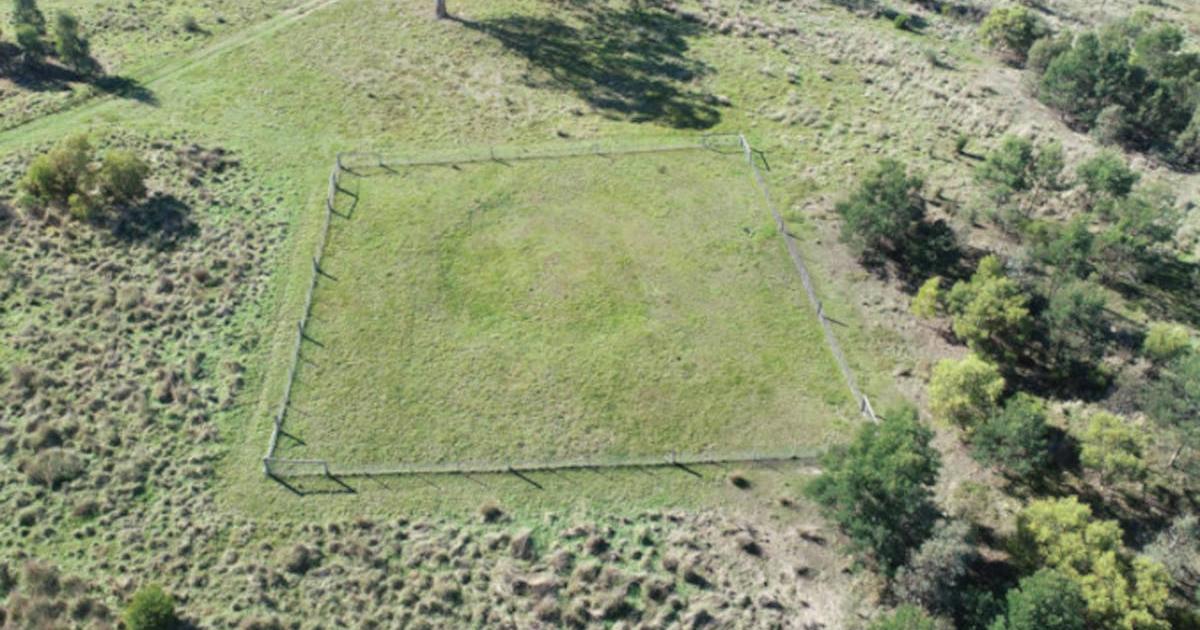
On the outskirts of Melbourne, Australia, there is a series of large rings which rise mysteriously out of hills. These “earth rings”, located on Wurundjeri Woi-wurrung Country in the suburb of Sunbury, aren’t natural phenomena. In fact, they represent large scale feats of human endeavor. They also represent the ancient and ongoing connection Aboriginal people have to Country.
Our new study, published today in Australian Archaeology, presents the results of the only known archaeological excavation of one of these rings combined with Wurundjeri Woi-wurrung understanding of these enigmatic places.
It expands our understanding of the richness and diversity of Australia’s archaeological record, created over more than 65,000 years of continuous occupation by Aboriginal and Torres Strait Islander peoples, who maintain the oldest still-surviving cultures on the planet.
Secret and Sacred Locations of Initiation and Ceremony
Earth rings have been reported across the world, including in England, Amazonia and Cambodia.
- Aboriginal Dreamtime Stories and the Creation Myths of Australia
- Tracing Songlines: Unraveling Aboriginal Australia's Ancient Oral Maps
People created these rings hundreds to thousands of years ago. They did so by excavating and heaping together earth in a large circle (or circles) measuring up to hundreds of metres in diameter.
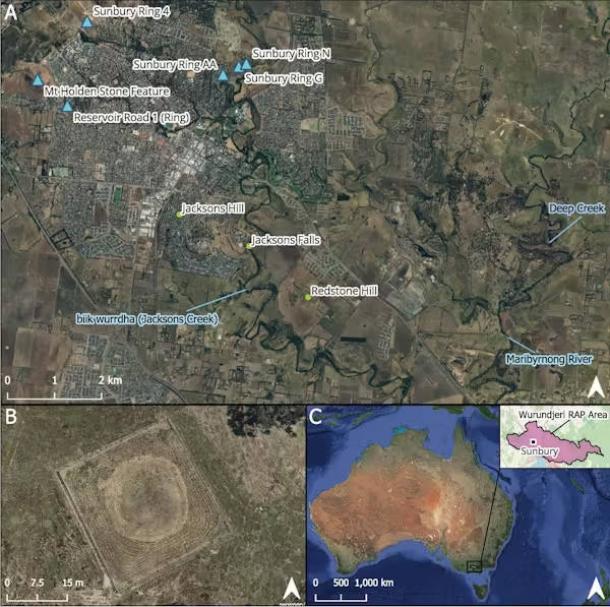
The excavation and study area showing (A) the Sunbury landscape; (B) an aerial view of Sunbury Ring G; and (C) the location in southeastern Australia (figure courtesy of Zara Lasky-Davison). (VicMap 2024, Department of Transport and Planning 2024, NearMap 2024, Google Satellite 2024).
In eastern Australia, earth rings are understood to represent secret and sacred locations of initiation and ceremony for different Aboriginal language groups.
Many earth rings were destroyed following European colonization and land development. It’s estimated that hundreds of earth rings once existed in New South Wales and Queensland alone. But only around 100 remain today. A smaller number of rings are documented in Victoria – including five earth rings in Sunbury.
Reading the Landscape
The Wurundjeri Woi-wurrung people are the Traditional Custodians of a large area in central-southern Victoria. This area includes much of greater Melbourne and surrounds.
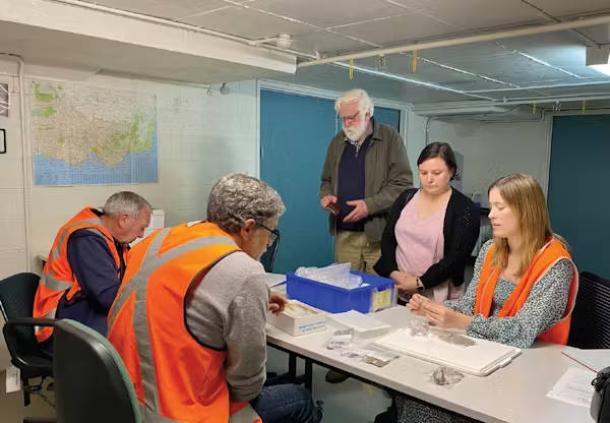
From left to right, Wurundjeri Woi-wurrung Elders Ron Jones and Allan Wandin; and David Frankel, Delta Lucille Freedman and Caroline Spry examining artefacts from Sunbury Ring G at Melbourne Museum. (Caroline Spry).
In 2021–22, Wurundjeri Woi-wurrung people led the first cultural values study of the broader landscape that encompasses the five Sunbury earth rings.
For Wurundjeri Woi-wurrung people, this landscape holds immense cultural significance.
It reflects a deep history of occupation, colonization, resistance, adaptation, self-determination and resilience. It is where Liwik (Ancestors) have lived, traveled, gathered together and raised successive generations of people.
Wurundjeri Woi-wurrung people have actively managed this landscape over thousands of years. This is in accordance with their traditional lore and customs relating to creation ancestors Bunjil and Waa.
Wurundjeri Woi-wurrung people today continue to hold traditional responsibilities to care for Country. The Narrap team is currently working to restore and preserve the health of this important cultural landscape.
New Archaeological Excavations
In 2022, Wurundjeri Woi-wurrung people led a new archaeological excavation of one of the rings, known as Sunbury Ring G.
Sunbury Ring G represents a place where Liwik travelled and came together, and of probable ceremony. It is also a highly significant location between the traditional lands of the Marin bulluk and Wurundjeri wilam clans of Woi-wurrung speaking people, separated by biik wurrdha (also known as Jacksons Creek).
Archaeologist David Frankel first excavated Sunbury Ring G in 1979. To date, no other excavation of an earth ring is known in Australia.
Wurundjeri Woi-wurrung people led the dating and re-analysis of the 166 stone artefacts found during the 1979 excavations.
This involved dating the ring deposits to estimate when the ring was made. It also involved piecing the artefacts back together like a jigsaw, and studying residues and wear patterns on their surfaces and edges. This provides clues on how Woi-wurrung speaking people made and used stone tools at Sunbury Ring G.
An Ancient Ring
The results of our study reveal Woi-wurrung speaking people constructed the ring sometime between 590 and 1,400 years ago (or between 625 and 1435 AD). They spent time in the area clearing the land and plants, scraping back soil and rock to create the ring mound and layering rocks to create stone arrangements.
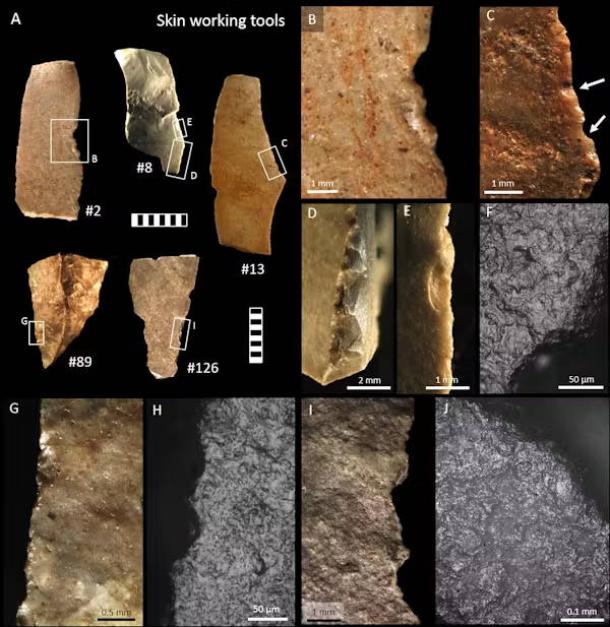
Skin-working tools recovered during excavations at Sunbury Ring G. (Elspeth Hayes).
They also lit campfires, made stone tools which they used on a variety of plants and animals, and moved items around the ring’s interior.
Wear patterns and residues on some of the stone artefacts suggest Woi-wurrung speaking people may have also used some of these stone tools to create feather adornments and scar human skin for ceremony. This practice has been documented in other parts of Victoria.
Our study is the first to combine cultural and archaeological insights on earth rings in Australia.
It demonstrates the importance of further investigating and preserving these earth rings, as well as others known to occur across eastern Australia. This is especially important in the face of continued threats by land development and climate change which threaten the survival of earth rings.
Top image: Earth ring found on Wurundjeri Woi-wurrung territory near Sunbury, Victoria, Australia.
Source: David Mullins.
This article was originally published under the title ‘New Excavation of ‘Rings of Mystery’ in Victoria Reveals Rich Aboriginal History’ by Caroline Spry, Allan Wandin, Bobby Mullins, and Ron Jones on The Conversation and has been republished under a Creative Commons license.