
The search for Amelia Earhart’s missing airplane has gone on for more than eight decades. Theories abound, but evidence of the legendary aviator’s ultimate fate has been hard to find. However, a definitive resolution to this historical mystery may be close at hand, finally, thanks to the determined efforts of an Oregon-based research institute to get at the truth. They say they have collected compelling evidence that a strange object photographed in a shallow lagoon adjacent to the Taraia Peninsula and near Nikumaroro Island in the central Pacific is in fact the fuselage of the missing Lockheed Model 10 Electra that Amelia Earhart and her navigator Fred Noonan were flying when they were tragically lost at sea.
Known as the Taraia Object, this cylinder-shaped anomaly was likely seen for the first time in 1938, or just one year after Earhart’s plane was lost. Since then it has been spotted multiple times in satellite imagery and in conventional aerial photographs.
Building on previous investigative work carried out by the International Group for Historic Aircraft Recovery (TIGHAR), the Archaeological Legacy Institute, led by Executive Director Dr. Richard Pettigrew, has announced its intention to send a team of experts to Nikumaroro Island later this year, to get an up-close look at the Taraia Object and to investigate what they strongly suspect was the site where Amelia Earhart landed her ailing plane, on the Nikumaroro Island reef.
On their website the Archaeological Legacy Institute has a special page devoted to the Taraia Object, complete with a video presentation, which lays out the case that that this artifact is very likely is the fuselage from Amelia Earhart’s aircraft.
While TIGHAR has been pursuing the truth about Amelia Earhart for nearly four decades, they have not been particularly enthusiastic about the chances that the Taraia Object might be her plane. The theory of those who do support this idea is that Earhart and Noonan were forced to make an emergency landing at Nikumaroro, surviving for a time but eventually perishing here when no rescue team came to save them. If this were true, it would of course mean that Earhart’s and Noonan’s remains might be found somewhere on the island.
- Ancient Runways and Flying Fish: Did the Nazca Culture Take Flight?
- Aquatic Forensics Opens Up the Cold, Wet Cases of Australia’s Shipwrecks
Nikumaroro is located approximately 400 miles (640 kilometers) southeast of Howland Island, so it is certainly within range of where Earhart and Noonan were headed when they left the skies for good on July 2, 1937. The images of the Taraia Object have been scrutinized intensely by the experts from the ALI, and what those pictures have revealed offers real hope for finding a solution to the enduring Amelia Earhart mystery.
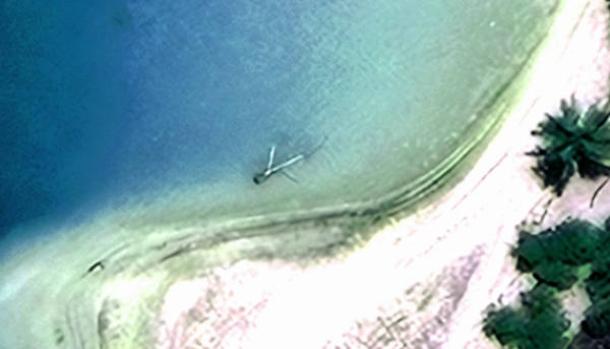
Clearest available picture of the Taraia Object. (Archaeology Legacy Institute).
The Archaeological Legacy Institute Joins the Pursuit
The ALI’s involvement in this saga began in 2020, when a private citizen named Michael Ashmore noticed the anomaly while looking at imagery from Apple Maps. He alerted ALI, and intrigued by what he saw, Dr. Pettigrew solicited enough donor funding to pay for 26 additional satellite images spanning the years from 2009 to 2021.
This imagery showed that the Taraia Object became visible in the lagoon in 2015 after the passage of a tropical cyclone, was most clearly defined in 2015 and 2016, and then was slowly reburied with sediment until disappearing from view in 2024.
Notably, what seems to be same object in the same location is visible in aerial photos shot by the New Zealand military in 1938, just one year after the disappearance of Earhart’s plane. There was also a solar reflection from the precise position of the Taraia Object in aerial video footage shot by TIGHAR in 2001.
Even though TIGHAR personnel made many visits to the island prior to 2015, they could not have seen the plane wreckage in the murky water, where it was buried beneath a substantial layer of sediment. Neither metal detectors nor sonar would not helped, as TIGHAR simply didn’t have a good enough idea of where the object could be found. Only now, with its exact location known, can the Taraia Object be readily excavated, examined and identified, and that is precisely what the ALI team plans to do when they secure sufficient funding to make their 2025 trip to Nikumaroro possible.
Remembering the Amazing Life of Amelia Earhart
In her time, Amelia Earhart was a major celebrity, perhaps the most well-known and widely admired woman in America. Following in the footsteps of aviation pioneer Charles Lindbergh, Earhart became the first woman to fly solo across the Atlantic Ocean, traveling from Newfoundland to Northern Ireland in 1932. In 1935 she completed an even longer journey, becoming the first aviator to fly non-stop from Hawaii to California.
Always in search of the next adventure, the 40-year-old Earhart sought to complete the ultimate air journey in 1937, when in partnership with navigator Fred Noonan she attempted to fly all the way around the world in a specially manufactured Lockheed Model 10 Electra. This incredible journey was to be completed in stages, but disaster struck on July 2nd during a 2,600-mile trip across an open stretch of Pacific Ocean toward Howland Island, when radio contact was lost and Earhart’s plane never reached its destination.
A frantic search was launched, but neither Earhart nor her plan were found, and the search was called off on July 19, much to the sorrow of a nation—and a world—that had been following her aerial exploits for years with much admiration. Subsequent searches fared no better, as the truth about what happened on that tragic day in July of 1937 has remained elusive.
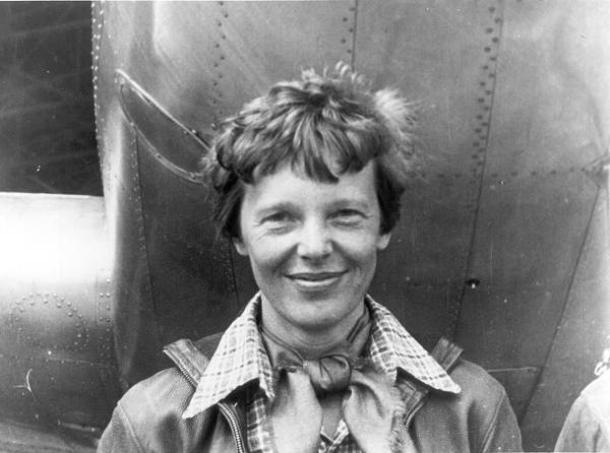
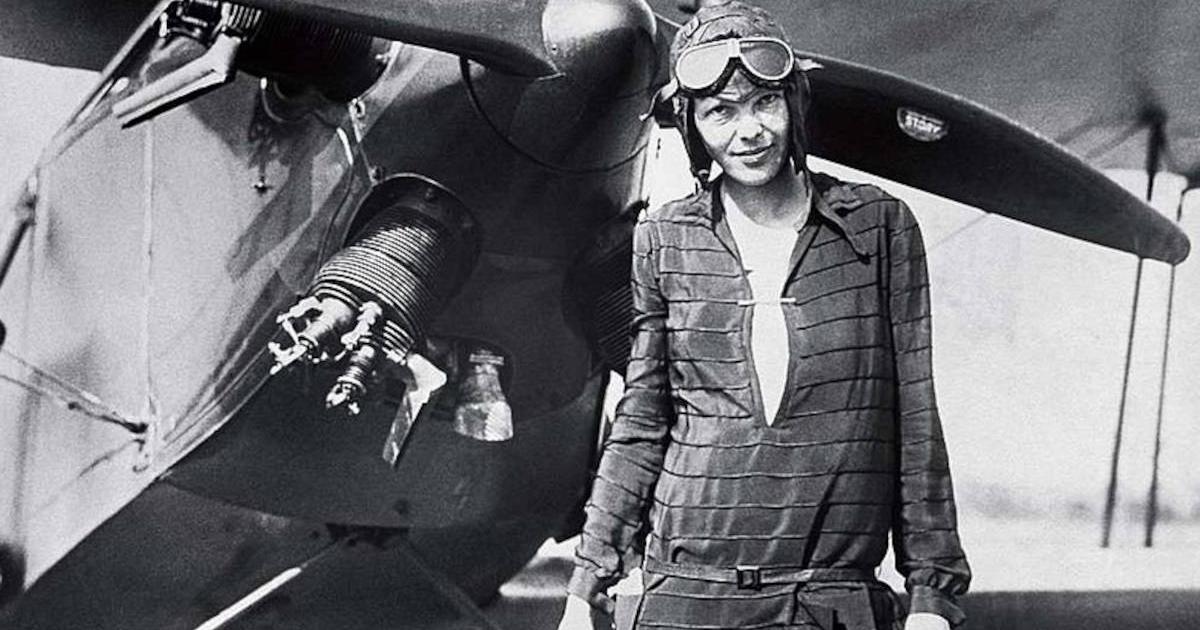
Amelia Earhart, standing beneath the nose of her Lockheed Model 10 Electra in 1937, before leaving on her trip around the world. (Underwood & Underwood/Public Domain).
Many Theories but No Proof—Until Now?
In the eighty-plus years since Earhart’s plane disappeared in the Pacific, people have been trying to figure out what really happened. Many theories have been offered, including proposals that Earhart had actually landed on another island and survived, at least for a time.
- Marutsakha Takes Flight: Modern Aviation Based on Ancient Vimana
- Norwegian Scientists Unintentionally Provide Fuel for a Fringe Theory on the Bermuda Triangle
The evidence in support of these theories has generally been thin at best and non-existent at worst. This is why Dr. Richard Pettigrew and his ALI research team have proceeded cautiously, not wanting to get anyone’s hopes up, including their own, based on speculation or too little data. But now, after having access to so much revealing imagery, they are confident in their belief that the Taraia Object is “likely” the fuselage of Earhart’s ill-fated aircraft.
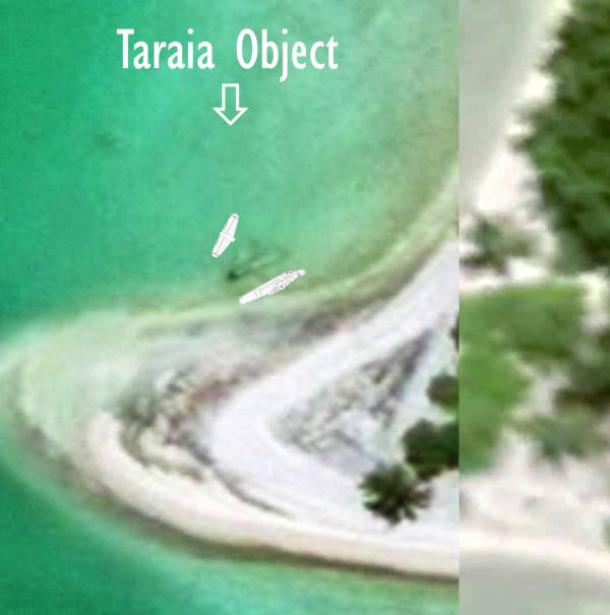
Another aerial view of the Taraia Object. (Archaeology Legacy Institute).
“I’m well aware of the frustrating history of the decades-long search for Earhart and Noonan,” Dr. Pettigrew said in the announcement of his team’s planned discovery mission. “As a professional archaeologist and scientist, I’m quite cautious when I consider evidence for or against an important hypothesis such as this.”
”After following TIGHAR’s Nikumaroro research for decades and then going there with them in 2017, I developed great respect for the Nikumaroro Hypothesis, even in the absence of absolute confirmation in the form of DNA or clear evidence of the missing Electra,” he continued. “Now, by inspecting the Taraia Object, we may finally get that absolute confirmation.”
Dr. Pettigrew hopes to raise enough funds to pay for a small archaeological team to visit the island to study the Taraia Object directly by August 2025. This research will reveal the truth about the Taraia Object one way or the other, and if Dr. Pettigrew and his colleagues find what they expect to find their work will quickly become front page news all around the world, as the name ‘Amelia Earhart’ continues to evoke fascination even to this day.
Top image: Amelia Earhart standing outside of her airplane after landing it.
Source: Luciaroblego/CC BY-SA 4.0.
By Nathan Falde