Archaeology, the study of human history through the excavation and analysis of artifacts, structures, and other material remains, offers a window into the lives of ancient civilizations. While archaeology only officially became an academic discipline in the mid-19th century, ancient peoples were already engaging in practices that, in many ways, mirrored archaeological work. Whether through the restoration and reconstruction of monumental structures, the recording of written texts, or the careful preservation of sacred objects, they unknowingly laid the foundations for the modern discipline.
Thutmose IV and the Dream Stele
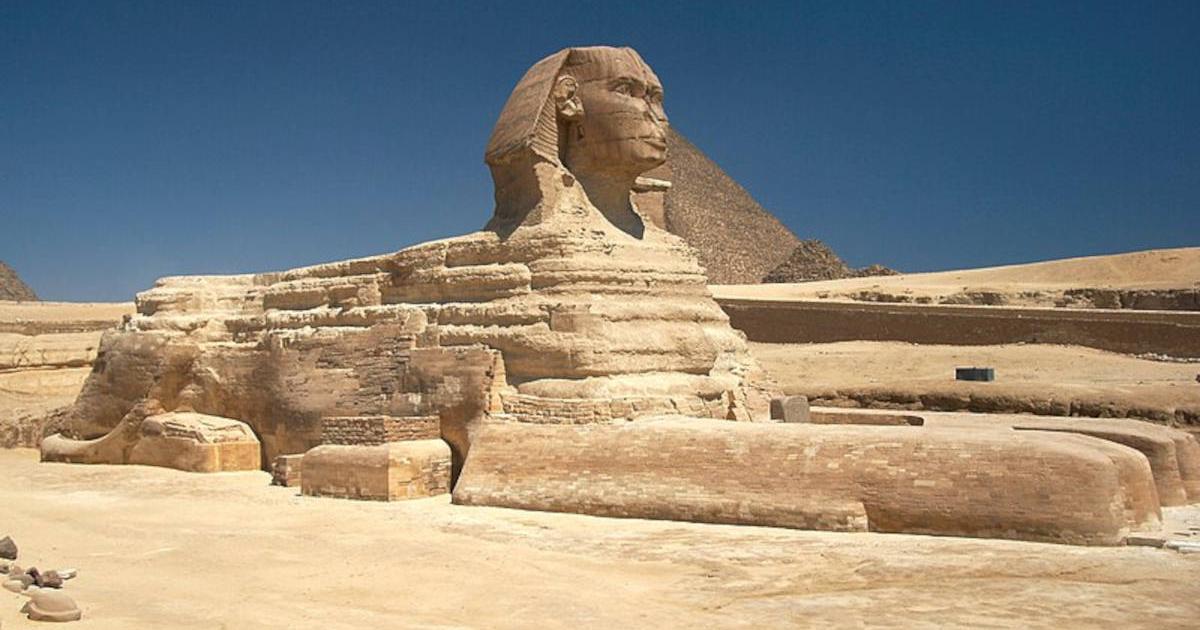
Around 1401 BCE, the Great Sphinx of ancient Egypt’s Old Kingdom lay buried up to its neck in sand, neglected and lost to time. On an afternoon hunting expedition, a young prince named Thutmose IV, son to Amenhotep II of the 18th dynasty, happened upon what remained of the colossus and decided to sit in its shadow for a much-needed break. Before long, he slipped into a deep slumber and the god of this mighty statue came to him in his dream. The god’s booming voice echoed in his mind, promising everlasting praise.
“Look at me, see me, my son Thutmosis. I am your father, Harmakhis-Khepri-Atum, and I shall give you the kingship on earth, in front of all the living ones. You shall wear the White and the Red Crowns upon the throne of Geb, the hereditary prince. The earth shall be yours in its length and width, (everything) that the Eye of the Lord-of-All illuminates. The food of the Two Lands shall be yours, (as well as) the great tributes of every foreign land, (your) lifetime will be a time, great in years.” (Dream Stele)
Yet, the god would not offer such things without expecting something in return. The Sphinx, having been abandoned for 1,000 years, was rightfully owed.
“My face is yours, my heart is yours as you are a protector to me, for my (current) condition is like one that is in need, all my limbs (as if they were) dismembered as the sands of the desert upon which I lie have reached me. So run to me, to have that done which I desire, knowing that you are my son and my protector. Come forth, and I shall be with you, I shall be your leader.”
Thutmose suddenly woke, staring up in awe and reverence. Hastily, he summoned his hunting party and returned to the city. He promised the god offerings of oxen and vegetables, to raise it up from its decrepit state, and honor all those who came before him. Soon, Thutmose returned and excavated the Sphinx from its sandy tomb and built a mud brick wall around it as a protective fortress. Meticulously, he had every stone that had fallen out of place returned and painted the statue in bold, brilliant colors. He had given the Sphinx what it wanted and more; his gift was the kingdom. Thutmose became Pharoah, and in his first year, he erected the Dream Stele, placing it at the back of an open-aired chapel that sat between the Sphinx’s gargantuan front paws.
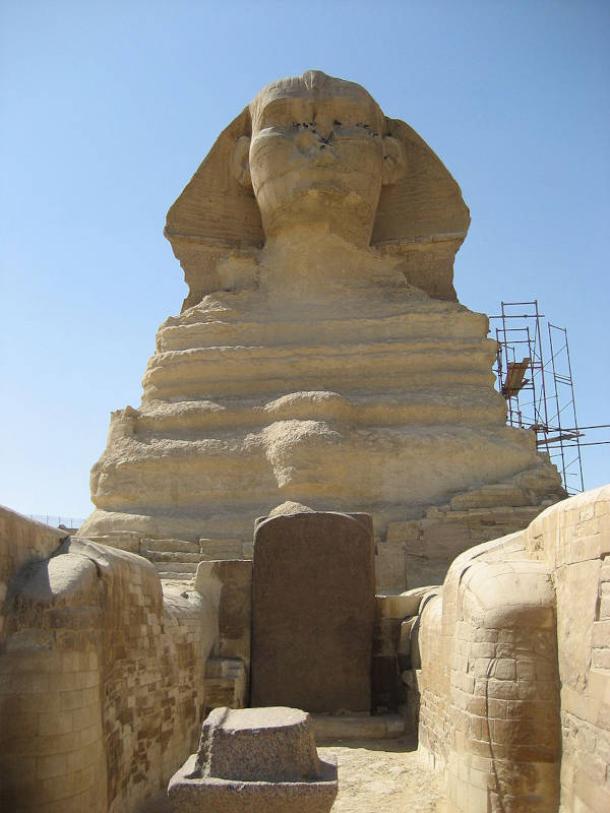
The Dream Stele of Thutmose IV, installed between the paws of the Sphinx. (Chanel Wheeler/CC BY-SA 3.0).
The stele tells Thtomose’s story, of his dream and his offerings to the god. On the top left and right registers, it identifies the king with praise. On each side, the king appears with offerings of incense and libation. Between these two scenes, the god speaks approval of Thutmose on the throne. The rest of the stele describes Thutmose’s encounter with the god and the promises he intended to keep.
It has been argued that Thutmose’s motivations were to secure the throne – one that was supposed to go to his older brother. By having a god by his side, he easily had all the legitimacy needed to take the throne.
There were, however, many ways to gain favor with the gods, and his unique choice may reflect something more. What Thutmose did to resurrect the Sphinx underlies the precision and dedication required in archaeological work. If it was not for the work he did, the Sphinx may have been completely taken by the sand by the time early 19th-century archaeologists began uncovering it. Unlike others, Thutmose has never been recognized as an early archaeologist. Regardless, the fate of the Sphinx was decided the day a boy lay to rest under its shadow.
Top image: The Great Sphinx of Egypt, one of the world’s most famous monuments, which was first excavated around 1,400 BC by Thutmose IV.
Source: Barcex/CC BY-SA 2.5.