
Researchers analyzing an extremely rare Egyptian alabastron inscribed with the name of Persian ruler Xerxes I have discovered traces of opium within the ancient vessel, suggesting that the narcotic played a far more significant role in ancient Egyptian society than previously understood. The quadrilingual vase, housed in Yale University's Peabody Museum Babylonian Collection, represents one of fewer than ten intact inscribed alabaster vessels known worldwide - and marks the first time such a royal artifact has been scientifically analyzed to identify its contents. Published in the Journal of Eastern Mediterranean Archaeology and Heritage Studies, the research by the Yale Ancient Pharmacology Program provides the clearest evidence yet that opiates were widely consumed across different social classes in ancient Egypt, with kings and commoners alike choosing to carry the substance into the afterlife.
- Bronze Age High: Traces of Opiates Found in Cypriot Vessel
- Evidence of Opium Use By Canaanites in 14th Century BC
Using gas chromatography-mass spectrometry, the research team identified five diagnostic biomarkers for opium: noscapine, hydrocotarnine, morphine, thebaine, and papaverine. The discovery challenges long-standing scholarly assumptions that these elaborate alabaster containers held perfumes or cosmetics. "This study presents the clearest comprehensive evidence yet that opiates were a broader part of ancient Egyptian society," write the authors, who emphasize that this marks the first time the contents of an inscribed Egyptian alabastron have been identified through scientific techniques.
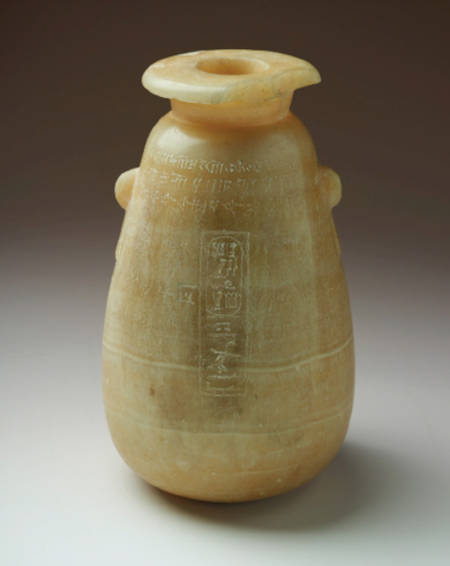
Egyptian alabastron inscribed with the name of Persian ruler Xerxes I found to have traces of o/pium. (Courtesy of the Yale Babylonian Collection/Koh et al, 2025)
A Vessel Fit for Kings
The alabaster vase bears inscriptions in four ancient languages - Akkadian, Elamite, Persian, and Egyptian hieroglyphs—declaring Xerxes I as "Great King." A Demotic addendum notes the vessel's capacity as "12 kpd-units," approximately 1200 milliliters. Xerxes I ruled the Achaemenid Persian Empire from 486 to 465 BC, a period when Egypt was incorporated as a Persian province following Cambyses II's conquest.
- The Battle of Pelusium: Psychological Warfare Leads Persians to Victory
- Persian King Xerxes Ordered the Sea to be Whipped
The vase's provenance traces back to 1912 Paris, and scholarly consensus suggests these alabastra were produced and initially inscribed in Egypt before being transported to Mesopotamian palaces as prized diplomatic gifts. The regnal years noted in hieroglyphs indicate they formed components of periodic, possibly annual, tributes from Egypt to Persia's imperial centers at Susa and Persepolis. These vessels were then distributed to esteemed elites of the Achaemenid Empire, who valued them enough to take them to their graves, as evidenced by similar examples found at the Mausoleum of Halicarnassus and a Sarmatian burial mound in Russia.
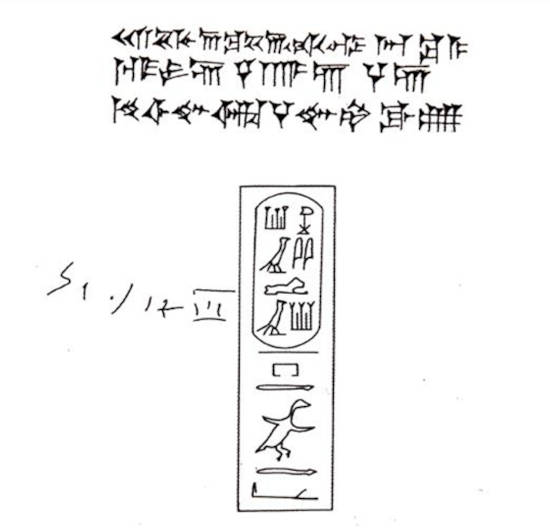
Quadrilingual inscription on the Yale Babylonian Collection Egyptian alabastron. (Courtesy of the Yale Babylonian Collection/Koh et al, 2025)
Implications for Tutankhamun's Treasure
The discovery raises intriguing questions about the contents of other ancient alabaster vessels, particularly those from the tomb of Tutankhamun. When Howard Carter excavated the boy king's burial chamber in 1922, he found a vast quantity of alabaster vessels - many filled with sticky, dark-brown organic residue that chemist Alfred Lucas could not definitively identify in 1933, except to rule out most unguents and perfumes.
Carter documented two ancient looting incidents at the tomb: the first targeted portable metals, while the second focused specifically on the contents of these calcite vessels. Thieves methodically transferred the precious organic materials into portable bags, scraping the vessels' interiors by hand to extract every trace. Carter noted finger marks inside the containers and discovered some leather bags left behind during the hasty escape.
"The greases, or oils, that they once contained had, no doubt, a far greater value in those days than possibly we imagine," Carter observed.
According to the study authors, "many of the looted alabastra from Tutankhamun's tomb were clearly observed to have the same sticky, dark-brown organic remains with distinct odor that match the characteristics of dried opium latex." A few vessels remain filled with their original contents today, "primed for future ORA studies." The researchers conclude:
"Therefore, it remains imminently possible, if not probable that at least some of the vessels in fact contained opiates as a part of a long-lived ancient Egyptian tradition we are only beginning to understand."
Opium Across Egyptian Society
Previously, traces of opium were discovered in jugs from a tomb at Sedment, south of Cairo, used as a cemetery for less wealthy individuals. The Penn Museum's New Kingdom vessels from Sedment Tomb 254 - including Cypriot Base Ring juglets and two calcite vessels - also showed the same dark, aromatic residue as the Xerxes alabastron, despite being separated by a millennium.
Together, these discoveries indicate that opiates were consumed by both commoners and elites in ancient Egypt. The researchers even speculate that alabaster vases may have become culturally synonymous with opium consumption, "in the same way that hookahs today are attached to shisha tobacco consumption." While this comparison remains somewhat speculative, the authors assert: "it is now abundantly clear that opiate use was a fixture of ancient daily life."
The unique properties of calcite , the mineral comprising these alabaster vessels, may explain their exceptional preservation of organic compounds. The entire structure being composed of calcite presumably created a high surface area that allowed diagnostic compounds to be absorbed and protected over millennia. This lipophilic nature of calcite minerals makes them ideal repositories for organic residues, particularly fatty compounds like those found in opium preparations.
By analyzing both freshly excavated materials and historical objects with careful attention to their biographies and preservation conditions, researchers are reconstructing ancient pharmacological practices that shaped daily life, religious rituals, and funerary customs across the ancient Mediterranean world.
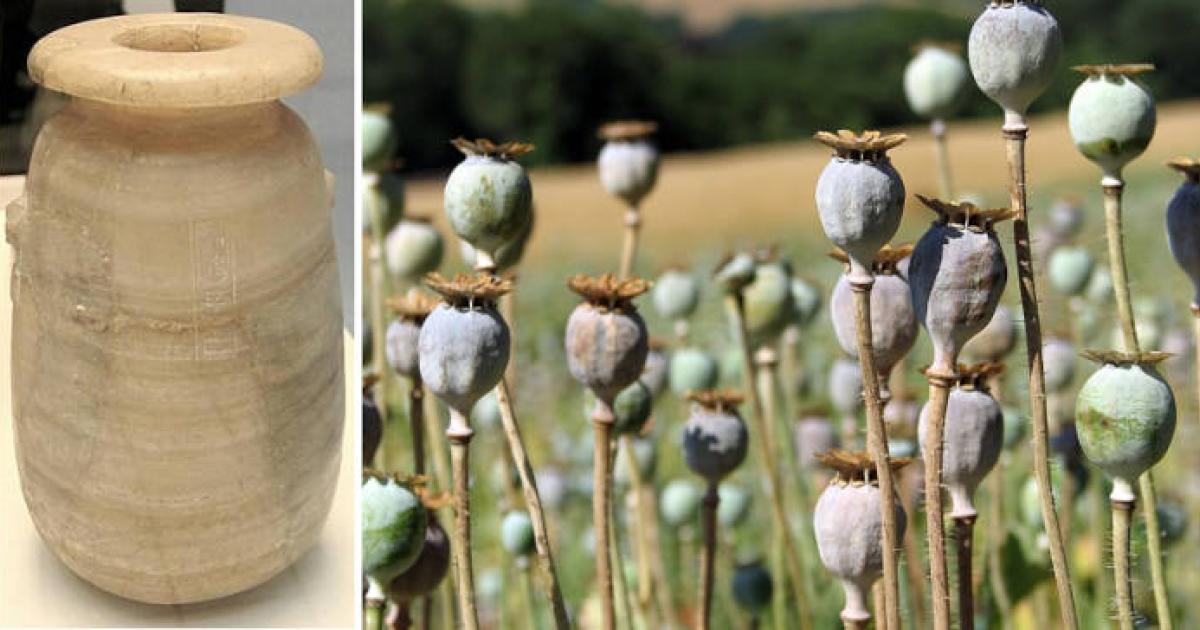
Top image: Left, Jar of Xerxes I from the Mausoleum at Halicarnassus, Right; Opium poppies. Source: Left; Marco Prins/CC0, Right; Alastair Rae/CC BY-SA 2.0
By Gary Manners
References
Koh, A., et al. 2025. The Pharmacopeia of Ancient Egyptian Alabaster Vessels: A Transdisciplinary Approach with Legacy Artifacts. Journal of Eastern Mediterranean Archaeology and Heritage Studies, 13(3): 317-402. Available at: https://scholarlypublishingcollective.org/psup/jemahs/article/13/3/317/402889
Pickrell, Z. 2025. Opium Found In Rare Ancient Egyptian Vase Dedicated To "Great King" Xerxes. IFLScience. Available at: https://www.iflscience.com/opium-found-in-rare-ancient-egyptian-vase-dedicated-to-great-king-xerxes-81240