
Archaeologists have unearthed a 6,000-year-old temple complex in eastern Turkey featuring a sinister "blood channel" and altar stone bearing knife marks, providing the first direct evidence of human and animal sacrifice rituals in the region during the Late Chalcolithic and Early Bronze Ages.
The discovery at Tadım Mound near Elazığ represents the oldest known temple structure in the Upper Euphrates Basin, offering unprecedented insights into the religious practices of ancient communities who inhabited this strategic crossroads between Mesopotamia and Anatolia. The excavation, led by the Ministry of Culture and Tourism in coordination with the Elazığ Museum Directorate, has revealed a complex that fundamentally challenges our understanding of early religious architecture in the region.
- Was Göbeklitepe An Ancient Temple of Human Sacrifice?
- Mass Sacrifices of Teenage Girls Common in Bronze Age Turkey
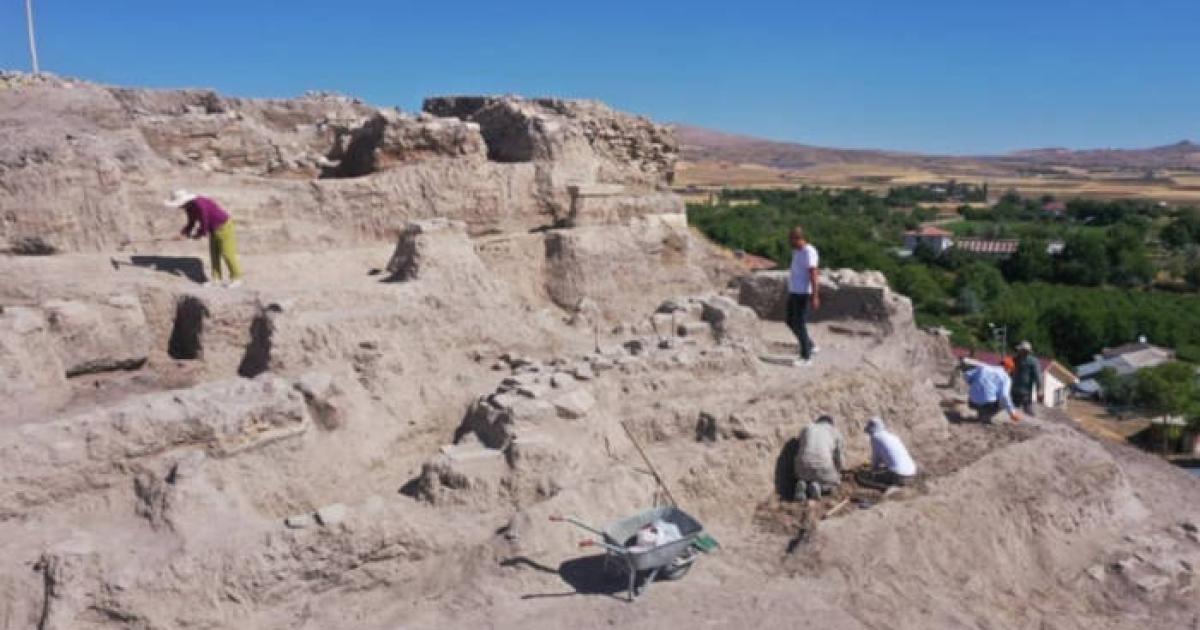
The most striking discovery within the temple complex was a ritual blood channel containing both human and animal remains, connected to an altar stone scarred with repeated knife cuts. This gruesome drainage system channeled blood and viscera from sacrificial victims into a deep pit, suggesting highly organized ceremonial practices. "This is the first temple area in our city and region," explained Ahmet Demirdağ, Provincial Director of Culture and Tourism, speaking to Anadolu Agency.
Sacred Architecture and Ritual Artifacts
The 35-meter-tall Tadım Mound, covering 210 by 160 meters, has yielded remarkable evidence of early religious architecture. Within the temple complex, archaeologists discovered four podiums likely used for placing votive offerings, a sacred hearth, and various ceremonial artifacts that illuminate the spiritual beliefs of these ancient communities.
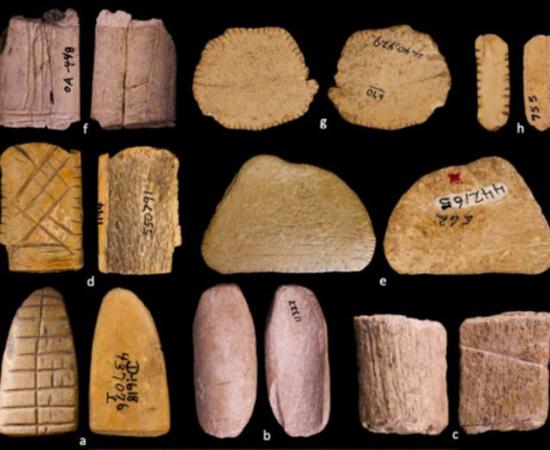
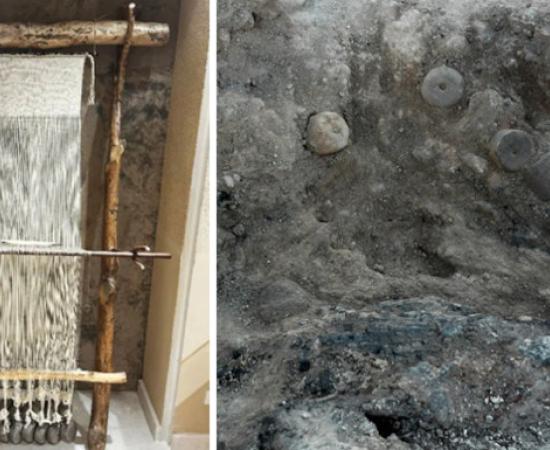
The ritual objects recovered include Nakhchivan-style pottery, seal stamps used in agricultural transactions, arrowheads, spindle whorls for textile production, and remarkably, idol figurines crafted from stone, clay, and bone. These figurines represent some of the earliest known forms of symbolic religious expression in the region, predating many famous religious sites.
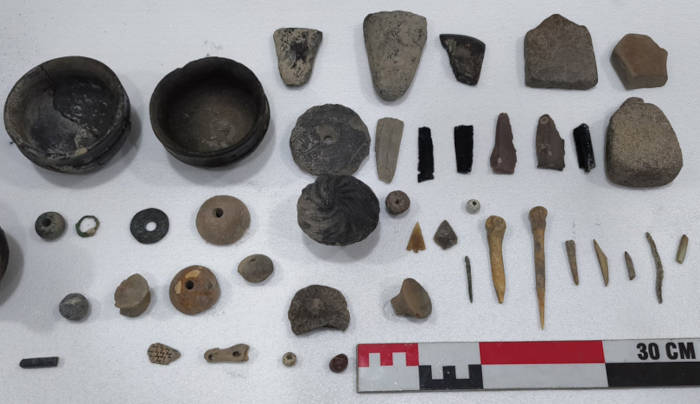
Artifacts believed to be offerings to the gods were uncovered during excavations at Tadım Castle and Mound, Elazığ, eastern Türkiye, July 14, 2025. (AA Photo)
Archaeological supervisor Ergün Demir noted that the temple's construction utilized rubble foundations with mudbrick walls, a technique that provided resistance to both natural disasters and human invasion. The architectural layout suggests early urban planning with closely spaced structures indicating communal living arrangements.
Evidence of Human Sacrifice Practices
The blood channel discovery aligns with growing evidence of human sacrifice practices in Bronze Age Turkey. Recent archaeological findings across the region, including the mass sacrifices of teenage girls at Başur Höyük, suggest that ritual killing was more widespread than previously understood.
The knife marks on the altar stone indicate repeated use for sacrificial purposes, while the sophisticated drainage system demonstrates careful planning for managing the aftermath of these ceremonies. According to the Arkeonews report, these rituals likely involved both human and animal victims as offerings to deities.
- Blood for the Gods: 10 Cultures that Engaged in Ritual Sacrifice
- Eight of the Oldest Temples in the Ancient World
The temple's location near the Euphrates River positioned it at a crucial cultural crossroads, where Mesopotamian influences merged with Anatolian traditions. This strategic location may have enhanced the temple's importance as a regional religious center, attracting pilgrims and reinforcing its role in early state formation.
Rewriting Early Religious History
This discovery significantly predates many famous religious sites, placing the origins of organized temple worship in Turkey far earlier than previously thought. While Göbekli Tepe remains the world's oldest known temple at 12,000 years old, the Tadım Mound complex represents a crucial link in understanding how religious practices evolved during the transition from hunter-gatherer societies to agricultural communities.
The evidence suggests that by 6,000 years ago, sophisticated religious hierarchies had developed in the region, capable of organizing complex rituals involving human sacrifice. These practices may have served to legitimize emerging social stratification and political authority, with religious leaders wielding considerable power over life and death.
The ongoing excavations continue to reveal layers of history, with researchers believing even older findings lie beneath the current discoveries. As Demirdağ noted, "We think that further digging will uncover even more ancient findings that will push the history of the region back even further."
The Tadım Mound temple complex stands as a testament to the dark sophistication of early religious practices, where blood offerings to the gods were conducted with ceremonial precision in purpose-built facilities. This discovery adds another piece to the puzzle of how ancient civilizations used ritual sacrifice as a tool for social control and spiritual expression.
Top image: Archaeological excavation of the 6,000-year-old temple complex showing the blood channel and altar at Tadım Mound, Elazığ, Turkey. Source: İsmail Şen / Anadolu Agency (AA)
By Gary Manners
References
Arkeonews. (2025). 6,000-Year-Old Temple with Blood Channel and Altar Unearthed in Eastern Türkiye. Available at: https://arkeonews.net/6000-year-old-temple-with-blood-channel-and-altar-unearthed-in-eastern-turkiye/
Daily Sabah. (2025). Ancient rituals revealed: 6,000-year-old complex found in Türkiye. Available at: https://www.dailysabah.com/life/history/ancient-rituals-revealed-6000-year-old-complex-found-in-turkiye