
A groundbreaking new study has finally cracked the 6,000-year-old mystery surrounding Armenia's enigmatic dragon stones, known locally as vishaps. Researchers have discovered these massive prehistoric monuments were deliberately positioned at high altitudes as part of an ancient water cult that dominated the Armenian Highlands for millennia. The comprehensive analysis provides compelling evidence that these fish-shaped megaliths served as sacred markers connecting mountain water sources to the valleys below.
The study, published in the prestigious journal npj Heritage Science, represents the first comprehensive statistical analysis of Armenia's vishap stones, examining 115 monuments scattered across the country's mountainous terrain. Led by Vahe Gurzadyan of Yerevan State University and Arsen Bobokhyan from the Institute of Archaeology and Ethnography, the research team discovered that these ancient builders invested enormous labor in transporting multi-ton stones to elevations exceeding 2,700 meters (8860 ft) above sea level, defying practical expectations, reports Popular Mechanics.
- Serpent Stones: The Vishap Steles of Armenia as a Symbol of Rock Art and Rich Heritage
- Burial of Two Infants Found Under Dragon Stone At Prehistoric Armenia Site
Revolutionary Statistical Analysis Challenges Ancient Assumptions
The breakthrough came when researchers analyzed the relationship between stone size and altitude distribution. Logic would suggest that ancient builders would create smaller monuments at higher elevations where the snow-free working period was severely limited. However, the statistical analysis revealed the opposite pattern. Some of the largest dragon stones, including a massive 4.3-ton monument called Karakap 3, were deliberately positioned at altitudes exceeding 2,800 meters (9185 ft), reports La Brújula Verde on the study findings.
This counterintuitive distribution indicates that prehistoric communities were willing to invest tremendous resources and overcome significant logistical challenges to place these monuments at specific high-altitude locations. The researchers calculated that transporting and positioning these stones at such elevations would have required substantial manpower, specialized knowledge, and careful timing within the limited snow-free periods available for mountain construction work.
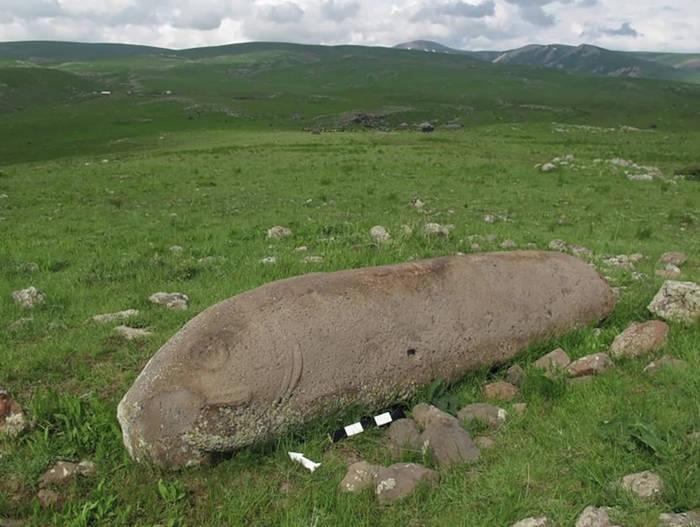
A Piscis-type dragon stone showing characteristic fish-shaped carving. (Vishap Project, A. Bobobkhyan/ Nature)
Ancient Water Cult Connected Mountains to Valleys
The study's most significant revelation concerns the dragon stones' connection to prehistoric water management systems. The monuments cluster at two distinct elevation peaks: approximately 1,900 meters (6333 ft) and 2,700 meters (8860 ft) above sea level. This bimodal distribution corresponds precisely to critical zones in the Armenian Highland's ancient irrigation systems, supporting theories first proposed by scholar Ashkharbek Kalantar in the 1920s, notes Greek Reporter.
The fish-shaped piscis vishaps predominantly appear at higher elevations near water sources, while cow-hide shaped vellus stones concentrate at mid-elevations where water was utilized by human communities. This spatial arrangement reveals a sophisticated understanding of watershed management that connected mountain snow deposits to valley agricultural systems concludes the study. The positioning near springs, lakes, and traces of prehistoric irrigation channels demonstrates that these monuments marked sacred points in a comprehensive water distribution network.
- The Cult of Mithra: Sacred Temples, Vedic Legends and Ancient Armenian Understanding
- Zorats Karer: The Incredible History of the 7500-year-old Armenian Stonehenge
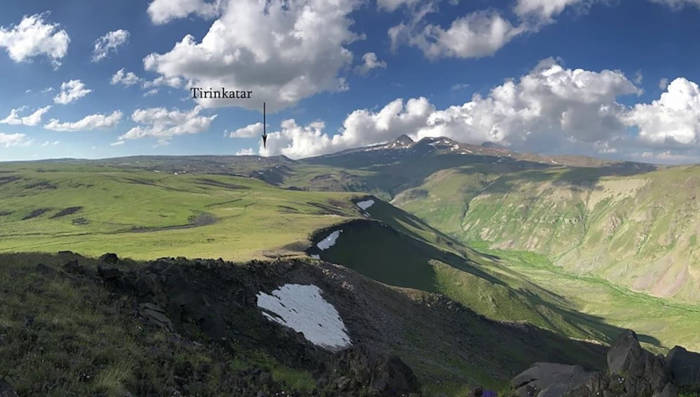
Location of Tirinkatar archaeological site on Mount Aragats showing dragon stone distribution. (Vishap Project, H. von der Osten, A. Hakhverdyan/Nature)
Chalcolithic Origins and Millennial Sacred Landscapes
Radiocarbon dating from the key archaeological site of Tirinkatar on Mount Aragats has revealed that dragon stones were erected as early as 4200-4000 BC during the Chalcolithic period. This makes them contemporary with other major prehistoric monuments worldwide, including the earliest phases of construction at sites like Stonehenge and Göbekli Tepe. The Tirinkatar site alone contains twelve vishap stones, representing the largest known concentration of these monuments.
The longevity of the dragon stone tradition spans several millennia, with evidence showing continuous use and reinterpretation of these sacred landscapes through successive cultural periods. Later civilizations, including the Urartian Kingdom, added cuneiform inscriptions to existing stones, while medieval Christian communities sometimes incorporated crosses and religious symbols, demonstrating the enduring spiritual significance of these ancient water cult sites.
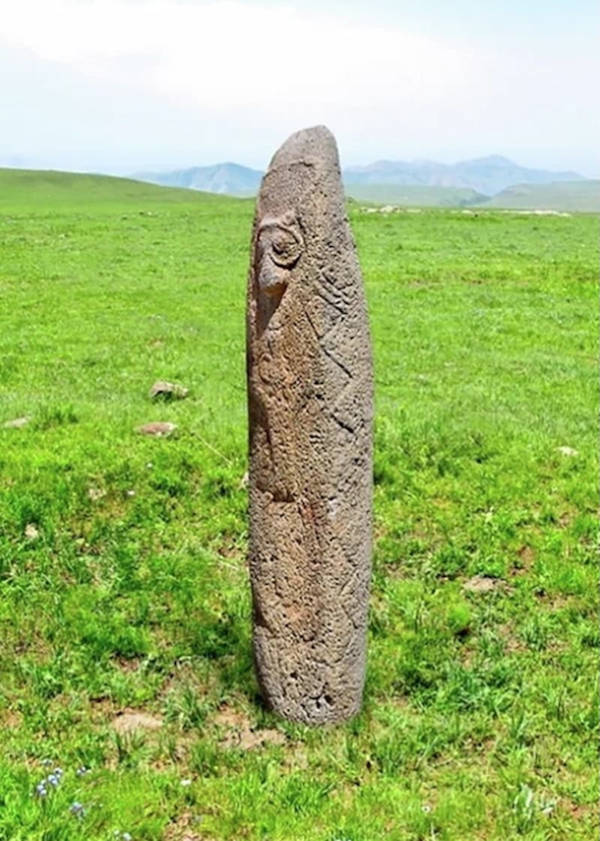
A hybrid dragon stone combining fish and hide imagery. (Vishap Project, A. Bobobkhyan/Nature)
The research fundamentally transforms our understanding of prehistoric Armenian society, revealing sophisticated planning capabilities and complex religious beliefs centered on water as a life-sustaining force. The study's authors conclude that human history demonstrates cults are invariably associated with significant societal efforts, and the dragon stones represent one of the most impressive examples of this principle in prehistoric archaeology. The findings enhance our comprehension of high-altitude archaeological sites and the social structures that shaped prehistoric communities across the ancient world.
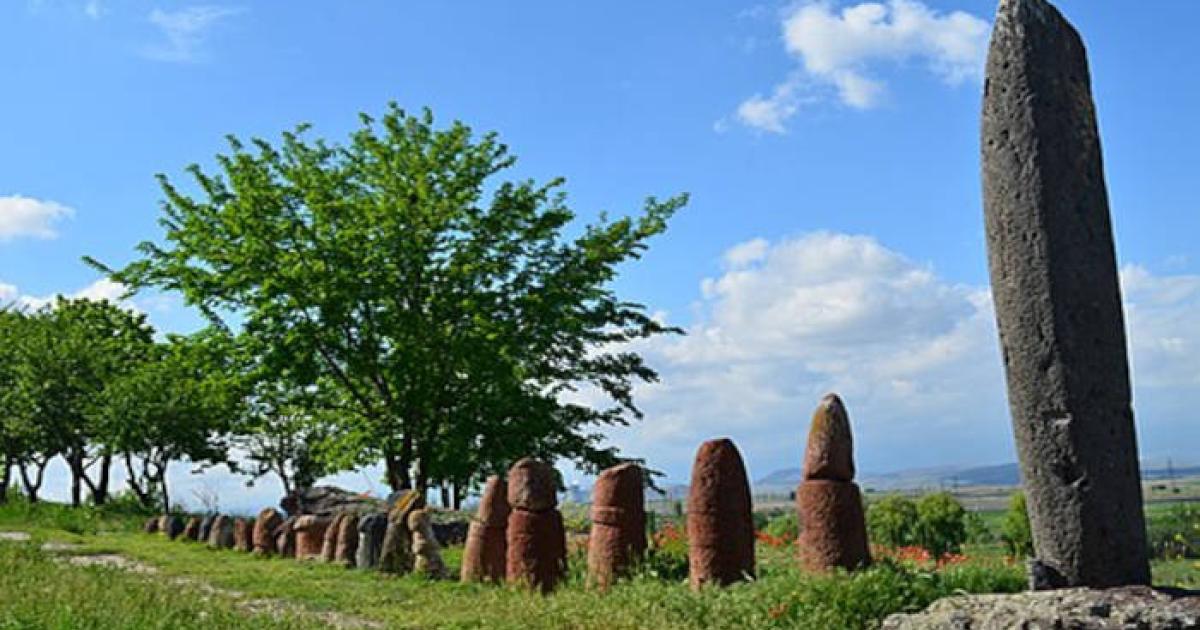
Top image: Vishapakar dragon stone at Metsamor archaeological site, Armenia, showing characteristic fish-like carving and monumental scale typical of these ancient water cult monuments. Source: Sonashen / CC BY-SA 3.0
By Gary Manners
References
Gurzadyan, V., & Bobokhyan, A. (2025). Vishap stelae as cult dedicated prehistoric monuments of Armenian Highlands: data analysis and interpretation. Available at: https://www.nature.com/articles/s40494-025-01998-z
Newcomb, T. (2025). Archaeologists Solved the Mystery of 6,000-Year-Old Dragon Stones. Available at: https://www.popularmechanics.com/science/archaeology/a66128020/dragon-stones-cult/