
Imagine organizing a festival so massive that people would drive livestock hundreds of miles to attend - without roads, GPS, or even the wheel. This isn’t mere fantasy, this was actually happening 3,000 years ago.
New archaeological evidence reveals that Bronze Age Britain hosted some of the most sophisticated social gatherings in ancient history - mega-festivals that connected communities from Scotland to Cornwall in an intricate web of feasting, trade, and social bonding that rivals our modern festival circuits.
Picture this: Massive crowds gathering near sacred sites like Stonehenge, with herds of cattle, pigs, and sheep streaming in from distant lands. The aroma of roasting meat filling the air as communities that rarely saw each other came together to feast, trade stories, and forge alliances. These weren't simple village get-togethers, they were logistical marvels that left behind garbage dumps the size of football stadiums, packed with millions of bone fragments that still tell their story today.
What drove ancient Britons to orchestrate such ambitious gatherings? And how did they manage to coordinate livestock movements across vast distances using Bronze Age technology? Revolutionary scientific techniques are finally unlocking these ancient mysteries, revealing a level of social organization that challenges everything we thought we knew about prehistoric Britain.
The answers lie buried in six massive prehistoric "middens" found at ancient party sites that became permanent monuments to humanity's earliest festival culture…
Exploring Avebury – Voices of Ancestors, with Steve Marshall. Recorded Webinar, from the Ancient Origins Store.
Revolutionary Study Uncovers Ancient Food Networks
A comprehensive study by Cardiff University archaeologists has analyzed animal remains from six massive prehistoric rubbish heaps called middens across Wiltshire and the Thames Valley. Using cutting-edge multi-isotope analysis on 254 animal samples, researchers discovered that Bronze Age communities transported livestock over vast distances to participate in communal feasts between 900-500 BC. This represents the largest multi-isotope faunal study ever conducted in archaeology.
- How Feasting Rituals Helped Lead to a Civilized World
- Bronze Age Cauldrons' Residues Unveil Caucasus Cuisine
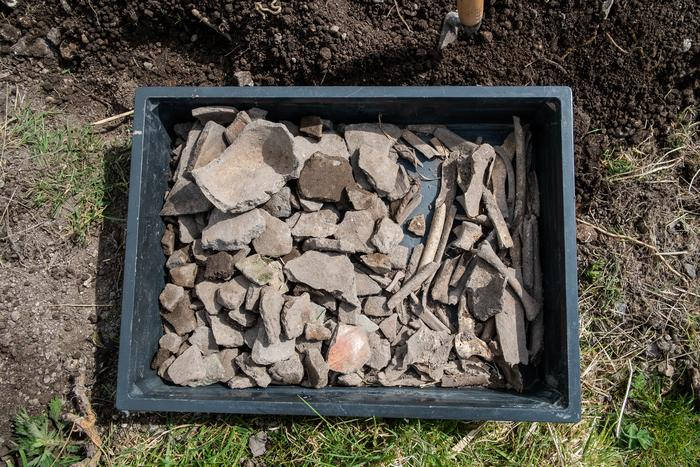
Collected feasting debris of pottery and bone from Bronze Age middens of East Chisenbury. (Cardiff University/Richard Madgwick)
The research, published in the journal iScience, demonstrates that these gatherings were "arguably the largest to take place in Britain until the medieval period," according to lead researcher Dr. Carmen Esposito from the University of Bologna. The middens, enormous mounds of feasting debris, became permanent features in the British landscape with some reaching the size of five football pitches.
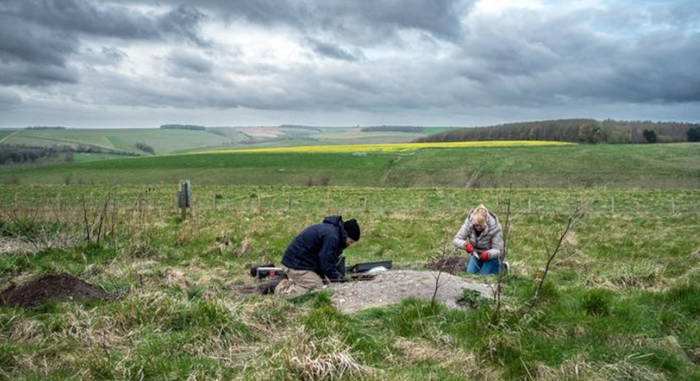
East Chisenbury midden (rubbish pile) under excavation. (Cardiff University)
Different Sites, Different Specialties
The study revealed that each midden site had distinct characteristics and roles within the broader feasting network. At Potterne in Wiltshire, pork dominated the menu with pigs transported from as far as northern England, Wales, Cornwall, and Devon. This massive site contains up to 15 million bone fragments, making it one of the most artifact-rich middens in England.
In contrast, East Chisenbury, located just 10 miles from Stonehenge, specialized in sheep with most animals sourced locally. This suggests a more conservative approach focused on intensive local production. The Thames Valley site of Runnymede in Surrey favored cattle, with animals arriving from Wales and southwestern England.
- Study Finds Huge Undetected Migration Wave to Prehistoric Britain
- Britain's Pompeii - Reveals Bronze Age Lifestyle of 'Cosy Domesticity'
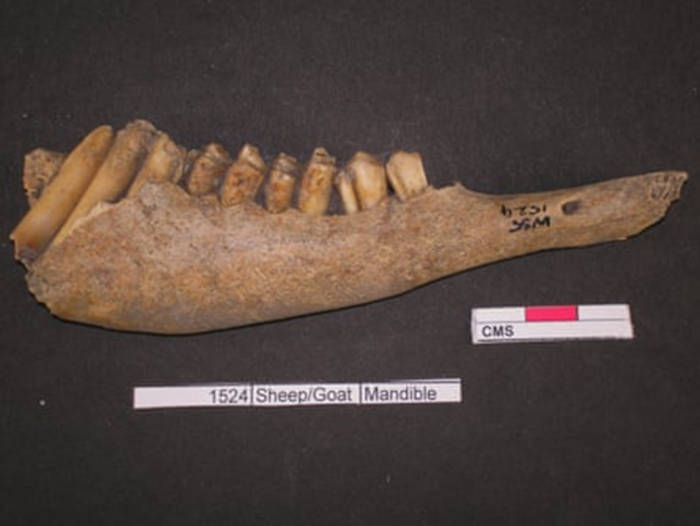
Sheep remains found at East Chisenbury suggest mutton was the preferred meat at that feasting area. (Cardiff University/Richard Madgwick)
Climate Crisis Sparked Social Innovation
Professor Richard Madgwick from Cardiff University's School of History, Archaeology and Religion suggests these massive feasting events emerged in response to climatic and economic instability at the end of the Bronze Age. "At a time of climatic and economic instability, people in southern Britain turned to feasting," he explained to The Guardian.
The period between 900-500 BC was marked by increasingly wet conditions and the declining value of bronze as iron technology emerged. These challenges prompted communities to develop new social and economic strategies centered on massive communal gatherings. Madgwick believes these events played, "a really important role in creating some degree of community cohesion at a time of trouble."
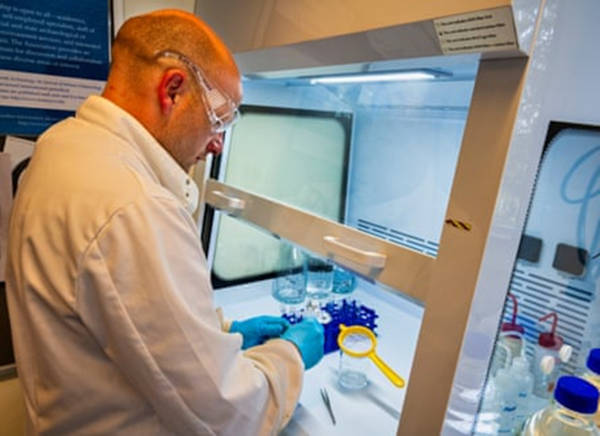
Scientists used cutting-edge multi-isotope analysis for the study. (Cardiff University/Richard Madgwick)
Revolutionary Scientific Methods Reveal Ancient Movements
The breakthrough findings were made possible through multi-isotope analysis, a rapidly developing archaeological technique. Each geographical region has distinct chemical signatures that permeate local water and food sources. As animals consume these resources, regional markers become locked in their bones, allowing researchers to trace their origins centuries later. The study examined strontium, oxygen, sulfur, carbon, and nitrogen isotopes to create detailed profiles of animal movements and management practices.
This comprehensive approach revealed that Bronze Age Britain had remarkably sophisticated logistics networks. The evidence suggests waterways played crucial roles in transporting livestock, as all middens were located near rivers. Some animals traveled from Scotland to southern England, representing journeys of hundreds of miles with live cattle and pigs - a massive undertaking requiring considerable planning and resources.
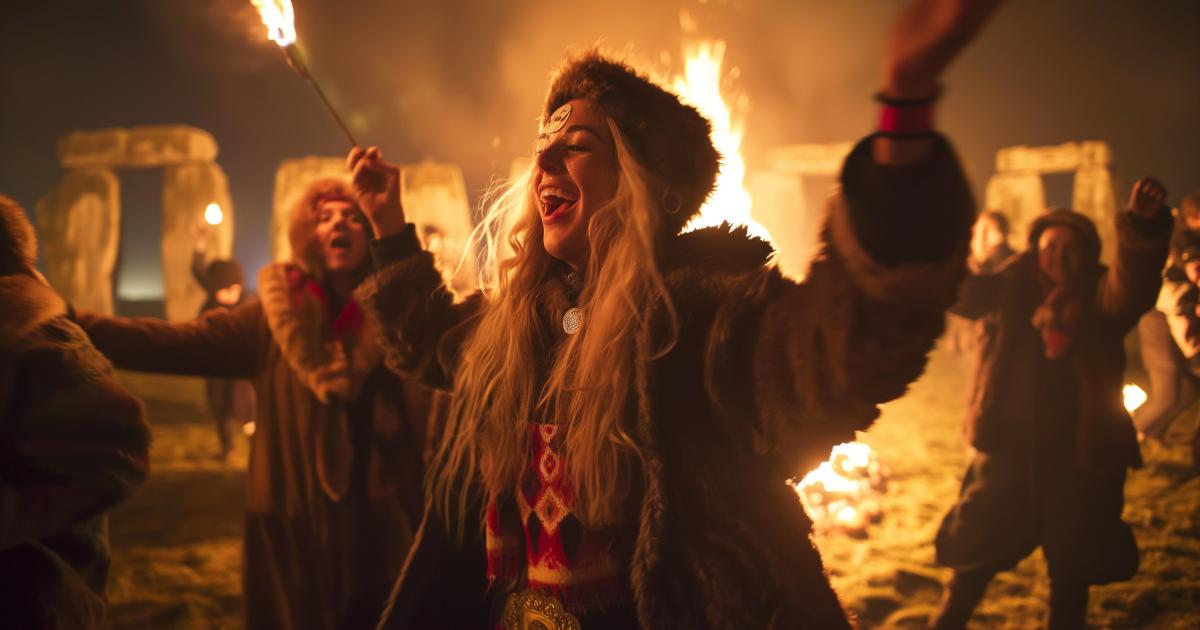
Top image: Britons partying at Stonehenge AI generated. Source: tiagozr/Adobe Stock
By Gary Manners
References
Cardiff University. 2025. The Age of Feasting: Late Bronze Age networks developed through massive food festivals. Available at: https://www.eurekalert.org/news-releases/1097498
Esposito, C., Madgwick, R., et al. 2025. Diverse feasting networks at the end of the Bronze Age in Britain (c. 900-500 BCE) evidenced by multi-isotope analysis. Available at: https://www.cell.com/iscience/fulltext/S2589-0042(25)01532-9
Sample, I. 2025. People gathered for great meat feasts at end of British Bronze Age, study shows. Available at: https://www.theguardian.com/science/2025/sep/10/people-gathered-for-great-meat-feasts-at-end-of-british-bronze-age-study-shows-animal-bones