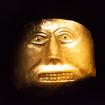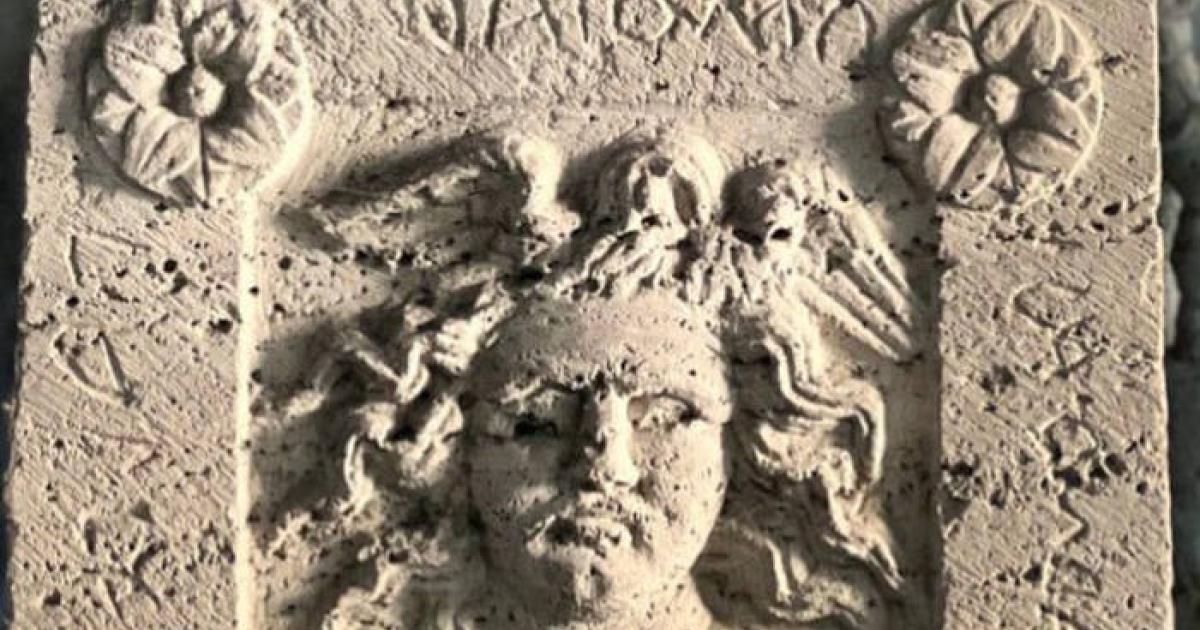

During routine conservation work at the ancient Palazzone Necropolis in Perugia, Italy, archaeologists have uncovered a remarkable travertine urn that challenges conventional understanding of Etruscan burial practices. The 2,300-year-old vessel, adorned with a striking relief of Medusa and intricate cursive Etruscan inscriptions, contained not human remains but three intact terracotta vessels, suggesting a symbolic burial or cenotaph.
The urn belonged to an individual identified as Arn of the Acsi family and dates to the 3rd century BC, during the early phase of the family hypogeum's construction. What makes this discovery particularly intriguing is the prominent Medusa relief carved in high relief on the main face, framed by cursive Etruscan script and decorated with stylized floral motifs and ritual disks called paterae - elements typically reserved for elite burials, explains Archaeology Magazine.
- The Cerveteri Necropolis, Etruscan City of the Dead
- Do not Underestimate the Etruscans: Art and Culture of their Own

The newly discovered Etruscan urn showing the detailed Medusa relief and Etruscan inscriptions
(Ipogeo dei Volumni e Necropoli del Palazzone)
Medusa as Protective Guardian
When archaeologists lifted the urn's lid, they discovered three intact terracotta vessels: a bicchiere (cup) and two brocchette (jugs) made from undecorated orange paste, arranged deliberately inside. The absence of human remains, despite a lead sheet found in the tomb mentioning the remains of Arn and possibly Lari Caprti, points to a symbolic burial performed when the body was lost or buried elsewhere, writes All That’s Interesting.
In Etruscan-Italic funerary iconography, Medusa functioned as an apotropaic symbol - a protective ward against evil forces intended to safeguard both the urn's contents and the tomb itself. "Medusa was not just decoration; she was an active presence in the tomb," explained Dr. Silvia Rossi, the site's Director of Conservation, describing the relief as "a tangible sign of the choices made to accompany the deceased into eternity."
- Rare Untouched Etruscan Tomb Unearthed by University Team
- Huge Etruscan Tomb Found Hidden in Plain Sight at San Giuliano

The three terracotta vessels found inside the urn instead of human remains. (Ipogeo dei Volumni e Necropoli del Palazzone)
Ritual Enigma at Palazzone
The Palazzone Necropolis, discovered in 1840, comprises approximately 200 chamber tombs dating from the Hellenistic period (3rd-1st centuries BC). This particular find occurred within the hypogeum of the Acsi family, part of the larger Etruscan burial complex that continues to reveal secrets about ancient Italian funeral customs.
The urn's sophisticated carving demonstrates the high level of Etruscan craftsmanship, while its unique contents raise questions about ritual practices that may have been more common than previously understood. The prominence of Medusa's image suggests this was more than mere decoration - it represents a deliberate choice to invoke the Gorgon's protective powers for the symbolic burial.
Future Research and Display
The urn has been transferred to the site's Antiquarium for detailed analysis, including materials and organic residue studies to determine what the terracotta vessels may have originally contained - whether ashes, libations, or other ritual offerings. These investigations could provide crucial insights into whether such symbolic burials were exceptional occurrences or part of broader Etruscan funerary traditions.
Dr. Rossi emphasized that the discovery reinforces how the Etruscans continue to surprise researchers:
"It is a reminder that the Etruscans still surprise us. The piece is remarkable not only for its carving, but for the ritual complexity it suggests."
Once analysis is complete, both the urn and its contents will be exhibited at the National Archaeological Museum of Umbria, offering the public a chance to contemplate this ancient mystery.
The discovery adds another layer to our understanding of Etruscan civilization and their sophisticated approaches to honoring the dead, whether through traditional burial or symbolic commemoration when physical remains were unavailable.
Top image: Etruscan urn with Medusa design and Etruscan inscription. Source: Ipogeo dei Volumni e Necropoli del Palazzone
By Gary Manners
References
All That's Interesting. 2025. Archaeologists In Italy Just Found An Ancient Etruscan Urn Emblazoned With The Face Of Medusa. Available at: https://allthatsinteresting.com/italy-palazzone-necropolis-medusa-urn
Archaeology Magazine. 2025. Etruscan Urn with Carved Medusa Head Puzzles Experts. Available at: https://archaeology.org/news/2025/09/05/etruscan-urn-with-carved-medusa-head-puzzles-experts/
La Brújula Verde. 2025. An urn with a Medusa relief found in the Palazzone Necropolis reveals an Etruscan ritual enigma. Available at: https://www.labrujulaverde.com/en/2025/09/an-urn-with-a-medusa-relief-found-in-the-palazzone-necropolis-reveals-an-etruscan-ritual-enigma/