
For over six centuries, historians have believed a compelling narrative about how the Black Death swept rapidly across Asia along the Silk Road before devastating Europe and the Middle East in the mid-14th century. Now, new research from the University of Exeter has revealed that this entire understanding stems from a fundamental misinterpretation of a single medieval Arabic literary tale - a rhyming story that was never meant to be taken as historical fact. The discovery challenges long-held assumptions about plague transmission and demonstrates how a creative work can shape scientific understanding for centuries.
The revelation centers on a text called a "maqāma" - an Arabic literary genre featuring traveling tricksters - written by the poet and historian Ibn al-Wardi in 1348-49 in Aleppo, according to the new research published in the Journal of Arabic and Islamic Studies. This entertaining tale personified plague as a roving deceiver who, over 15 years, decimated regions from China through India, Central Asia, and Persia before entering the Mediterranean. However, the text was later mistaken for a factual chronicle, leading generations of historians - both Arab and European - to interpret it as an eyewitness account of the pandemic's actual movement.
- The Black Death: the Plague that Sowed Terror and Death in Medieval Europe - Part 1
- Medieval Black Death Origin Traced to Central Asia
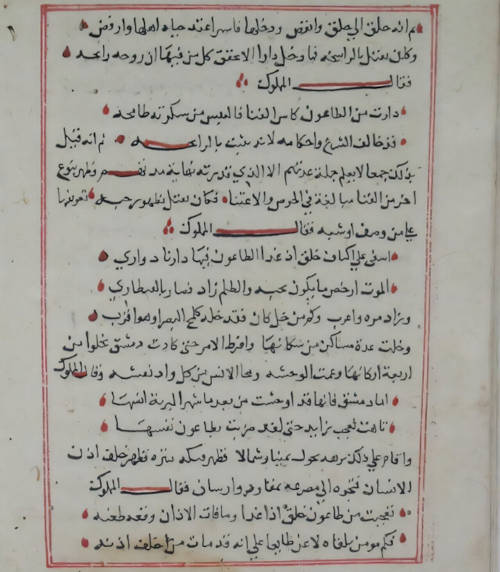
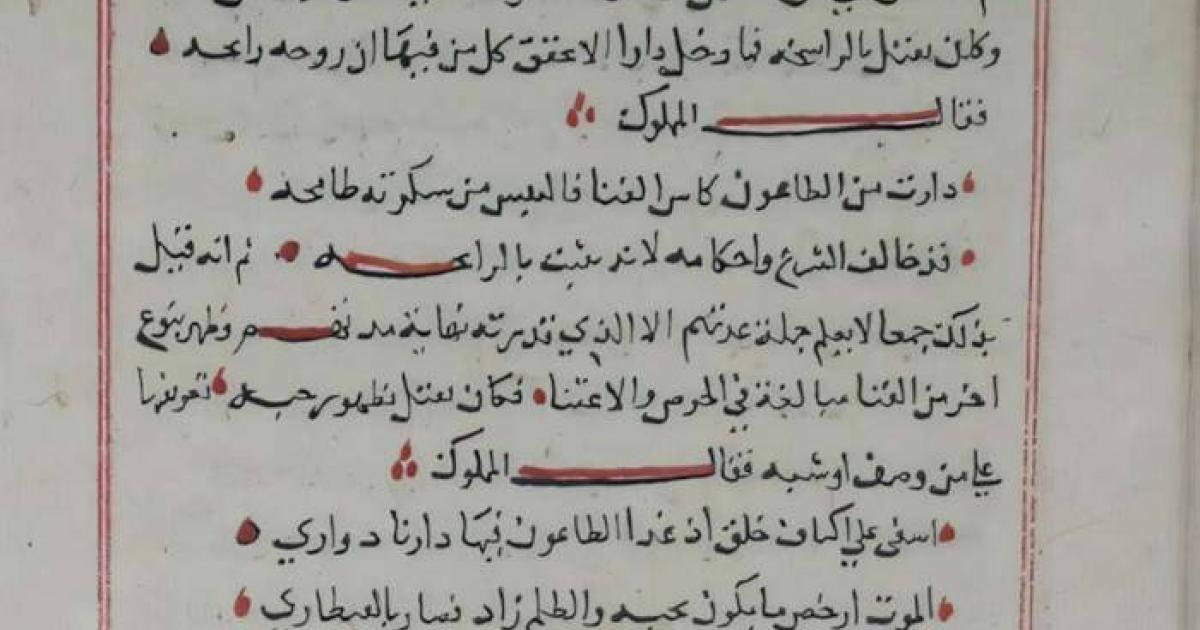
A page from Ibn Abi Hajala's (d. 1375) Dafʿ al-niqma bi-l-ṣalāh ʿalā nabī al-raḥma ("Repelling the Trial by Sending Blessings Upon the Prophet of Mercy"). This plague treatise contains four maqamas, three of which were composed in Syria during the 1348/9 Black Death outbreak. (MS Laleli 1361, Süleymaniye Library, Istanbul, personal photo/University of Exeter)
The Quick Transit Theory Unravels
The so-called "Quick Transit Theory" built upon Ibn al-Wardi's narrative suggested that the plague pathogen moved over 3,000 miles overland within just a few years, originating from Kyrgyzstan in the late 1330s and establishing itself sufficiently to cause the devastating pandemic of 1347-1350. This theory has influenced not only historical scholarship but even modern genetic studies. Some geneticists, drawing on this narrative, continue to assert that the pathogen Yersinia pestis was displaced from Central Asia only in the late 1330s, moving to the Black and Mediterranean seas in less than a decade.
- Culling the World: The Catastrophic Conquests of the Black Death
- 2,000-Year-Old Feces from the Silk Road Reveal Spread of Infectious Diseases
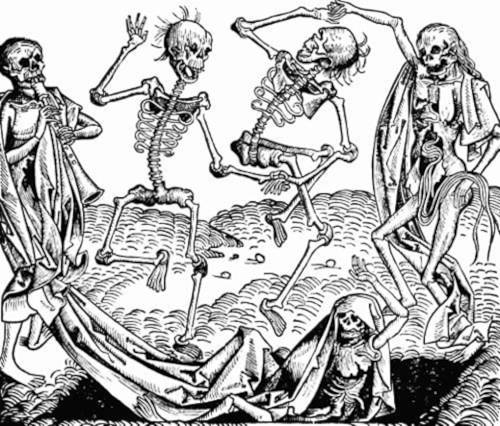
The Dance of Death (1493) by Michael Wolgemut, from the Nuremberg Chronicle of Hartmann Schedel. (Public Domain)
The study by Muhammed Omar, a PhD candidate in Arab and Islamic Studies, and Professor Nahyan Fancy, a historian of Islamic medicine, traces how this misinterpretation began with 15th-century Arab historians and subsequently influenced European scholarship. "All roads to the factually incorrect description of the spread of the plague lead back to this one text," Professor Fancy explained in the University of Exeter announcement. "It's like it is in the center of a spider's web of the myths about how the Black Death moved across the region."
Understanding Maqāma as Literary Art
The maqāma form, invented in the late 10th century, flourished particularly from the 12th century onward. Fourteenth-century Mamluk literati especially prized this writing style, and several plague-related maqāmas from 1348-49 survive in manuscript libraries worldwide. These texts were designed to be read aloud completely in one session, combining entertainment with philosophical reflection. Ibn al-Wardi's text was one of at least three maqāmas about plague composed during 1348-49, yet it became uniquely influential because he quoted selections in his historical writings, lending it an air of factual authority it was never intended to possess.
- Bizarre European Medieval Plague Cures
- Was Medieval Black Death Really That Bad? A New Pollen Study Says No!
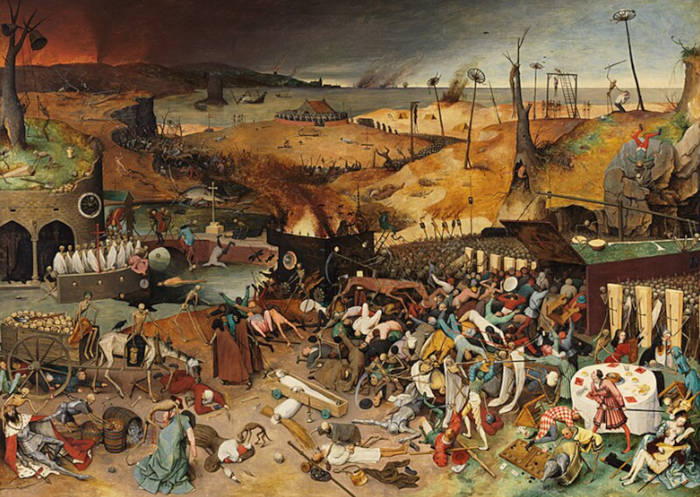
Medieval artwork depicting the devastating impact of the plague on European populations. (Pieter Bruegel the Elder/Public Domain)
"The entire trans-Asian movement of plague and its arrival in Egypt prior to Syria has always been and continues to be based upon Ibn al-Wardī's singular Risāla, which is unsubstantiated by other contemporary chronicles and even maqāmas," Professor Fancy noted.
"The text was written just to highlight the fact the plague travelled, and tricked people. It should not be taken literally."
This distinction is crucial - the story's literary purpose was to explore the plague's deceptive and unpredictable nature through allegory, not to provide a geographic timeline of disease transmission.
Ancient Origins 'Ancient Medicine' Magazine, avaialble from the Ancient Origins Store.
Unlocking New Historical Understanding
Rather than viewing this discovery as merely correcting an error, the researchers emphasize the positive implications for historical scholarship. By recognizing these texts as literary works rather than medical chronicles, historians gain freedom to examine earlier plague outbreaks with fresh perspectives. Events such as the 1258 outbreak in Damascus or the 1232-33 outbreak in Kaifeng can now be studied for their own significance, rather than being overshadowed by the presumed rapid transmission narrative.
The maqāmas also offer valuable insights into how medieval societies coped with catastrophic events. "These writings can help us understand how creativity may have been a way to exercise some control and served as a coping mechanism at this time of widespread death," Professor Fancy observed, drawing parallels to how people developed new culinary or artistic skills during the COVID-19 pandemic. "These maqāmas may not give us accurate information about how the Black Death spread. But the texts are phenomenal because they help us see how people at the time were living with this awful crisis."
The research underscores an important lesson about source criticism in historical scholarship. A single text, when misinterpreted across centuries, can fundamentally shape understanding of pivotal events. The Black Death killed between 75 and 200 million people from 1346 to 1353, making accurate understanding of its origins and spread essential not only for historical knowledge but also for modern epidemiology. By recognizing Ibn al-Wardi's work as the literary masterpiece it was meant to be, scholars can now pursue more nuanced investigations into plague transmission patterns, earlier outbreaks, and the genuine mechanisms by which this devastating pandemic reshaped medieval societies across three continents.
Top image: A page from Ibn Abi Hajala's (d. 1375) Dafʿ al-niqma bi-l-ṣalāh ʿalā nabī al-raḥma ("Repelling the Trial by Sending Blessings Upon the Prophet of Mercy"). This plague treatise contains four maqamas, three of which were composed in Syria during the 1348/9 Black Death outbreak. Source: MS Laleli 1361, Süleymaniye Library, Istanbul, personal photo/University of Exeter
By Gary Manners
References
Omar, M. and Fancy, N. 2025. Mamluk Maqāmas on the Black Death. Available at: https://journals.uio.no/JAIS/article/view/12790
University of Exeter. 2025. Myths about rapid spread of the Black Death influenced by single "literary tale", experts show. Available at: https://news.exeter.ac.uk/faculty-of-humanities-arts-and-social-sciences/myths-about-rapid-spread-of-the-black-death-influenced-by-single-literary-tale-experts-show/
World History Encyclopedia. 2020. Boccaccio on the Black Death: Text & Commentary. Available at: https://www.worldhistory.org/article/1537/boccaccio-on-the-black-death-text--commentary/