
In the 1970s, the remains of at least 37 individuals were discovered deep within a 15-meter (49-foot) shaft at Charterhouse Warren in Somerset, England. Recent analysis of over 3,000 bone fragments from this site has revealed a brutal and unsettling story of violence, butchery, and likely cannibalism in Early Bronze Age Britain, dating between 2500 and 1500 BC. These findings, published in the journal Antiquity, challenge the previously held notion that this period was relatively peaceful.
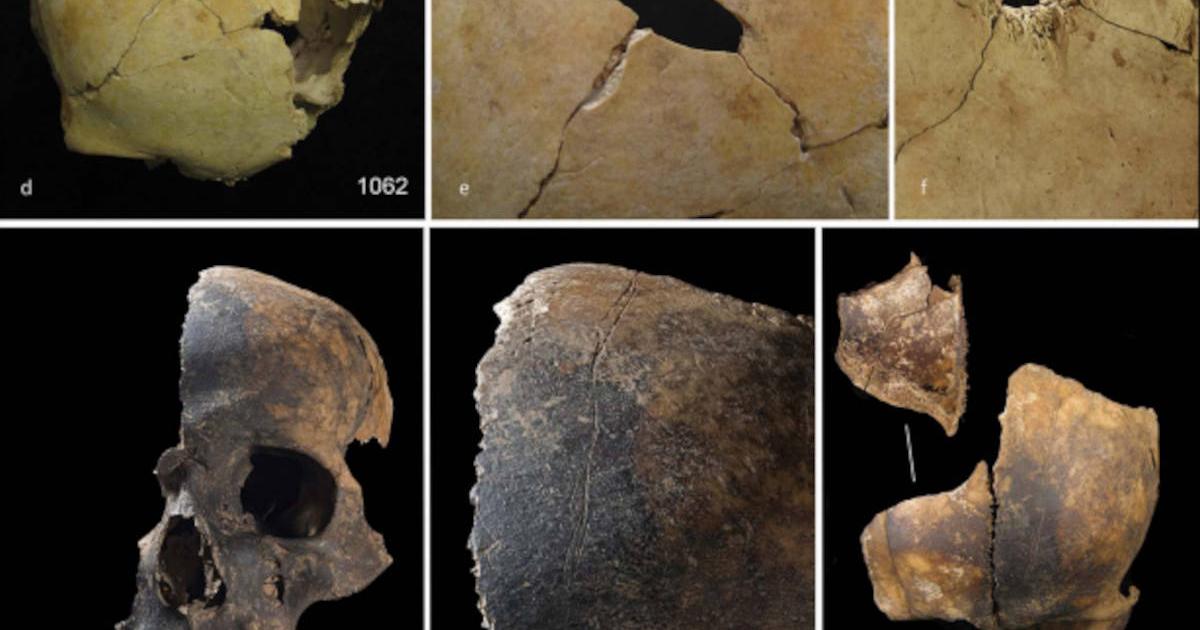
The assemblage includes men, women, and children, indicating that an entire community may have been wiped out. The bones bear signs of blunt force trauma to the skulls, suggesting these people were violently killed. More disturbingly, cut marks and fractures made around the time of death imply the victims were not only butchered but may have been partially consumed by their enemies. This represents the largest known instance of interpersonal violence in British prehistory.
- Mindless Vandals Churn Up Bronze Age Burial Site
- Near-Pristine Bronze Age Spear Dated Over 3,000 Years Found in Britain
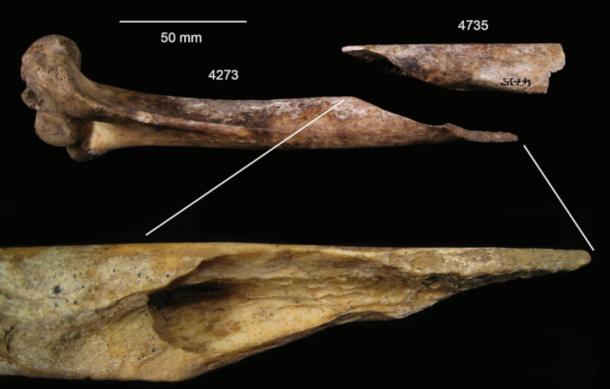
Cut marks found on the bones made around the time of death. (Schulting et Al./Antiquity Publications Ltd)
The Dehumanization of Enemies
Unlike the ritualistic cannibalism evidenced at Gough’s Cave in nearby Cheddar Gorge, where human remains were carefully processed as part of funerary practices, the Charterhouse Warren massacre appears to have a far darker purpose. The chaotic nature of the bone assemblage, with human remains mingled with animal bones, indicates that this butchery served to dehumanize the victims. By treating the dead as animals, the perpetrators likely sought to ‘other’ them, stripping away their humanity as a form of psychological and social warfare.
The researchers believe this act of violent ‘othering’ was not motivated by hunger. The presence of numerous cattle bones within the same deposit suggests the attackers had no need for human flesh as food. Instead, the butchery was probably a symbolic act of revenge, intended to humiliate and degrade the victims.
- 8 Ancient Cultures Practicing Cannibalism Through the Ages
- Ancient And Modern Cannibalism: A Question Of Taste
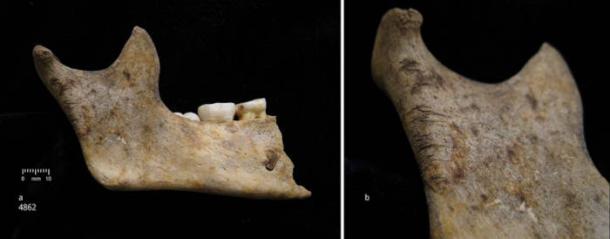
Right hemi-mandible of child aged about 10 years (a) with detail of cutmarks on the ascending ramus (b). (Schulting et Al./Antiquity Publications Ltd)
The Context of Violence in Bronze Age Britain
Lead author Professor Rick Schulting from the University of Oxford points out that the evidence of violence at Charterhouse Warren stands in stark contrast to the relatively limited examples of conflict from the Early Bronze Age.
“We actually find more evidence for injuries to skeletons dating to the Neolithic period in Britain than the Early Bronze Age, so Charterhouse Warren stands out as something very unusual,” he explains. “It paints a considerably darker picture of the period than many would have expected.”
The lack of defensive wounds among the remains suggests that the victims were caught off guard, possibly taken by surprise while going about their daily lives. This implies that the massacre was a premeditated attack, possibly in retaliation for a theft, insult, or other social transgression. The fact that entire families were killed points to a cycle of revenge that escalated into extreme violence.
Disease and Social Turmoil
Adding to the mystery, previous research identified traces of plague bacteria in the teeth of two children from the site. This unexpected discovery raises questions about the role of disease in the conflict. Could the spread of plague have contributed to tensions, leading to scapegoating or increased social stress?
However, researchers found no clear evidence of resource competition or ethnic conflict during this period. Instead, it seems social dynamics and personal grievances were the likely triggers. In a small, tightly-knit community, perceived offenses may have spiraled out of control, culminating in this shocking act of violence.
Professor Schulting reflects on the broader implications of these findings:
“Charterhouse Warren is one of those rare archaeological sites that challenges the way we think about the past. It is a stark reminder that people in prehistory could match more recent atrocities and shines a light on a dark side of human behavior. That it is unlikely to have been a one-off event makes it even more important that its story is told.”
A Dark Chapter of Prehistoric Britain
The discovery at Charterhouse Warren offers a chilling glimpse into the lives of Early Bronze Age Britons. It suggests that while this period may have seen relative stability overall, it was not immune to cycles of brutal violence and retribution. The deliberate dehumanization of the victims, through butchery and the mixing of their bones with animals, highlights a complex social world where tensions could erupt into extreme acts of cruelty.
Top image: Examples of skulls from the assemblage, with evidence for blunt force trauma and cut marks. Source: Schulting et Al./Antiquity Publications Ltd
By Gary Manners
References
Schulting RJ, Fernández-Crespo T, Ordoño J, et al. ‘The darker angels of our nature’: Early Bronze Age butchered human remains from Charterhouse Warren, Somerset, UK. Antiquity. Published online 2024:1-17. doi:10.15184/aqy.2024.180