
Revisiting the era of the castrati, one cannot help but be struck by the dichotomy of beauty and brutality. These singers, celebrated for their angelic voices, commanded the adoration of European audiences for centuries. Yet behind their ethereal performances lay a history as troubling as it is compelling, a testament to the lengths humanity has gone in the pursuit of artistic perfection.
- The Gory History of Barber Surgeons: Medieval Medicine Gone Mad
- Castrati: The Superstars of the Church and Opera in 16th Century Europe
The Necessity That Birthed a Phenomenon
In the crucible of 16th-century Italy, sacred music held an almost divine importance, yet societal norms forbade women from contributing their voices to church choirs. This curious collision of dogma and musical ambition gave rise to an unthinkable solution: the creation of castrati, young boys surgically altered to preserve their prepubescent vocal range. What began as a necessity soon became a tradition, enshrined within the musical culture of Europe.
For many impoverished families, offering a son for such a transformation seemed a gamble worth taking. Perhaps hope, desperate and naive- led parents to this decision. Who could blame them, standing at the edge of destitution, tempted by the shimmering promise of fame and fortune? Yet, how many of those hopes crumbled under the weight of regret as the cost of this “opportunity” became irrevocably clear?
- Were These Eunuchs in Ptolemaic-Roman Egypt? The Truth May Be in Their Bones
- Harmonies from Heaven: Tracing the Origins of the Gregorian Chant
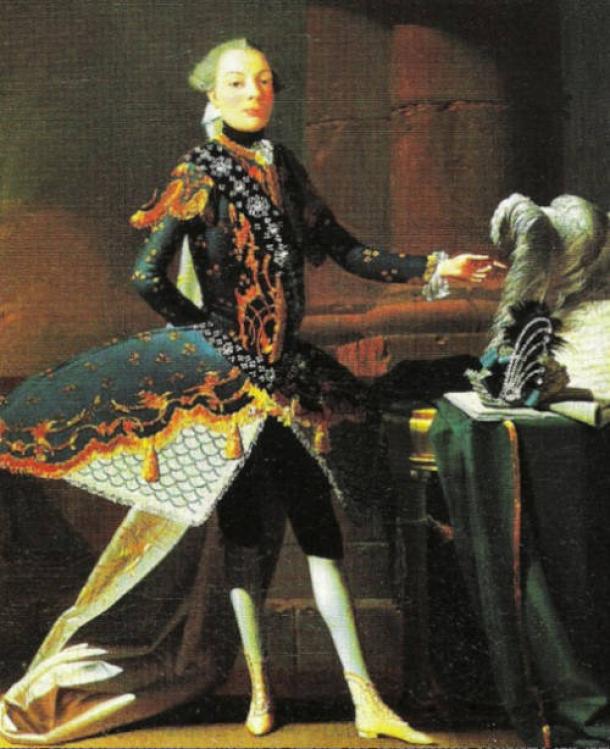
Portrait of Carlo Scalzi in costume for the role of Sirbace in Rosbale of Porpora. (Public Domain)
The Painful Path to Artistry
The process of creating a castrato was grim, a practice rooted in shadows, both literal and moral. The surgeries, often performed by barber surgeons, were rudimentary at best and perilous at worst. Anesthesia was a luxury unheard of; opium, cold water, or artery compression served as crude substitutes. The physical toll on these boys was immense. Many did not survive the crude and perilous surgeries. Those who did bore lifelong reminders of their ordeal: their bodies, shaped by hormonal imbalances, took on exaggerated forms that set them apart. In a strange paradox, society celebrated their artistry and ridiculed their appearance.
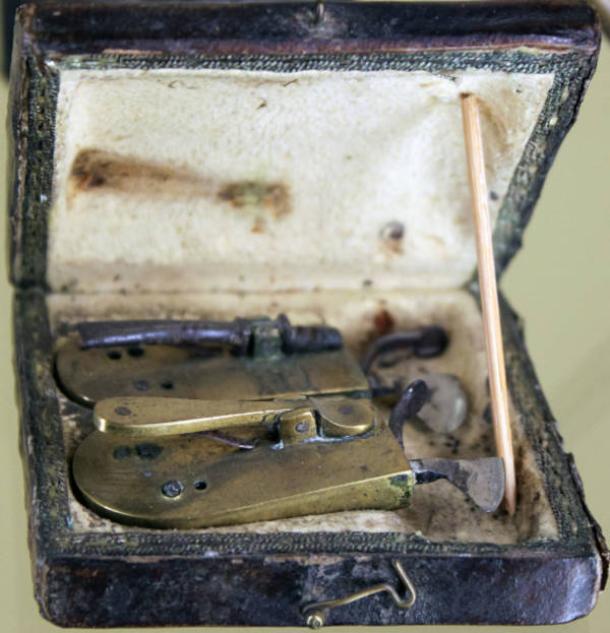
A barber surgeons’ tools, beginning of 19th century. (Anagoria/CC BY 3.0)
It is almost incomprehensible that children, some barely beyond infancy, were cast into a life demanding impossible feats of endurance and skill. Their survival and success were both improbable and miraculous, highlighting the severe moral compromises societies have historically embraced for art's sake.
Ascendance: From Choirs to Grandeur
Despite the grim beginnings, the castrati’s voices became indelible in Europe’s cultural fabric. When Pope Sixtus V approved their use in the Sistine Chapel Choir in 1599, it was more than mere acknowledgement; it was an endorsement of their necessity. Their voices, soaring, otherworldly, became synonymous with sacred music, filling cathedrals with haunting melodies that seemed to bridge the mortal and the divine.
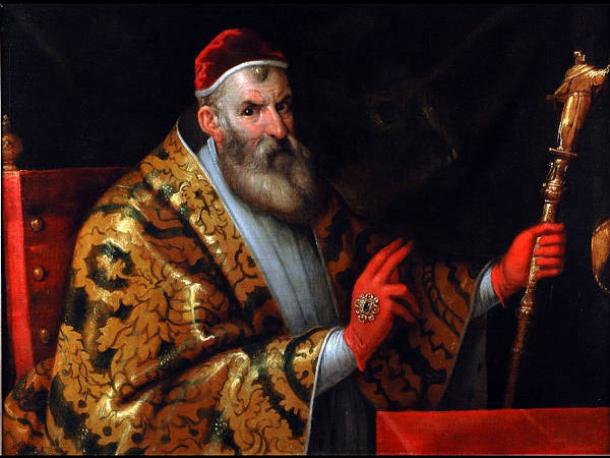
16th century portrait of Pope Sixtus V, painted by Filippo Bellini. (Public Domain).
By the Baroque era, the castrati had transcended their ecclesiastical origins. Composers such as Handel and Porpora composed arias tailored explicitly to their extraordinary vocal ranges. The grandeur of operatic stages provided a platform for the castrati to captivate audiences. These singers became icons of their era, their voices embodying technical brilliance and emotional depth. However, for every celebrated figure like Farinelli, countless others languished in obscurity, their names lost, and sacrifices forgotten.
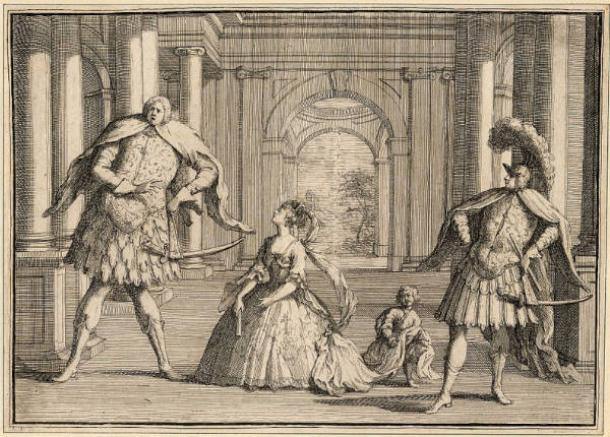
Caricature of a performance of Handel's Flavio, featuring Berenstadt on the far right, the soprano Francesca Cuzzoni in the centre and Senesino on the left. (Public Domain)
The Complex Legacy of Farinelli
Among the luminaries of this era, Carlo Broschi, immortalized as Farinelli shone the brightest. His voice, unparalleled clarity and emotive power moved audiences across Europe to tears. Yet, Farinelli's glittering career is a stark reminder of the hidden price paid by many others who shared his path but not his fame.
Here, the castrati's legacy becomes deeply human: a blend of brilliance and exploitation, triumph and tragedy. For every gilded aria, there is the memory of a child’s irrevocable sacrifice. Can we separate the art from the suffering that created it? Should we?
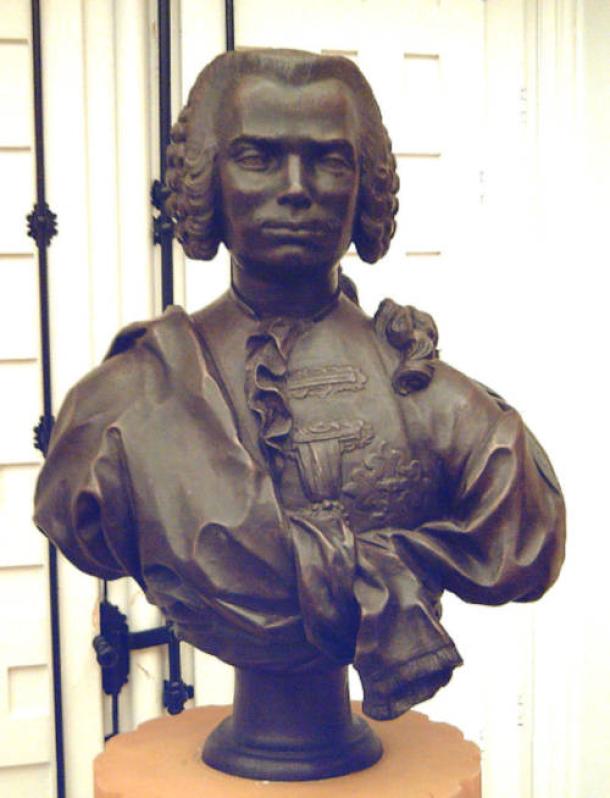
Bust of Carlo Broschi, Farinelli (1705–1782). (Luis García/CC BY-SA 3.0)
Societal Contradictions
The societal perception of castrati was anything but straightforward. Adored for their talent yet mocked for their appearance, they occupied a revered and ridiculed space. Enlightenment thinkers like Rousseau condemned the practice, deeming it barbaric, while satirists aimed at their peculiar physicality. Yet, paradoxically, Europe’s elites were captivated by their androgynous allure and artistic brilliance.
For noblewomen, the castrati represented ideal companions, entertaining yet non-threatening. This duality underscores a society grappling with its contradictions, its admiration for beauty at odds with its discomfort over how it was achieved.
Decline and Reflection
By the late 18th century, shifting musical tastes and evolving societal attitudes heralded the decline of the castrati. The rise of heroic tenors, whose powerful voices embodied a new archetype of masculinity, rendered the ethereal castrato obsolete. Legislation in 19th-century Italy banned the practice, and Pope Pius X’s 1903 decree ended their use in Vatican choirs. Alessandro Moreschi, the last castrato, retired in 1913, his haunting recordings a ghostly echo of a bygone era.
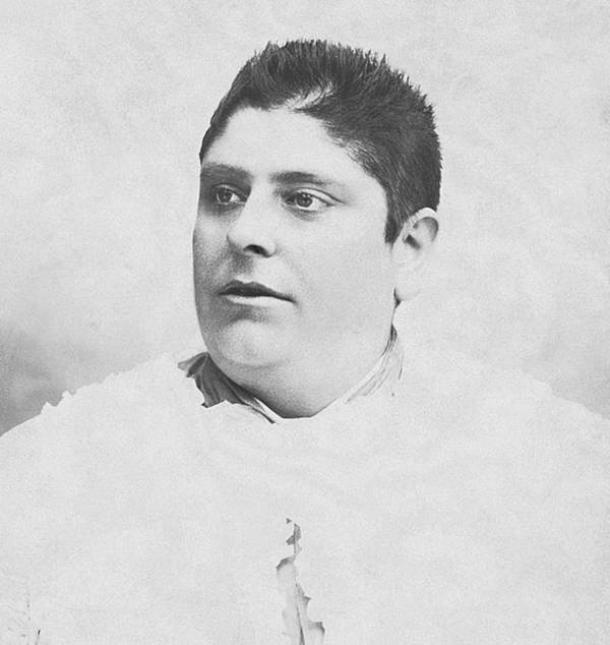
Alessandro Moreschi, the last of the Sistine castrati, circa 1875. (Public Domain)
A Cautionary Tale
Today, the story of the castrati invites uncomfortable reflection. How could a society justify such suffering for the sake of art? And are we so different, in our modern world, from those who condoned it? Consider the exploitation that persists in various industries today: children laboring in mines, workers enduring hazardous conditions, all in pursuit of goods and services we deem essential.
The castrati’s legacy, then, is more than just their music. It’s a mirror held up to our ethical boundaries, challenging us to weigh the cost of human achievement. Their voices, simultaneously beautiful and tragic, remind us of the fragile balance between creation and morality, a balance we must navigate with care.
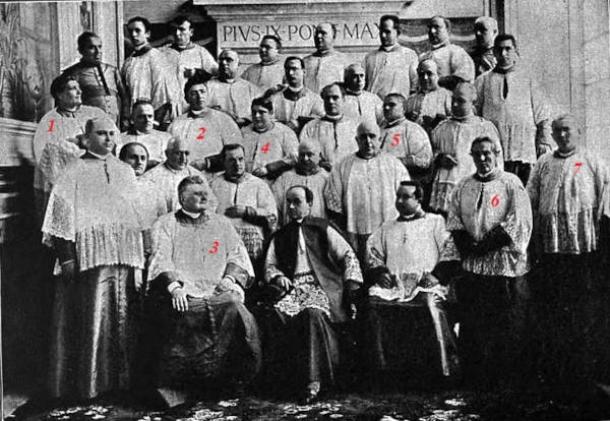
Sistine Chapel Choir in 1898, with seven castrato singers (including Alessandro Moreschi, #4). (Public Domain).
A Legacy Etched in Harmony and Sorrow
Listening to Moreschi’s recordings today feels like stepping into a realm where beauty and sorrow are inseparably intertwined. His haunting and fragile voice is a relic of a time when artistic brilliance demanded unimaginable sacrifices. These recordings evoke a poignant mix of admiration and unease, forcing us to confront the ethical complexities of human ambition.
The story of the castrati extends beyond mere historical fascination; it serves as a powerful reminder of the consequences of prioritizing art over humanity. As we reflect on their legacy, we are reminded of our collective responsibility to ensure that future achievements in any field do not come at the cost of such profound suffering. Their voices linger as testaments to artistic mastery and echoes of lives forever altered, a bittersweet legacy that urges us to tread carefully as we navigate the ever-shifting boundaries of creation and morality.
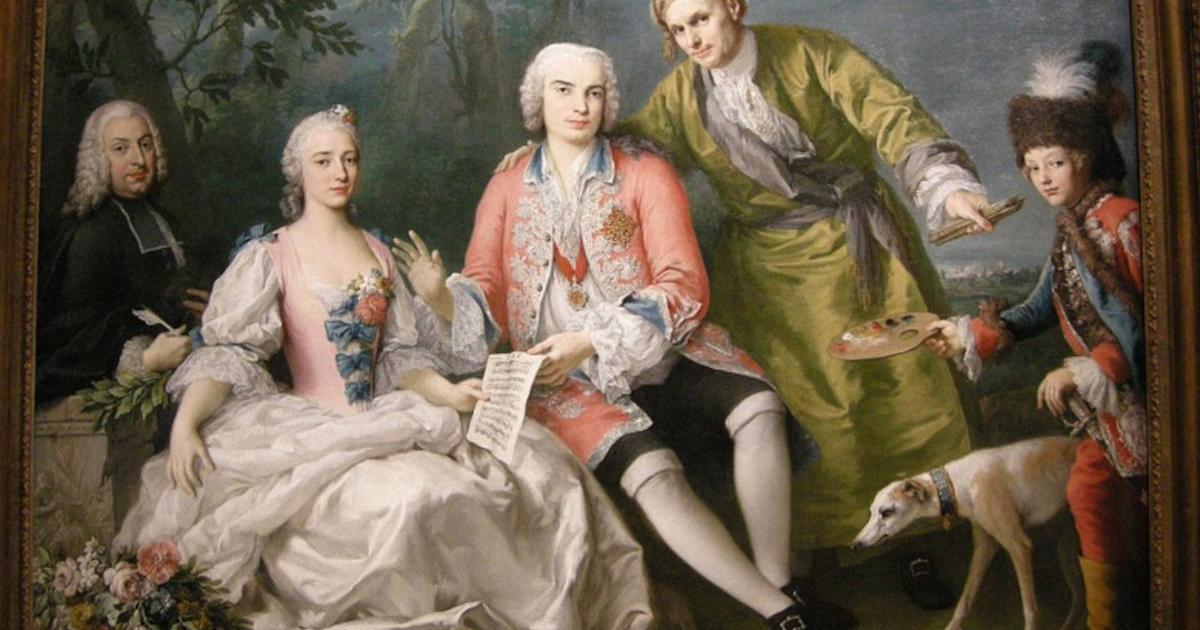
Top image: Portrait group: The singer Farinelli and friends. Source: I, Sailko/CC BY-SA 3.0
References
Barbier, P. 1996. The World of the Castrati: The History of an Extraordinary Operatic Phenomenon. Souvenir Press.
Blazeski, G. 2018. Alessandro Moreschi, one of the last castrato singers, was the only one who had his voice recorded. The Vintage News.
Blazeski, G. 2018. Castrati singers – Castrated in order to keep their voices at a higher pitch. The Vintage.
Davis, E. 2023.What was a castrato? And what did they sound like? Inside their sinister history... Classic FM.
Fisher, M. 2021. The Strange Beauty of the Castrati. Martini Fisher Blog.
Lyons, M. 2021. Pius X ends use of Castrati. History Today.
Pemberton, M. 2020. Castrati: Did the End Justify the Means? Historia.
Martini F. 2021. Echoes of the Castrati. Blog Post.