
- 7,000-Year-Old Chinchorro Mummies are the World's Oldest
- The Deadly Toxin Found in the World's Oldest Mummies
The Chinchorro people, who inhabited the coastal regions of what is now northern Chile and southern Peru beginning around 7000 BC, developed the earliest known artificial mummification techniques - predating ancient Egyptian practices by approximately 4,000 years. According to research by Bernardo Arriaza published in the Cambridge Archaeological Journal, these elaborate mortuary preparations were not merely practical preservation methods but rather sophisticated works of art that served a therapeutic function for grieving communities.
The study suggests that the Chinchorro mummification process originated as an emotional response to catastrophic infant mortality rates, potentially exacerbated by chronic arsenic poisoning from contaminated water sources. Archaeological evidence reveals that approximately 26 percent of Chinchorro individuals died in infancy, a devastating loss that may have driven the community to develop increasingly elaborate methods of preserving their deceased children.
"The elaborate post-mortem care of infants served as a means to assuage social grief and emotional distress, ultimately honoring and preserving the deceased," Arriaza writes in the study, as reported by Phys.org.
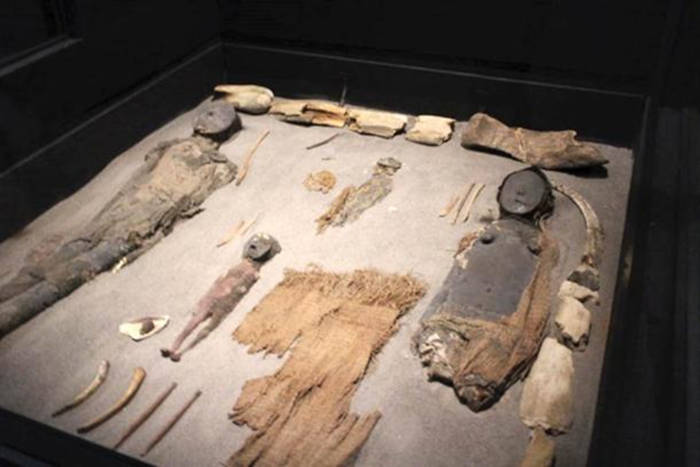
Chinchorro mummies at the Museum in San Miguel de Azapa, 12 km from Arica, Chile, showing some of the world's oldest preserved artificially mummified remains dating to approximately 5000-3000 BC. (Servicio Nacional del Patrimonio Cultural)
The Artistic Dimension of Ancient Grief
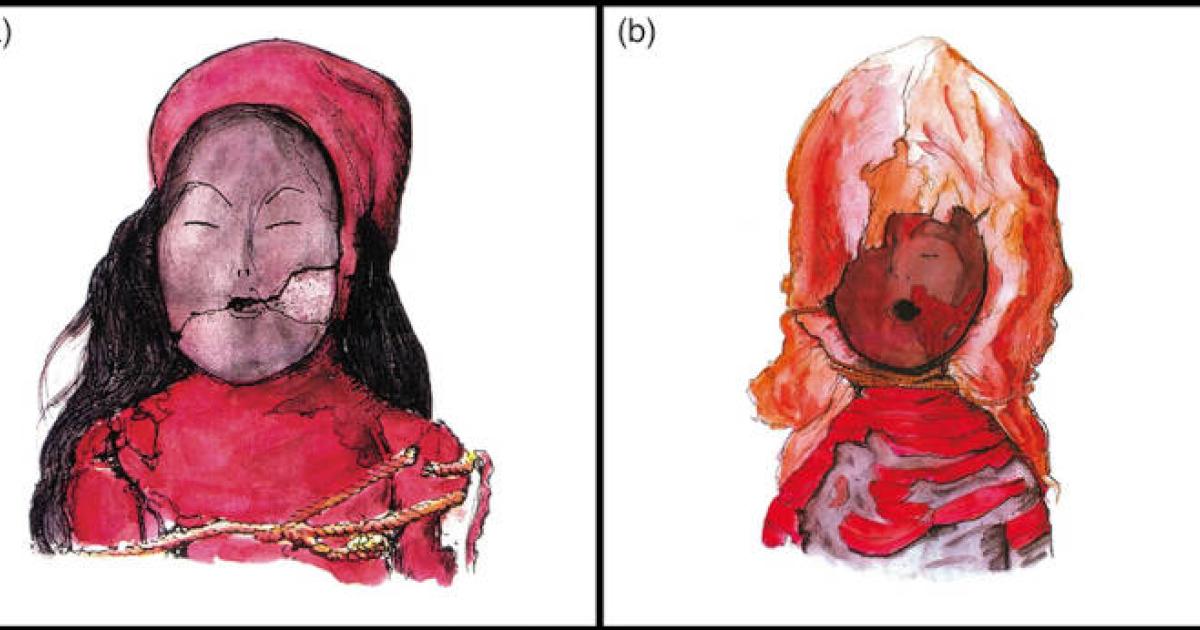
The Chinchorro developed three distinct mummification styles over their 3,500-year cultural period, each demonstrating remarkable artistic sophistication. The earliest "black mummies" featured an intricate internal structure of wooden sticks, reeds, and grey clay, covered externally with a uniform layer of black manganese paint. Around 4500 BC, the Chinchorro introduced "red mummies" - bodies stuffed and painted with vibrant red ochre, featuring elaborate wigs approximately 60 centimeters long and carefully modeled facial features including eyes, nose, mouth, and genitals for all ages and sexes.
- Ready for the Afterlife: The Mummification Process in Ancient Egypt
- The Cost of Grief: Professional Mourners of the Ancient World
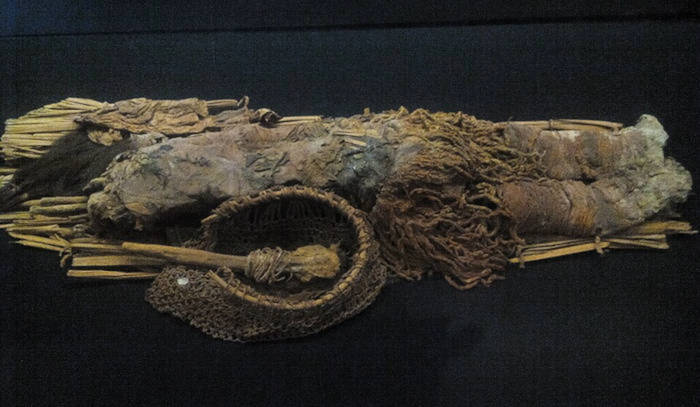
Red-style Chinchorro infant mummy from approximately 3000 BC. (WeHaKa/CC BY-SA 4.0)
These mortuary preparations required extensive community involvement and specialized knowledge. The Chinchorro collected naturally occurring minerals including iron oxides, manganese, and various clays from river terraces throughout the Atacama landscape. They harvested vegetation such as reeds and grasses to create wrapping materials and stuffing. Analysis of manganese contamination in Chinchorro remains reveals that both women and men participated actively in the mummification process. 83.8 percent of examined mummies show elevated manganese levels, indicating equal handling and associated health risks for both sexes.
The artistic choices made by Chinchorro morticians carried profound symbolic meaning. The primary color triad of black, red, and white - humanity's earliest produced colors - likely represented notions of death, life, and spiritual transformation. Black symbolized the transition to another existential stage, red represented vital life forces, and white signified purity or new phases of existence. "The colors of these mummies stand out vividly, like the phoenix rising from the barren desert," Arriaza notes in the research.
- Elaborate Funeral Rituals and Exhumation of the Dead in Toraja
- From India and Taiwan to Tibet, the Living Assist the Dead in their Death Rites
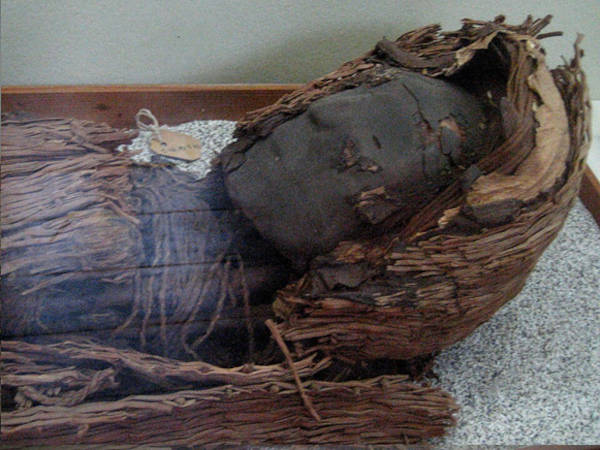
Detail of Chinchorro mummy head showing artistic facial modeling. (Pablo Trincado/CC BY 2.0)
Art Therapy and the Archaeology of Emotion
The revolutionary aspect of Arriaza's hypothesis lies in connecting ancient mortuary practices with modern understanding of grief counseling and art therapy. Contemporary research demonstrates that engaging in artistic creative expressions provides a non-verbal outlet for processing intense emotions experienced after losing a loved one. Through artistic activities, individuals can externalize emotional pain and find narrative meaning in their loss.
"Visual art provides a non-verbal outlet for processing intense emotions experienced after the loss of a loved one," the study explains.
The Chinchorro faced particularly acute emotional trauma due to environmental factors. The Camarones Valley, where artificial mummification first appeared around 7000 BC, contained water sources with arsenic levels reaching 1000 micrograms per liter, 100 times the recommended safety limit. This chronic arsenic exposure would have caused frequent miscarriages, stillbirths, and high infant mortality, creating immense suffering for parents. In response, Chinchorro communities may have channeled their grief into elaborate creative acts, transforming deceased infants with earth, sticks, paint, and wigs - essentially keeping them present in their transformed state.
The mummification process itself became increasingly elaborate over generations. What began as relatively simple preservation evolved into highly artistic presentations featuring decorated reed mats, intricate facial modeling, elaborate wigs, and vibrant body painting. Some mummies even featured geometric designs in white and green pigments on their faces. This progression suggests that the therapeutic aspects of the artistic process became culturally embedded, passed down through generations as a vital coping mechanism for collective grief.
Social Complexity and Gender Roles
Arriaza proposes a tentative hypothesis regarding gender roles in Chinchorro mummification. During the classic black mummy period (approximately 6000-4750 BC), women may have taken leading roles as morticians, reflecting the deep emotional bonds between mothers and their deceased infants. The earliest prepared bodies belonged to newborns and fetuses, suggesting women's empowerment and active participation in community spiritual practices. During the later red mummy period (4500-4000 BC), men may have assumed greater responsibility, emphasizing visibility and territorial display through bright colors as population density increased and competition for resources intensified.
This division of labor challenges traditional assumptions about hunter-gatherer societies, revealing sophisticated social organization and gender cooperation. The Chinchorro maintained permanent coastal settlements, developed extensive maritime knowledge, and created burial grounds that connected them to ancestors and territory. Their extraordinary care for the deceased - applied equally across all ages, sexes, and social positions - suggests a matrilineal organization where women held significant cultural authority.
The artistic legacy of the Chinchorro demonstrates that early maritime hunter-gatherers possessed complex worldviews extending far beyond subsistence concerns. Their mummies exemplify the Oxford Dictionary's definition of art: "the expression or application of human creative skill and imagination, producing works to be appreciated primarily for their beauty or emotional power." By examining these 7,000-year-old artifacts through the lens of art therapy and emotional archaeology, researchers gain unprecedented insight into humanity's ancient struggle with loss, grief, and the universal need for healing through creative expression.
Top image: Watercolors of red (left) and bandage (right) style Chinchorro child mummies. Source: Cambridge Archaeological Journal
By Gary Manners
References
Arriaza, B. 2025. The Artistic Nature of the Chinchorro Mummies and the Archaeology of Grief. Cambridge Archaeological Journal. Available at: https://www.cambridge.org/core/journals/cambridge-archaeological-journal/article/artistic-nature-of-the-chinchorro-mummies-and-the-archaeology-of-grief/E47F035D0F550826EC9D873B71ABE85E
Phys.org. 2025. Chinchorro mummification may have originated as a form of art therapy, study suggests. Available at: https://phys.org/news/2025-12-chinchorro-mummification-art-therapy.html