
During a remarkably warm period 400,000 years ago, early humans living near what is now Rome regularly butchered massive straight-tusked elephants, using both their meat and bones as vital resources for survival. Researchers have uncovered compelling evidence at the Casal Lumbroso archaeological site in northwest Rome showing that ancient hominins not only consumed elephant flesh but also ingeniously transformed the enormous bones into tools, according to a study published in PLOS One.
The discovery provides a fascinating window into the Middle Pleistocene world when temperatures were notably warmer than today. Lead researcher Beniamino Mecozzi from Sapienza University of Rome and his team examined over 300 skeletal fragments belonging to a single straight-tusked elephant (Palaeoloxodon antiquus) alongside more than 500 stone tools discovered at the site. These enormous prehistoric elephants stood taller than modern African elephants and would have provided an extraordinary windfall of resources for ancient human groups.
- Stone, Water, and Elephants: Survival Secrets of Early Humans
- Neanderthals Hunted Elephants Twice the Weight of Modern Ones
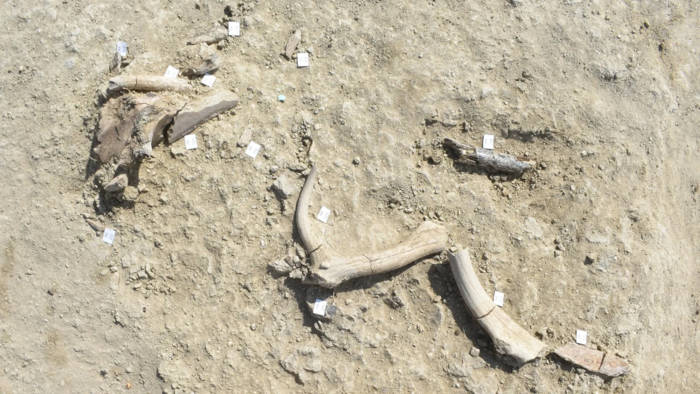
Excavation of elephant bones at Casal Lumbroso. (Beniamino Mecozzi/PLoS ONE)
A Sophisticated Butchering Operation
The elephant remains tell a story of deliberate and systematic processing. Many bones showed fresh fractures caused by blunt impacts soon after the animal's death, indicating intentional breakage to access nutrient-rich marrow. What makes this discovery particularly intriguing is the absence of visible cut marks on most bones, suggesting that smaller tools were used to carefully process soft tissue without leaving obvious traces on the massive skeletal elements. According to a PLoS ONE news release this pattern reflects the challenges of working with such enormous animals.
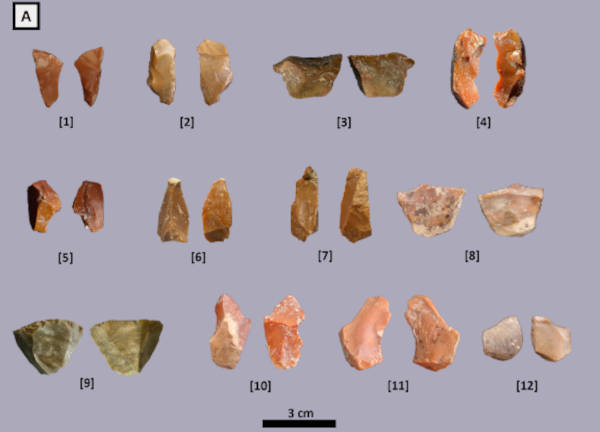
Various small Lithic tools from Casal Lumbroso. (PLoS ONE)
The stone tools discovered at Casal Lumbroso were predominantly small, measuring under 30 millimeters. Researchers believe this reflects a scarcity of large stones in the immediate area. However, ancient humans demonstrated remarkable ingenuity by transforming the elephant's own bones into larger implements. Several elephant bone fragments showed evidence of deliberate flake removals and use-wear traces, proving they had been fashioned into functional tools. This adaptive behavior showcases the resourcefulness of these ancient populations when faced with material limitations.
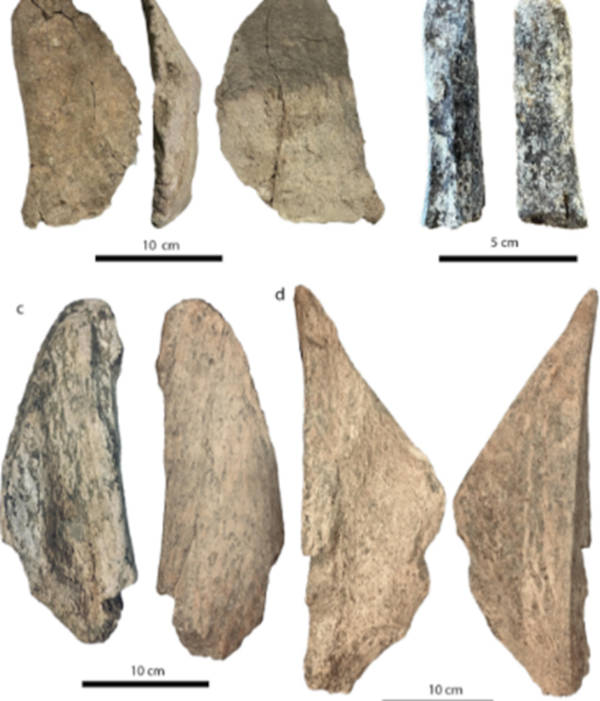
Selection of bone tools from Casal Lumbroso. (PLoS ONE)
Rome's Remarkable Prehistoric Past
The Casal Lumbroso site joins other significant discoveries in northwest Rome, including the renowned archaeological locations of Castel di Guido and La Polledrara di Cecanibbio, where similar evidence of elephant exploitation has been documented. This concentration of sites establishes the region around Rome as one of Europe's most important areas for understanding how early humans interacted with megafauna during the Middle Pleistocene.
Geological analysis using volcanic ash layers found at the site allowed researchers to precisely date the remains to approximately 404,000 years ago. This period corresponds to Marine Isotope Stage 11c, acknowledged as one of the longest and warmest interglacial periods of the past 800,000 years. The environment around ancient Rome during this time featured wooded landscapes with humid climatic conditions – a lush setting that supported diverse ecosystems including not only elephants but also rhinoceroses, red deer, fallow deer, wolves, and numerous other species whose remains were also recovered from the site.
Patterns of Prehistoric Survival
The relatively rapid burial of the elephant carcass, as evidenced by minimal carnivore damage and the tight concentration of remains, suggests that early humans efficiently processed the animal before scavengers could access it. The researchers noted that:
"400,000 years ago in the area of Rome, human groups were able to exploit an extraordinary resource like the elephant – not only for food, but also by transforming its bones into tools."
This multi-faceted use of elephant carcasses appears to represent a recurring behavioral pattern among ancient hominins during mild climate periods of the Middle Pleistocene across central Italy.
The ability to exploit such massive animals required not just physical capability but also social coordination and technological knowledge. A single straight-tusked elephant could have provided several tons of meat, fat, and marrow – enough to feed a substantial group for an extended period. The systematic fracturing of bones to extract marrow and the fashioning of bone tools demonstrate sophisticated understanding of material properties and resource maximization. This evidence challenges simplistic views of early human capabilities and reveals populations with complex subsistence strategies adapted to their environments.
The Casal Lumbroso discovery adds crucial data to our understanding of how prehistoric humans survived and thrived during dramatic climatic fluctuations. As Mecozzi and colleagues concluded:
"Reconstructing these events means bringing to life ancient and vanished scenarios, revealing a world where humans, animals, and ecosystems interacted in ways that still surprise and fascinate us today."
The site continues to offer insights into the daily lives, challenges, and remarkable adaptability of our ancient ancestors who walked the landscapes of Italy four hundred millennia ago.
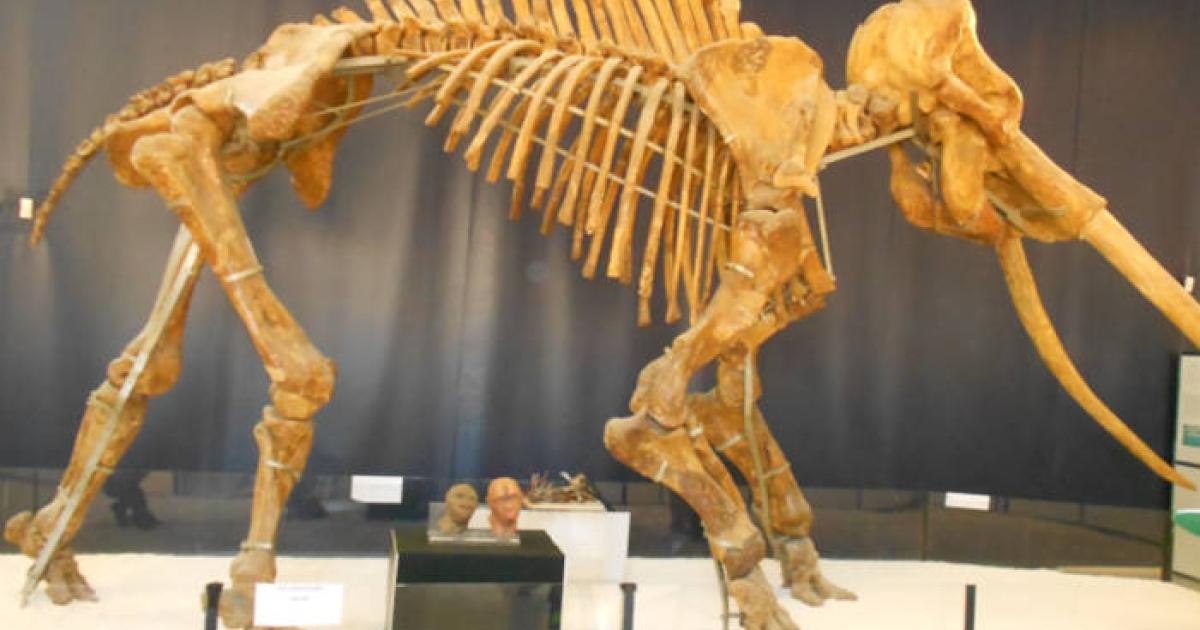
Top image: Straight-tusked elephant (Palaeoloxodon antiquus) skeleton display. Source: Diagram Lajard/CC0
By Gary Manners
References
Mecozzi, B. et al. 2025. From meat to raw material: the Middle Pleistocene elephant butchery site of Casal Lumbroso (Rome, central Italy). PLOS One. Available at: https://journals.plos.org/plosone/article?id=10.1371/journal.pone.0328840
ScienceDaily. 2025. Ancient humans in Italy butchered elephants and made tools from their bones. Available at: https://www.sciencedaily.com/releases/2025/10/251012054612.htm

![The Great Pyramid Of Giza Top image: The Great Pyramid of Giza under a starlit sky, highlighting the North Face. Source: [Pixabay/Creative Commons] Image](https://www.ancient-origins.net/sites/default/files/styles/article_featured_big/public/field/image/Great Pyramid Of Giza_0.jpg?itok=yavsyDqT)