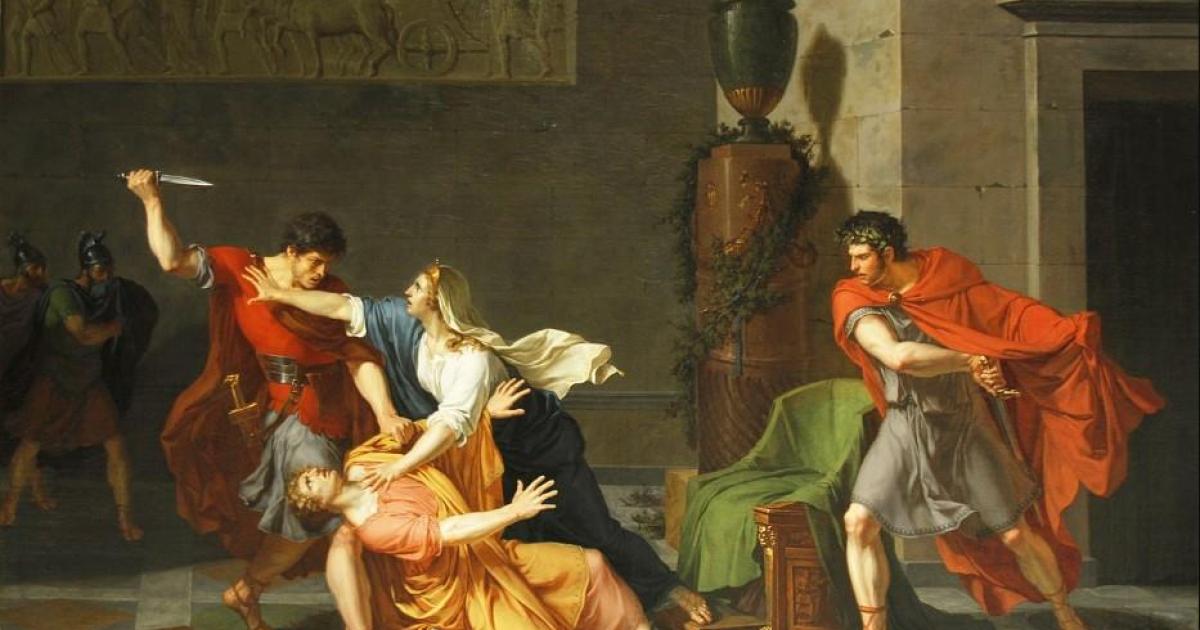

The reigns of Rome’s emperors were not always bountiful, long, or unopposed. In fact, in many cases, they were turbulent and chaotic, to say the least. This was especially true in cases when a long-reigning emperor was suddenly gone, or when the throne had to be shared amongst “co-emperors”. And, when faced with all that power, wealth, and influence, powerful men seldom wanted to share it all. This was the case with the co-emperors, brothers Geta and Caracalla. Upon the death of their father, Septimius Severus, who intended them to share the throne, they at once quarreled and clearly showed to all the complexities of imperial rule when succession was not clearly outlined. And so, the short life and reign of Emperor Geta were troubled by the discord in his family, and the deadly rivalry with his own brother.
- Who were Caracalla and Geta, the Unhinged Roman Brother Emperors Depicted in Gladiator II?
- Emperor Caracalla: Was He as Bad as Everyone Says?
Who Wants to be an Emperor?
Emperor Septimius Severus reigned for 18 years, having risen to power in a traditional way and defeated several of his contenders for the Imperial seat. He consolidated his rule, executed many of his opponents in the senate, and placed his own men in positions of power. With that, he was able to maintain his position for longer than most emperors in the troubled period known as the “Year of Five Emperors”. Severus had two sons - Caracalla, born in 188 AD, and Geta, born one year later. From the get-go, Severus intended for his sons to rule as co-emperors, and tried not to foster rivalry and animosity between them. He sought to cement the dynasty’s future by promoting unity between his sons, eventually appointing them as joint heirs. However, the brothers had no love to share for one another, and the tensions between them only grew during childhood.
- Emperor Caracalla: Was He as Bad as Everyone Says?
- Triumphs and Turmoil: Unraveling the Legacy of the Severan Dynasty
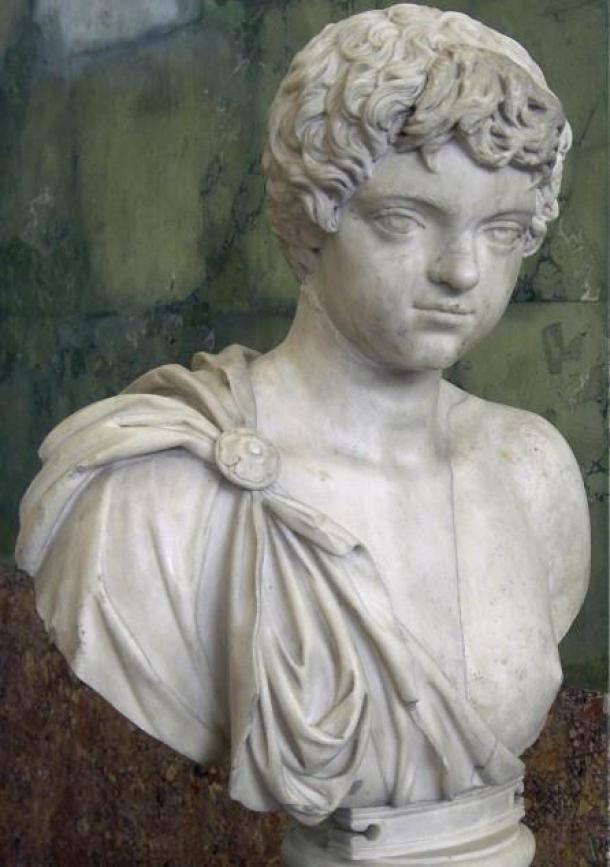
Portrait of Caracalla in his youth. Hermitage , Jupiter Hall. (St. Petersburg, Russia). (I, George Shuklin/CC BY-SA 3.0)
And even though the brothers were growing up as clear rivals, the public failed to see this aspect of them. Emperor Severus worked hard to portray his family as a harmonious unit, as this image was very important to ensure the loyalty of the troops and the people of the provinces. But beneath this facade was a bitter rivalry between two brothers who were not eager to share power. In this way, the “seeds of discord” were planted early on in their lives, and spelled trouble for the future.
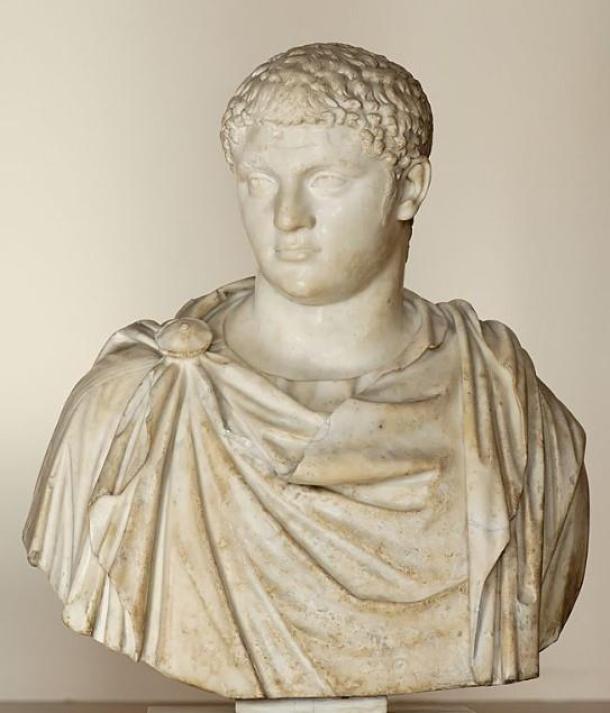
Emperor Septimius Geta. Marble, Roman artwork, ca. 208 AD. (Public Domain)
And trouble truly did come with the unexpected death of Septimius Severus in February 211 AD. Having fallen ill, he spoke to his sons on his deathbed, allegedly saying: “"Be harmonious, enrich the soldiers, scorn all others". As was outlined during his life, the two brothers were co-heirs, and now, with his death, co-emperors. Severus hoped that his sons would govern the realm as he did, but with joint efforts. Alas, his death only let loose the bitterness they kept for so long, and now a major power struggle ensued.
Brothers United by Hate
Soon after the death of their father, who died in Britain, at Eboracum (modern York), the brothers traveled back to Rome in the company of their mother, Julia Domna. Their mother was also their chief advisor, in the same way she was to her husband Severus. She managed to maintain her political influence over her sons and was the only thing keeping Caracalla and Geta from completely falling out. But even so, they hated each other. The brothers always kept away from each other, never shared meals and spaces, and kept their own retinues and servants. The empire was effectively divided, with Caracalla and Geta establishing separate courts in the same palace, and even separated public spaces. Soon, their hostility extended to administrative decisions, with each seeking to undermine the other’s authority.
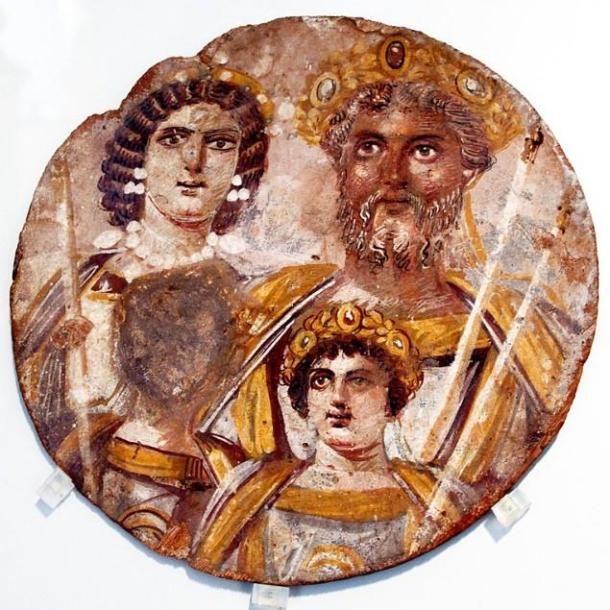
The Severan Tondo depicting Septimus Severus, his wife Julia Donna, their younger son Caracalla, and the obliterated image of his murdered co-heir Geta. Carcalla erased his brother’s image from portraits and inscriptions. (© José Luiz Bernardes Ribeiro/CC BY-SA 4.0)
Both men were in great fear of assassination. As weeks turned to months, they only met in the presence of their mother, and that in the presence of a strong armed guard. This, of course, prevented them from ruling the realm at all, but the stability was ensured through the mediation of their mother. By the end of 211 AD, the very same year their father died, the brothers were reaching a boiling point.
Just a few months after Severus died in Britain, the rivalry between his sons reached a tragic climax. On December 26th, 211 AD, Caracalla was decisive in his desire to kill his brother. He orchestrated a meeting with him, in the presence of their mother, under the pretense of final reconciliation. Geta accepted the call, never suspecting that it was, in fact, an ambush. As the meeting was in the quarters of their mother, Geta appeared without a guard. Caracalla promptly had him murdered by centurions, and all the while Geta was in the arms of his mother. It was a brutal end to the bitter rivalry between the brothers.
Emperor Geta, the Betrayed
And so ended the very brief and very uneventful reign of Emperor Geta of the Severan dynasty. Caracalla, his murderer, went on to reign as sole emperor until 217 AD, when he was stabbed to death by a disaffected soldier.
In many ways, the life and brief reign of Geta were dominated by the rivalry with his brother, and their somewhat childish avoidance of one another. Due to this bitter enmity, they never really reigned at all until Geta’s assassination. Ultimately, Geta’s story is a clear example of how the thirst for power can drive apart entire families, and lead brothers into battle against each other.. His ultimate fate is a reminder that even the mightiest empires can be profoundly shaped by personal relationships and individual choices.
Top image: Emperor Geta Dying in his Mother's Arms, Jacques-Augustin-Catherine Pajou. Source: Public Domain
References
Bartolini, M. 2023. Roman Emperors: A Guide to the Men Who Ruled the Empire. Pen and Sword History.
Kerrigan, M. 2016. The Untold History of the Roman Emperors. Cavendish Square Publishing, LLC.
Trafford, L. J. 2024. Ancient Rome's Worst Emperors. Pen and Sword History.