

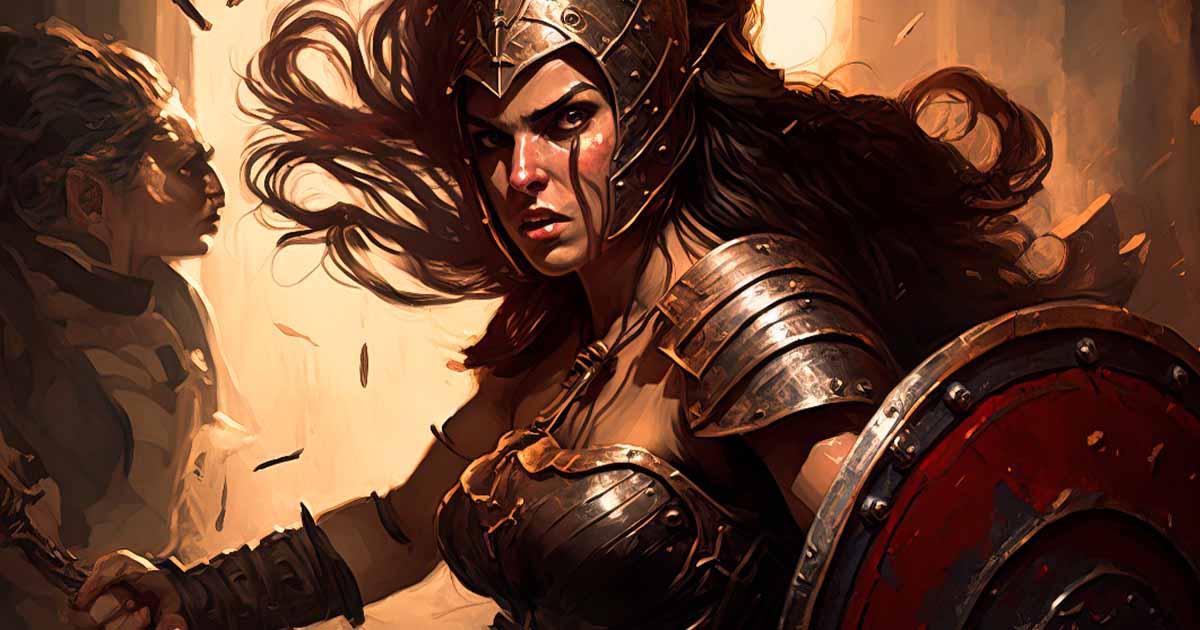

The Colosseum in ancient Rome was a symbol of strength, courage, and honor. For nearly three decades, gladiatorial combat had been the ultimate expression of Roman values, where men battled each other to the death for the entertainment of the masses. But in 107 AD, a controversial twist on this brutal sport emerged. Female gladiators, or gladiatrix, stepped into the arena, representing an inversion of the masculine energy that gladiators embodied.
Emperor Trajan, known for his successes as a tough general and for expanding Rome's empire, saw the fighting women as an opportunity to bring new and exotic spectacle to the people of Rome. Among these gladiatrix was Mevia, a free citizen of Rome, who willingly took the gladiator's oath, committing herself to the life of a gladiator and to the possibility of dying on the sands of the Colosseum. Despite the social anxiety and worry about the dilution of Roman virtues, Mevia's victory resonated far beyond the Colosseum's walls and raises questions about the role of women in ancient Roman society.
- Gladiators: Ancient Romans Loved Their Deadly Games
- Gladiatrix: Female Fighters Offered Lewd Entertainment in Ancient Rome
Top image: Gladiatrix. Source: Julien / Adobe Stock.






















History
Permalink
Just proof that feminism happens before/as the decline of civilizations
Move along nothing to see here
As far as dubious narratives
Permalink
As far as dubious narratives about Rome go, this one might be the big ‘shark jump’.