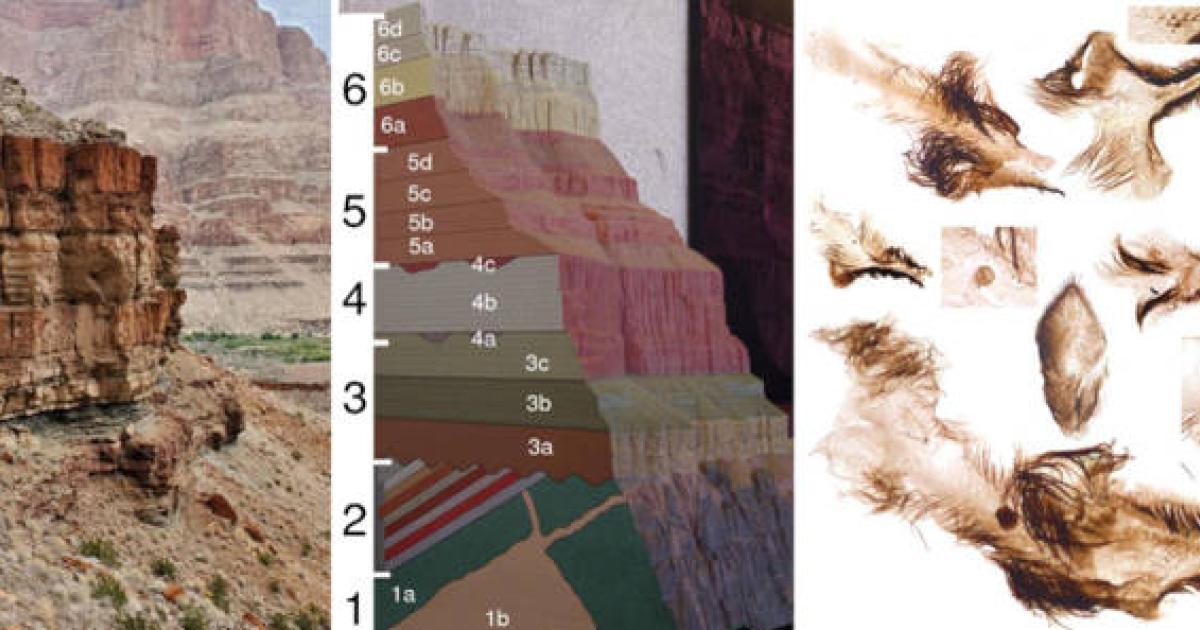

Researchers from the University of Cambridge have made an extraordinary discovery in one of the world's most iconic natural landmarks: the Grand Canyon has yielded a treasure trove of exceptionally preserved early animals from more than half a billion years ago. This groundbreaking find represents the first discovery of soft-bodied Cambrian fossils in the Grand Canyon and provides unprecedented insight into what researchers describe as an evolutionary "Goldilocks zone" that accelerated the development of complex life on Earth.
The fossil assemblage, dating from between 507 and 502 million years ago during the remarkable period known as the Cambrian explosion, includes tiny rock-scraping mollusks, filter-feeding crustaceans, spiky-toothed worms, and even fragments of their ancient meals. Published in the journal Science Advances, this discovery fundamentally changes our understanding of how environmental conditions shaped early animal evolution.
The research reveals that during the Cambrian period, the Grand Canyon region provided optimal conditions - neither too deep nor too shallow - that created a perfect balance for evolutionary experimentation and innovation among ancient marine creatures.
- The 500-Million-Year-Old Evolutionary Arms Race That Shaped Vision
- This Scorpion Was Among the First Lifeforms to Walk on Land
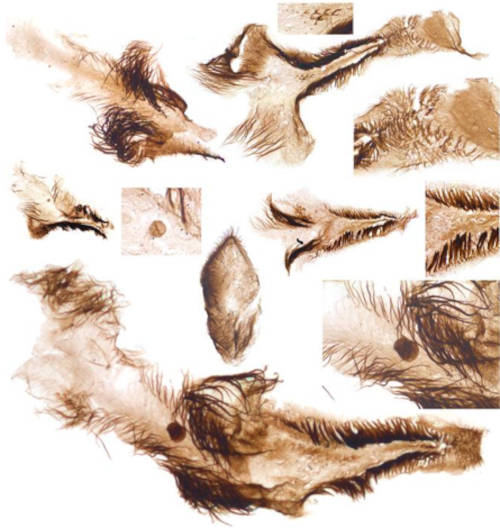
The rich fossil discovery – the first such find in the Grand Canyon – includes tiny rock-scraping molluscs, filter-feeding crustaceans, spiky-toothed worms, and even fragments of the food they likely ate. (Mussini et al./ Science Advances)

Are you related to a Cabbage? Find out in this exclusive webinar with Dr Ian McKay, from the Ancient Origins Store.
Unlocking Evolution Through Modern Technology
Lead researcher Giovanni Mussini, a PhD student in Cambridge's Department of Earth Sciences, spearheaded the 2023 expedition along the Colorado River that carved the Grand Canyon between five and six million years ago. The team's innovative approach involved dissolving fist-sized rock samples in hydrofluoric acid solution and passing the sediment through multiple sieves to release thousands of tiny fossils within.
"These rare fossils give us a fuller picture of what life was like during the Cambrian period," explained Mussini. "By combining these fossils with traces of their burrowing, walking, and feeding – which are found all over the Grand Canyon – we're able to piece together an entire ancient ecosystem."
The discovery is particularly significant because most Cambrian fossils previously found consisted of hard-shelled creatures, while soft-bodied specimens have been known primarily from a handful of exceptional sites like Canada's Burgess Shale formation and China's Maotianshan Shales. The Grand Canyon find represents the first evidence of non-mineralized Cambrian animals from what researchers term an evolutionary "Goldilocks zone" - an environment rich enough in resources to fuel rapid evolutionary innovation.
- 3300 Years Ago Ancient Egyptians Collected and Revered Fossils
- 390 Million-Year-Old Fossilized Forest in Somerset is Britain's Oldest
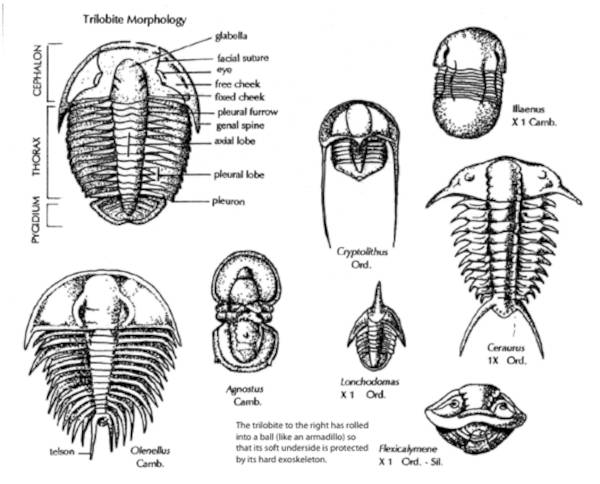
Examples of Cambrian period fossils showing the diverse body plans that evolved during this revolutionary time in Earth's history. (British Columbia/Yukon Open Authoring Platform)
Revolutionary Feeding Technologies from Half a Billion Years Ago
The microscopic examination revealed some of the most sophisticated feeding mechanisms that had evolved by the Cambrian period, representing cutting-edge biological "technologies" for their time. Many fossils belonged to crustaceans with complex molar teeth and hair-like extensions arranged in triangular grooves around their mouths. These tiny creatures used their hairy limbs like conveyor belts to sweep up passing food particles, then ground them with specialized dental grooves.
Other discoveries include slug-like mollusks that already possessed chains of teeth remarkably similar to modern garden snails, which they likely used to scrape algae or bacteria from rocks. The most unusual specimen identified by the researchers represents a new species of priapulids - commonly known as penis or cactus worms - which were widespread during the Cambrian but are nearly extinct today.
This newly discovered creature, named Kraytdraco spectatus after the fictional krayt dragon from Star Wars, possessed hundreds of complex branching teeth that helped it sweep food particles into its extensible mouth. The exotic appearance and sophisticated dental arrangements of these ancient creatures demonstrate the remarkable diversity of feeding strategies that evolved during this critical period in animal evolution.
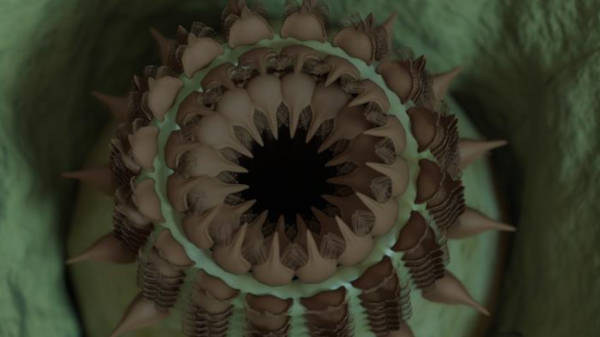
A new species of priapulids, also known as penis or cactus worms, which were widespread during the Cambrian but are nearly extinct today. The Grand Canyon priapulid had hundreds of complex branching teeth, which helped it sweep food particles into its extensible mouth. (Rhydian Evans/Science Advances)
The preservation quality was so exceptional that researchers could observe plankton-like particles near the mouths of some crustaceans, providing direct evidence of their feeding behavior half a billion years ago.
The Perfect Environment for Evolutionary Innovation
During the Cambrian period, the Grand Canyon region was positioned much closer to the equator than today, creating ideal conditions for supporting diverse marine life. The water depth provided a crucial balance - oxygen-rich but not too deep or too shallow - that maximized nutrients and oxygen availability while minimizing wave damage and harmful UV radiation from the sun.
This optimum environment created what Mussini describes as perfect conditions for evolutionary experimentation:
"Animals needed to keep ahead of the competition through complex, costly innovations, but the environment allowed them to do that," he explained. "In a more resource-starved environment, animals can't afford to make that sort of physiological investment."
The economic parallels are striking: abundant resources enabled animals to invest in evolutionary risks and innovations, while scarce environments would have forced conservative survival strategies. This geological insight helps explain why the Cambrian explosion produced such rapid diversification of animal body plans and feeding strategies that continue to influence modern ecosystems.
The research demonstrates that environmental conditions played a crucial role in enabling the burst of creativity that characterized the Cambrian period. The Grand Canyon's position in this evolutionary "Goldilocks zone" allowed for the development of the complex anatomical innovations that still shape the modern biosphere.
Implications for Understanding Life's Evolutionary Leaps
This discovery fundamentally challenges previous assumptions about where and how the most significant evolutionary innovations occurred during the Cambrian explosion. Previously, exceptional soft-bodied fossil preservation was known primarily from environments that were oxygen and resource-poor – conditions unlikely to foster the most complex evolutionary developments.
The Grand Canyon fossils represent the first evidence that rapid evolutionary innovation could occur in resource-rich environments, suggesting that abundance, rather than scarcity, may have been the primary driver of evolutionary creativity during this critical period. This finding has profound implications for understanding how environmental conditions influence the pace and direction of evolutionary change.
The research also highlights the ongoing potential for major discoveries in well-studied locations. Despite being one of the world's most thoroughly examined geological sites, the Grand Canyon continues to yield surprises that reshape our understanding of ancient life and evolution.
Top image: Image and diagram of the Grand Canyon's distinctive rock layers preserve a remarkable geological record spanning hundreds of millions of years, including the newly discovered Cambrian fossils. Source: Left; Joe Clevenger/ Center; CC BY-SA 3.0/ Right; Science Advances
By Gary Manners
References
Mussini, G. et al. 2025. Evolutionary escalation in an exceptionally preserved Cambrian fauna from the Grand Canyon. Science Advances. Available at: https://doi.org/10.1126/sciadv.adv6383
Mussini, G. 2025. Cambridge University Department of Earth Sciences Research. Available at: https://www.repository.cam.ac.uk/items/110f495f-425f-45f6-83c0-e98c34648c09
University of Cambridge. 2025. Grand Canyon was a 'Goldilocks zone' for the evolution of early animals. Cambridge University Press Release. July 23, 2025.
Various Authors. 2025. Current understanding on the Cambrian Explosion: questions and answers. Available at: https://link.springer.com/article/10.1007/s12542-021-00568-5
Various Authors. 2025. The Cambrian explosion was far shorter than we thought. Available at: https://www.nhm.ac.uk/discover/news/2019/february/the-cambrian-explosion-was-far-shorter-than-thought.html