
In a remarkable discovery, archaeologists have uncovered the remains of a child buried approximately 29,000 years ago in Khao Sam Roi Yot National Park, Thailand. This finding represents the oldest known human skeleton ever unearthed in the country and provides valuable insight into the prehistoric cultures that once thrived in the region.
The skeletal remains were found within Tham Din cave, buried about 6.5 feet (2 m) beneath the surface, according to a Thailand Government report. Researchers have determined that the child, nicknamed "Pangpond" after a well-known Thai television character, was around eight years old at the time of death. The burial’s unique characteristics suggest that the child was interred as part of a ritual, offering clues about the cultural and spiritual practices of ancient hunter-gatherers in Southeast Asia.
Unearthing the Distant Past
Archaeologists first began investigating Tham Din cave in 2020 after identifying ancient paintings within its chambers. These cave paintings, drawn in red ocher, depicted vivid hunting scenes, including human figures wielding bows and arrows while pursuing deer. Their discovery hinted at early human occupation in the region and spurred further exploration.
By 2022, excavations had yielded numerous artifacts, including animal bones, pottery, and stone tools. Laboratory analysis conducted in the United States revealed that these objects ranged in age from 10,000 to 29,000 years old, confirming that the site had been inhabited by prehistoric humans for thousands of years.
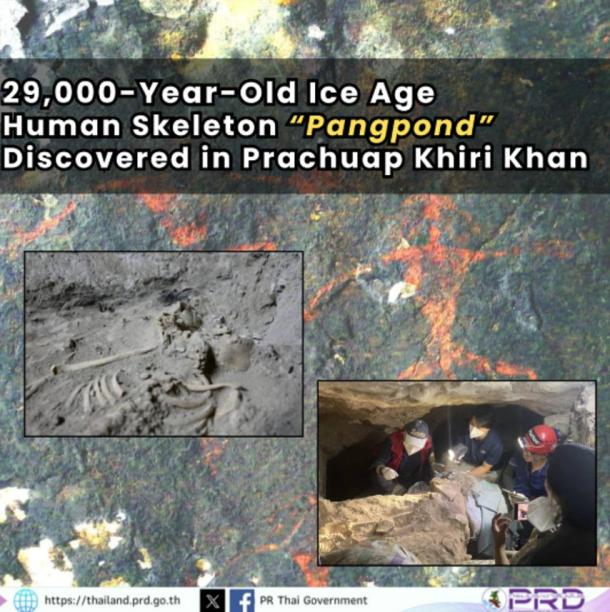
Images from PR Thai Government showing the human remains and cave art found at the Khao Sam Roi Yot National Park site. (PR Thai Government)
As archaeologists delved deeper into the cave’s floor, they made their most extraordinary discovery yet: the well-preserved skeletal remains of a young child, buried with ritualistic elements that pointed to a sophisticated cultural practice among early inhabitants of the region.
The skeleton of Pangpond was remarkably intact despite its immense age. The skull’s small size and the condition of the bone joints suggested that the individual was a child, estimated to be between six and eight years old.
Living during the Paleolithic Period, also known as the Old Stone Age, Pangpond belonged to a time characterized by early human innovation in toolmaking. This discovery has significant implications for the understanding of human migration and adaptation, as it suggests that humans may have occupied this part of Thailand far earlier than previously thought.
The child’s burial position, lying face-up, and the presence of stones and red pigments on the body indicate a ceremonial burial. These pigments, believed to symbolize blood and power, suggest that the child was given a ritualistic send-off by their community. Additionally, researchers found traces of charcoal and ash around the body, leading them to hypothesize that the remains may have been smoked before burial, potentially to preserve them or protect them from scavenging animals.
- DNA Elucidates Thailand's Iron Age ‘Log Coffin Culture’
- Nothing Else Like It! Ancient Meets Modern in the White Temple of Thailand
Insights into Prehistoric Rituals and Society
Archaeologists believe the burial of Pangpond sheds light on the customs and spiritual beliefs of prehistoric communities in Thailand. Kannika Premjai, who led the excavation team, emphasized the significance of this find.
"It is believed that the way the body was treated involved rituals, including a theory that this was one way to keep it from being eaten by wild animals. We have learnt from the position and direction in which the body was placed that it was a ritual, meaning the community living here had their own culture and way of living," Premjai told the Bangkok Post.
These findings suggest that early humans in Southeast Asia developed complex burial customs and had a distinct cultural identity. The use of red pigments and the placement of stones indicate that these people engaged in symbolic rituals, possibly as part of mourning or spiritual practices.
Pangpond’s discovery also provides valuable insights into how prehistoric humans adapted to environmental changes. During the Paleolithic era, much of Southeast Asia was part of a massive landmass known as Sundaland. Due to lower sea levels, large areas of land connected modern-day Thailand, Malaysia, and Indonesia, allowing early human populations to migrate and establish settlements across the region.
As sea levels rose over time, parts of Sundaland became submerged, prompting human groups to disperse and adapt to new environments. The presence of prehistoric remains in Khao Sam Roi Yot National Park suggests that early humans settled in caves and developed survival strategies suited to their changing landscape.
A spokesperson from Thailand’s Fine Arts Department (FAD) highlighted the importance of the site.
"The Din Cave site offers a unique window into the past, documenting the evolution of human societies over thousands of years," the FAD representative told Thai PBS World.
A Future Look at the Past
Following the completion of archaeological excavations, the Thai Department of National Parks, Wildlife, and Plant Conservation plans to open Tham Din cave to the public. This initiative aims to provide visitors with a deeper understanding of Thailand’s prehistoric heritage and allow them to experience firsthand the remnants of a civilization that existed tens of thousands of years ago.
The discovery of Pangpond not only enriches our understanding of ancient human societies but also reinforces the importance of preserving historical sites. As scientists continue to study the remains and associated artifacts, new revelations may emerge about the lives, beliefs, and survival strategies of the earliest known inhabitants of Thailand.
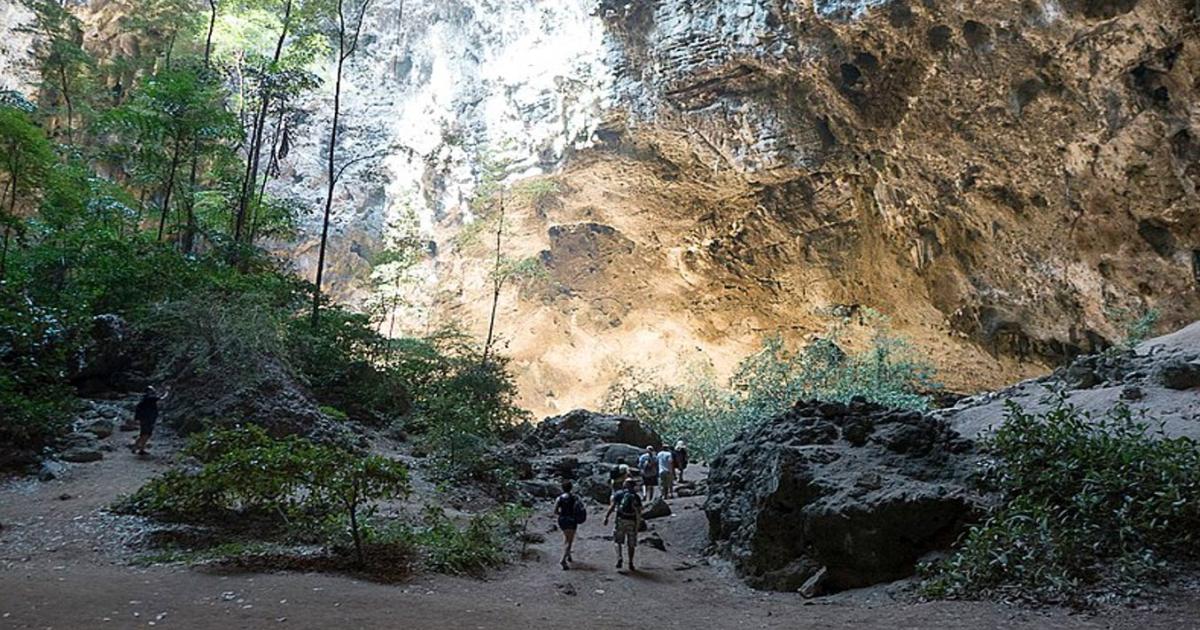
Top image: Khao Sam Roi Yot National Park. Source: CC BY-SA 2.0
By Nathan Falde