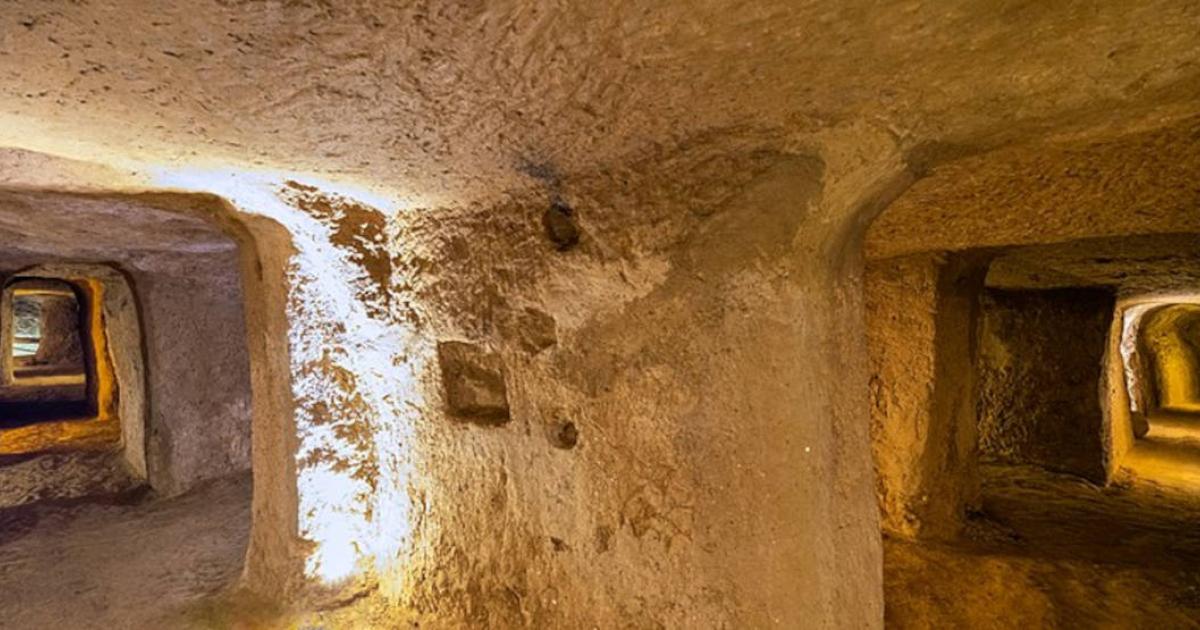

In the historically important town of Abarkuh in the Yazd province of central Iran, excavations have revealed something hidden that has stunned archaeologists and made them reconsider what they thought they knew about the region’s history. While digging underneath five houses built in past eras, a team of researchers was shocked to discover the remains of what appears to be a lost subterranean city.
The initial find consisted of secret rooms beneath the homes, but these were found to connect to something far more extensive.
“The presence of small stone chambers in the historical houses of Abarkuh, located under the stone bed, indicates their special function in the past, and therefore, investigation and research in this regard has begun, leading to the discovery of an underground settlement,” said Hossein Hatami, the mayor of Abarkuh, in an interview with the Iranian news agency IRNA. "Given the possibility that there are more examples of this underground complex in other neighborhoods and perhaps throughout the entire historical context of Abarkuh, research is continuing and has now led to the discovery of a beautiful watercourse made of carved stone.”
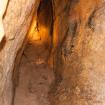
Carved out of the bedrock were an array of passageways leading in many different directions. They would have been suitable for occupation or for discrete travel between locations, and there is no doubt that the creation of these interconnected tunnels would have required many years of tireless effort. In addition to the passageways beneath the homes, the subterranean excavations also led to the discovery of the waterway or aqueduct, which was expansive and impressively engineered.
Needless to say, the archaeologists involved in the excavations in Abarkuh are delighted by this discovery, which will give them an opportunity to learn more about ancient construction techniques, architectural designs, daily living patterns, defensive strategies in the face of invasion, and water management practices.
- The Ancient Subterranean City of Nushabad: Why Were People Living Underground?
- Preserved by Nature: Studying the Spectacular Salt Mummies of Iran
Revealing the Astonishing Ingenuity of the Qajar People
The exact age of these incredible underground structures is still to be determined. However, the techniques and architectural choices resemble those associated with the Qajar people, a Turkmen tribe that originated in the lands of modern-day Azerbaijan, which in the past was part of Iran.
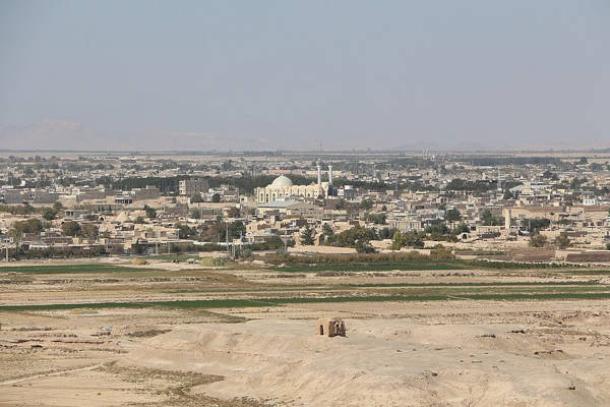
Town of Abarkuh, Yazd, Iran. (Bernard Gagnon/CC BY-SA 4.0).
The Qajars were one of the first Turkmen Qizilbash tribes to emerge in the 10th and 11th centuries, after which they spread across Asia Minor and settle din different territories. They were influential supporters of the Safavid dynasty during that group’s rule of the region, which lasted from 1501 to 1722, and in 1794 it was a Qajar chief, Agha Mohammed, who founded the Qajar dynasty that eventually reunified Iran (the Qajars held power until 1925).
Located just under 90 miles (140 kilometers) southwest of the city of Yazd, Abarkuh has long been considered one of the most important cities of ancient Iran. It sits at the nexus of a “golden triangle” of prosperous ancient settments, along with Yazd and Isfahan, and as such it has long been a center for trade and worship in the region.
Further investigations into the purpose of the sprawling underground city will continue, with the hope that new passageways and chambers will be discovered, and perhaps some ancient artifacts as well.
According to Hossein Hatami, aerial photographs of above-ground structures like the five houses show that the Qajar people intentionally built their homes on the top of rocky outcroppings. In addition to carving out caverns below they also installed gardens in the spaces between the homes, making efficient use of space.
As for the waterway, this consisted of a beautifully carved stone aqueduct that the discoverers believe would have played a fundamental role in the town’s water management strategies. The stones used to make the aqueduct are similar to those used in other Qajar-era buildings, making it clear who made it.
- Unique Underground City Adds New Direction to the Ancient Subterranean World of Turkey
- Iron Age Swords Seized at Heathrow Were Fakes
Hatami noted that the ancient residents of Abarkuh had built steps at various places along the route of the underground waterway, to facilitate access to water transfer routes. This allowed them to manage the water flow while also utilizing traditional qanat reservoirs as a source of water for their personal use.
Hossein Hatami said that the water flowing through the underground corridors would have cooled the surrounding spaces in summer, creating a cool refuge during the hottest days when surface temperatures soared to uncomfortable levels. It seems that the engineers of the underground city eventually carved out larger chambers with alcoves, making more space for the town’s inhabitants to escape the extreme heat and remain comfortable.
More practically, the underground complex would have made an excellent place to hide in the event of a foreign invasion or civil war.
Abarkuh is Making History Again
Up to this point, the underground installations have been found to expand beneath about one-third of Abarkuh’s surface structures. Unfortunately, past construction projects in the town led to the flooding of many underground pathways with wastewater, and that has complicated efforts to explore the interconnected system more fully.
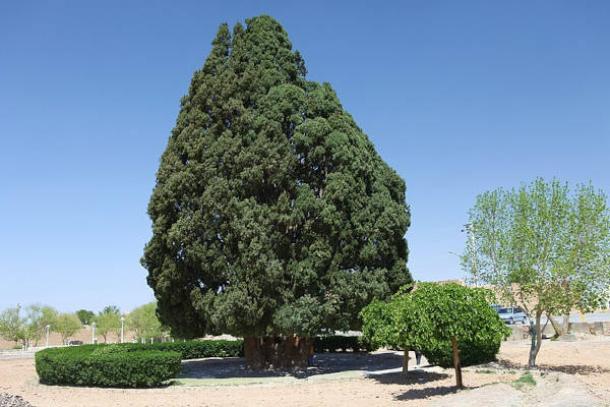
Abarkuh’s famous 4,000-year-old cypress tree. (Nineras/CC BY-SA 4.0).
There are currently about 400 historical sites that have been identified in the Abarkuh region, 147 of which have been registered as national heritage sites (a 4,000-year-old cypress tree is the most well-known of these). Nevertheless the discovery of the underground city stands out, demonstrating the incredible ingenuity and resilience of the people who occupied the region during more tumultuous times. The discovery of this underground city not only enhances the town’s rich cultural narrative, but also highlights its importance in the broader context of Iran’s fascinating and ever-evolving historical landscape.
Top image: Underground city in Nushabad, Kashan, Iran, similar in design to the underground city found in Abarkuh.
Source: Amirpashaei/CC BY-SA 4.0.
By Nathan Falde