
The breakthrough demonstrates how modern scientific methods can breathe new life into historical investigations. When archaeologists first unearthed the bones in 1915 during excavations at a Dominican monastery on Margaret Island in Budapest, they suspected the remains belonged to someone of high status. The burial context and historical records pointed toward Duke Béla, but without definitive proof, the skeleton's true identity remained speculation for more than a hundred years. That uncertainty has now been laid to rest through a combination of genetic testing, isotope analysis, and detailed forensic reconstruction.
- Medieval Murder Maps Reveal Violence in 14th-century English Cities
- Modern Forensic Science Helps Crack Details of 700-year Cold Case in Italy
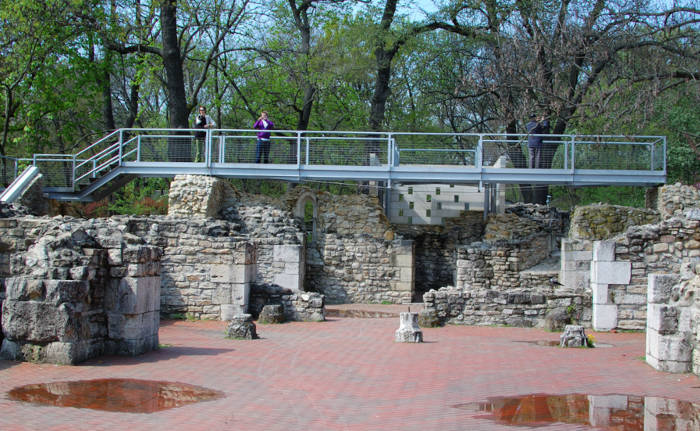
Ruins of the Dominican Convent on Margaret Island, Budapest. (Petr Šmerkl/CC BY-SA 3.0)
Lost Bones and a Century-Long Mystery
The story began when archaeologists excavating the Dominican monastery on Margaret Island in 1915 uncovered the skeletal remains of a young man buried in the sacristy. Based on the burial location, the evidence of severe trauma on the bones, and contemporary historical accounts, researchers at the time proposed that these were the remains of Béla, Duke of Macsó, grandson of King Béla IV of Hungary. According to 13th-century Austrian chronicles, Duke Béla was brutally assassinated in November 1272 by Ban Henrik "Kőszegi" of the Héder family and his associates during a power struggle within the Hungarian royal family.
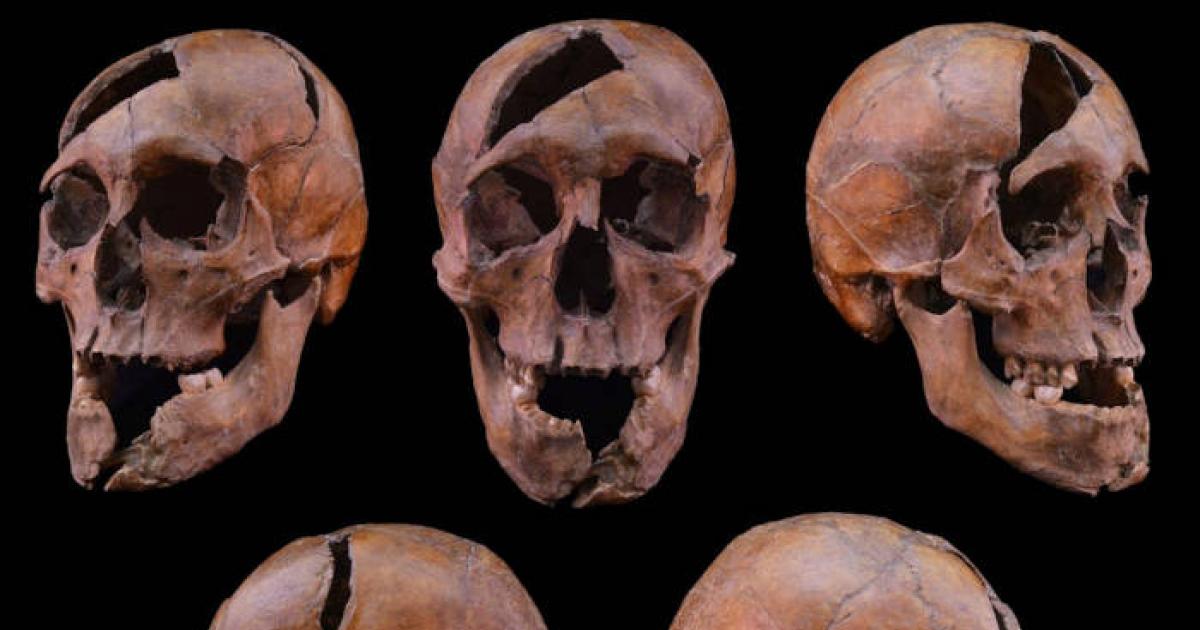
The initial anthropological examination conducted by Lajos Bartucz at the Institute of Anthropology revealed shocking details. Bartucz documented 23 sword cuts across the skeleton and multiple fatal skull injuries, concluding that the duke had been attacked by several assailants simultaneously and had even been struck while lying on the ground. He mentioned the findings publicly in 1936 and published a photograph of the skull in 1938, but then the trail went cold. After that, all references to the remains vanished from academic literature, and most experts believed the bones had been lost during the chaos of the Second World War.
The unexpected rediscovery came in 2018 when the postcranial bones were found in a wooden box stored among tens of thousands of specimens in the Anthropology Collection of the Hungarian Museum of Natural History. Meanwhile, the skull had been preserved all along in the Aurél Török Collection at Eötvös Loránd University. This remarkable find set the stage for a comprehensive reinvestigation using 21st-century scientific techniques that would finally provide definitive answers about the skeleton's identity and the circumstances of death.
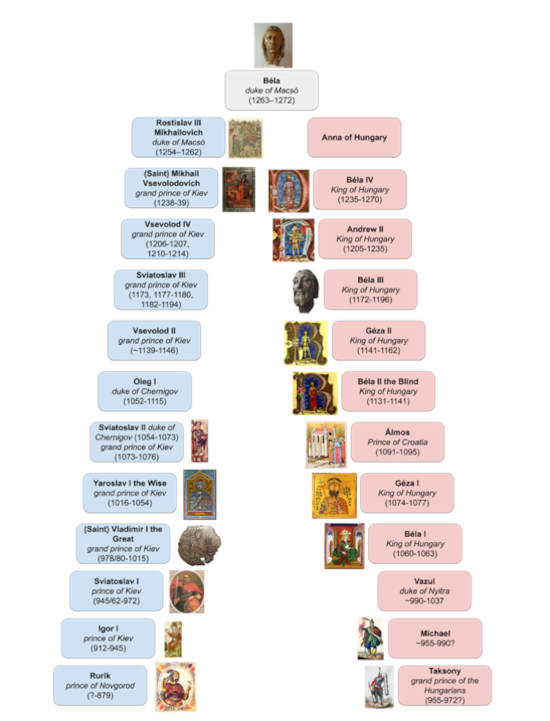
Genealogy of Duke Béla of Macsó (the facial reconstruction of Béla, Duke of Macsó was made by Ágnes Kustár, while King Béla III's face was reconstructed by Gyula Skultéty/Eötvös Loránd University)
DNA Unlocks Royal Lineage
In 2018, a new international research consortium formed under the leadership of Tamás Hajdu from the Department of Biological Anthropology at Eötvös Loránd University. The multidisciplinary team brought together anthropologists, geneticists, archaeologists, stable isotope specialists, radiocarbon experts, and dental professionals from institutions across Hungary, Vienna, Bologna, Helsinki, and Harvard University. Their objective was ambitious yet clear: verify the identity of the remains using modern forensic and bioarchaeological methods and reconstruct as completely as possible the life and violent death of the duke.
The genetic evidence proved decisive in confirming the skeleton's identity. Anna Szécsényi-Nagy and Noémi Borbély from the Institute of Archaeogenomics conducted comprehensive DNA analysis that matched multiple genealogical connections described in historical documents. The results demonstrated that Béla of Macsó was indeed the great-grandson of King Béla III, and his genetic distance to Saint Ladislaus fit the expected lineage pattern perfectly. This find holds exceptional historical value, as besides King Béla III, Béla of Macsó is the only confirmed member of the House of Árpád whose nearly complete skeleton is preserved.
Genome-wide analysis revealed a fascinating genetic mosaic that painted a vivid picture of medieval royal interconnections. The duke possessed almost half Scandinavian genetic component, significant Eastern Mediterranean ancestry, and a smaller early medieval Central European component. The Scandinavian contribution directly supports his descent from the Rurik dynasty, a Norse lineage that produced numerous Grand Dukes of Kiev from the 9th century onward through his father's side. The Eastern Mediterranean component likely corresponds to his maternal great-grandmother, Maria Laskarina, a member of the Byzantine imperial family and wife of Béla IV. Y-chromosome results further confirmed the historically documented Rurik paternal line, matching genetic data from both a 13th-century Rurikid discovered in a 2023 Russian study and present-day Rurikid descendants.
A Life Reconstructed Through Science
Beyond confirming identity, the research team pieced together a remarkably detailed picture of the duke's life through multiple scientific techniques. Anthropological analysis showed that the man buried beneath the monastery floor was in his early twenties at the time of death. Radiocarbon dating required careful interpretation after initial measurements suggested dates slightly earlier than historical accounts indicated. Additional testing by the Nuclear Research Institute in Debrecen revealed that the unexpectedly early date resulted from dietary habits rather than actual age. The individual had consumed high amounts of animal protein, including fish and possibly shellfish that fed on ancient carbon sources, creating what scientists call a "reservoir effect" in the bones.
The research team examined dental calculus to further reconstruct the duke's diet, recovering more than a thousand microfossils from the tartar deposits. Starch grains from wheat and barley, along with clear signs of milling, cooking, and baking processes, indicated that his meals included cooked wheat semolina and baked wheat bread—foods befitting someone of noble status. Strontium isotope analysis, which helps determine where a person lived during different life stages, revealed that the individual did not grow up in the same place where he was buried. His early childhood isotope signatures match those found in the region of Vukovar and Syrmia, now part of Croatia and Serbia but during the medieval period part of the Macsó Banat of the Kingdom of Hungary. Later in childhood he relocated to a different area, possibly near modern Budapest.
- When Vikings Come to Rule: The History of the Rurik Dynasty
- Medieval-Era Noblewoman in London Conspired to Assassinate A Priest
Brutal Assassination Revealed
To understand exactly how Béla died and to compare physical evidence with medieval historical accounts, the team conducted exhaustive forensic anthropological investigation. The analysis documented 26 perimortem injuries inflicted during a single violent attack, including nine wounds to the skull and 17 to the rest of the body. The pattern of wounds suggests that three assailants participated in the killing: one confronted him from the front while the others struck from the left and right sides. The wounds indicate that Béla recognized the attack and attempted to defend himself, sustaining defensive injuries as he tried to block the blows.
Two types of weapons were likely used during the attack, probably a sabre and a longsword, based on the characteristics of the cuts and punctures. The depth and clarity of the wounds revealed a chilling detail: Duke Béla wore no armor when he was killed, making him completely vulnerable to the assault. The reconstructed sequence of violence begins with strikes to the head and upper body. As he attempted to protect himself, he received severe defensive injuries to his arms and hands. He was ultimately incapacitated by strikes from the side, and once he had fallen to the ground, the attackers delivered the fatal blows to his head and face in what can only be described as an act of rage or hatred.
The number and intensity of these injuries point to powerful emotional motivation behind the killing, such as sudden anger or deep-seated hatred. Yet the coordinated nature of the attack—three men striking simultaneously from different angles—suggests careful planning and premeditation. As Tamás Hajdu explained, "Although Duke Béla's assassination in November 1272 appears to have been partly or wholly premeditated, the manner of the killing indicates that it was not carried out calmly." This brutal murder occurred during a turbulent period in Hungarian history marked by fierce struggles for power within the royal family and among powerful noble factions.
According to the 13th-century chronicles, Duke Béla was lured to what he believed would be a council meeting but instead walked into a carefully orchestrated assassination plot arranged by pro-Ladislaus lords led by Ban Henrik "Kőszegi." Contemporary stories describe how his mutilated body was recovered by his sister Margit and his niece Erzsébet, who ensured he received a proper burial at the Dominican monastery where his remains would rest for more than seven centuries before modern science would tell his story.
Top image: Margaret Island, Budapest, showing the area where Duke Béla's remains were discovered in the Dominican monastery. Source: Smithsonian Magazine
By Gary Manners
References
Hajdu, T., Borbély, N., et al. 2025. Murder in cold blood? Forensic and bioarchaeological identification of Béla, the assassinated Duke of Macsó (†1272 AD) – A multidisciplinary study. Available at: 10.1016/j.fsigen.2025.103381
ScienceDaily. 2025. Science finally solves a 700-year-old royal murder. Available at: https://www.sciencedaily.com/releases/2025/11/251114041217.htm