Human history begins not with written words, but with images. Long before there were books or hard drives, ancient civilizations worked with a different kind of memory: murals.
When examining ancient temple walls, tombs, caves and even public buildings, the essence of murals as living archives becomes obvious. And no one whould mistake these murals for being merely decorative. These were used as repositories for mythology, history, identity, knowledge and so many things.
Even today, murals remain powerful tools for storytelling and self-expression. A person might be inspired by pre-historic cave art or modern street scenes; whatever they choose, they can implement. Anyone can make their house or room as expressive as they want it to be. The good thing is that there are merchants who deal with wall murals and can actually come up with designs covering all styles, from ancient symbolism to contemporary designs.
But now, let’s look back at the early days and see exactly what murals were used for. The more we look into them, the more we can uncover the reality of life before the modern era.
- Wall Murals: Why They're Taking Over Your Walls - and Your Heart
- Stunning Maya Wall Paintings Uncovered in Guatemalan House
Educational Tools
Many ancient murals were used to teach various things. We are talking about values, cosmology, sacred knowledge, etc. This would be used to pass knowledge from generation to generation, while preserving their original meaning.
For example, archaeologists found a cave in Northwestern Patagonia, Argentina with art that serves the purpose of preserving cultural knowledge. Most of the art in the cave (Cueva Huenul 1) is made up of geometric shapes, polygons, circles and parallel lines drawn in red. Interestingly, researchers believe that the art might date to 8,200 years ago, or at least 130 human generations in the past.
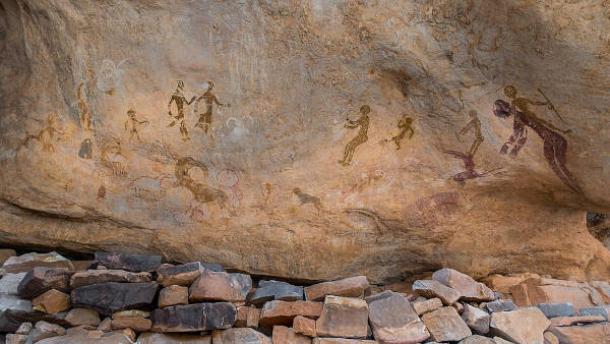
Cave art, the original form of mural. This is mural is located in Tassili n'ajjer park in Djanet in Algeria. (Issam Barhoumi/CC BY-SA 4.0).
The thangka paintings (though they started later, around the 11th and 12th centuries) have been used in the Tibetan Buddhist tradition. They served as visual aids for meditation, teaching and ritual practices. These paintings were done on monastery walls and depicted complex cosmologies and deity hierarchies. Monks would use them as part of their religious training, using art to memorize sacred texts and divine genealogies.
Depicting Significant Events and Iconic Figures
From ancient civilization to modern-day movements, murals have been used to visually narrate significant events. These help us understand what life was like in the past, as they give us a glimpse of what led to whatever happened. Also, these images reveal their origins and let us know what the belief systems of their creators were like.
Think about the Maya, for instance. About 100 BC, the Maya painted images of the coronation of their first king and the creation of the cosmos on the walls of a temple in San Bartolo, which was discovered in 2001. Before the uncovering of the murals, there was little evidence of the existence of the Maya kings. However, with this elaborately painted mural, they established the right of the kings to rule.
- Medieval Mural on Yorkshire Church Wall Pays Tribute to St. George
- Forgotten Warrior-Saints Exposed in Murals of Medieval City
The 30-foot by 3-foot mural depicts two coronation scenes. One is a real king being crowned, while the other is a mythological depiction.
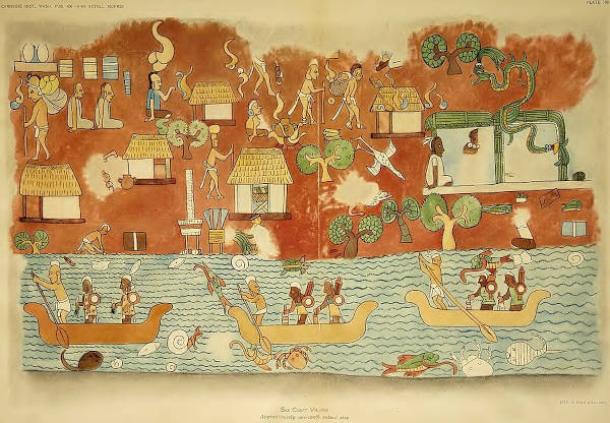
Maya fresco from the Temple of the warriors at Chichen Itzá, Yucatan. (Ann Axtel Morris/CC0).
In Napena Valley in northern Peru, archaeologists discovered murals of two-faced men in golden headdresses. These murals are estimated to be about 1400 years old. Actually, researchers say that such images have not been seen before in Moche art, or any other type of art in the pre-Hispanic tradition of the Andean region. Currently, experts have not yet figured out what the two-faced men represent, but they seem to be important figures.
Archaeology in Panamarca has been going on for approximately 50 years. Here researchers have discovered different forms of Moche art, including a mural of a priestess carrying out a ceremonial sacrifice.
Telling Tales of Triumph and Tragedy
Over one thousand years ago, Cacaxtla was a modest city full of palaces, temples and a couple of small pyramids. The only thing that couldn’t be imagined is that the walls of the city would be decorated with magnificent murals. These murals depict epic battles, scenes of trade, gods and religious worship. Since the discovery of the first two paintings in 1975, there have been endless debates about the political implications of the images, and the identity of the artists.
The one thing that murals have captured so well historically is the struggles and triumphs of past civilizations. Look at the well-depicted stories told by Greek art, for example. You get to see the fall of kings, the rise of heroes, the interference of gods and many more significant events.
According to Claudia Brittenham, an associate professor in art history studying the Cacaxtla murals, these types of art show the power of art to help communities understand themselves.
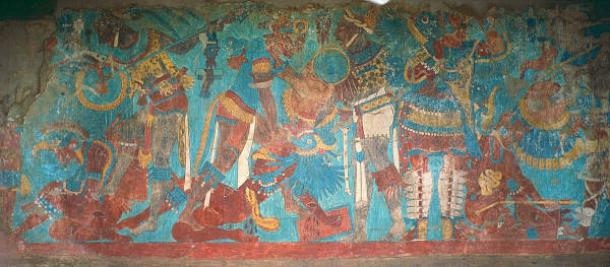
Battle Mural of Cacaxtla. (HJPD/CC BY-SA 3.0).
For example, the Battle Mural of Cacaxtla depicts military conflicts that took place in many different locations. This just shows how powerful a state Cacaxtla was, with a great army and a thriving economy. When their descendants see this, they are able to acknowledge who they are and what they have and can achieve as a society.
Cultural Preservation and Historical Memory
Art is a fantastic way to preserve history and pass down knowledge across generations. In ancient and early civilizations, we can clearly see that murals were being used to illustrate different events and significant occurrences that would change the courses of community history. As knowledge is passed down through murals, culture is preserved.
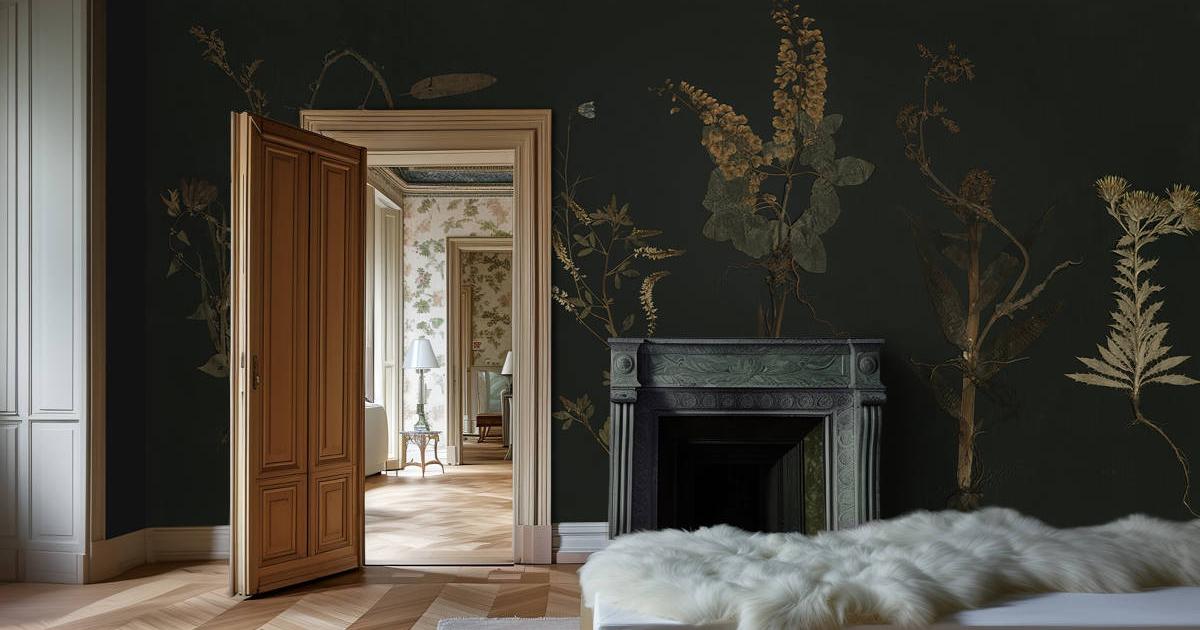
Top image: Nature-themed mural adorning a bedroom wall.
Source: Provided by author.
By Ronn Sweeny
Ron Sweeny is a profesional historian who decided to use his splendid research skills in the world of content marketing. He is a writer who is thorough and true to his word. It would be naïve to expect anything less from a historian. He is also a wonderful team player who knows when to sacrifice his personal goals in order to help the team. He is a man who delivers.