Archaeologists in Poland have unearthed compelling evidence of sophisticated Neanderthal behavior at a 70,000-year-old workshop site in the Zwoleńka River Valley. The remarkable discovery demonstrates that these ancient humans operated specialized tool maintenance centers where they repaired and sharpened implements used for butchering massive Ice Age animals including mammoths, rhinoceroses, and horses.
The excavation, conducted jointly by the State Archaeological Museum in Warsaw, the University of Warsaw's Faculty of Archaeology, and the University of Wrocław's Institute of Archaeology, represents the most significant Neanderthal research currently underway in Poland. Dr. Witold Grużdź, project manager from the State Archaeological Museum, confirmed that radiocarbon dating places the site's activity between 64,000 and 75,000 years ago, firmly within the Middle Paleolithic period, reports Science in Poland.
- 115,000-year-old Bones are of a Neanderthal Child that was Eaten by a Bird
- Oldest Ever Neanderthal Remains Found, Dating Back 116,000 Years!
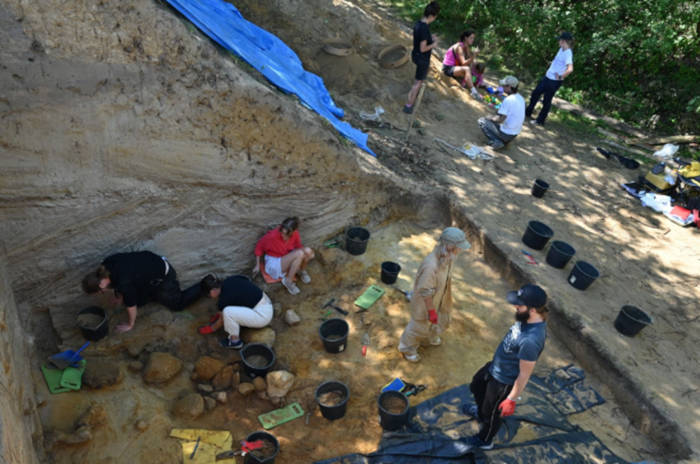
Excavations at the site in Zwoleńka Valley, central Poland. (Faculty of Archaeology of the University of Warsaw/PAP)
Unprecedented Preservation in Open-Air Environment
What makes this Mazovian site extraordinary is its open-air nature, where organic materials have survived for millennia. Most Neanderthal sites in Poland are concentrated in southern cave systems within the Kraków-Częstochowa Upland and Lower Silesia regions. The Zwoleńka discovery marks the northernmost confirmed Neanderthal presence in the country, in an area that was largely ice-covered during their occupation.
Dr. Katarzyna Pyżewicz from the University of Warsaw emphasized the rarity of such finds:
"Neanderthal discoveries are uncommon, and whatever emerges from this region carries immense scientific value. These archaeological sites typically lie buried several meters beneath the surface, making detection extremely challenging."
Evidence of Systematic Tool Repair Operations
Over three excavation seasons, researchers have recovered hundreds of flint tools and fragments, adding to approximately 330 artifacts initially catalogued from 1980s surveys. Analysis reveals these implements were primarily knives and scrapers showing distinctive wear patterns consistent with animal processing activities. The abundance of flint flakes and debris indicates the site functioned as a dedicated repair facility where finished tools were brought for maintenance and sharpening.
"Based on comparable Middle Paleolithic sites across Europe, we understand these tools were employed to quarter large animal carcasses," explained Dr. Pyżewicz.
The mammoths, rhinoceroses, and horses whose remains we've uncovered were likely processed using these very implements, which show clear signs of repeated use and refurbishment, explains the report.
- Adhesive Grips on Neanderthal Tools Reveals Species' Advanced Creativity
- Coastal Neanderthals Went Diving For Tools
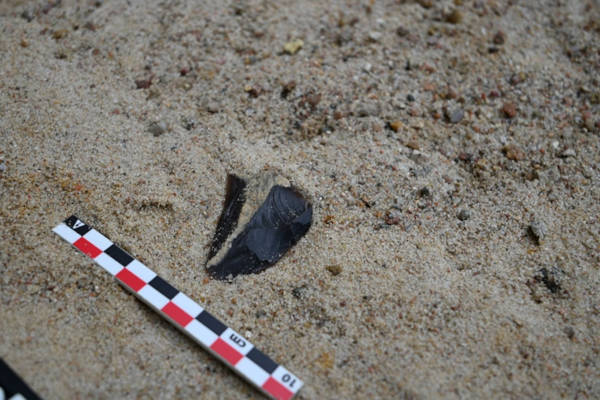
Flint artifacts and animal remains were recovered from the Neanderthal workshop site. (Faculty of Archaeology of the University of Warsaw/PAP)
Redefining Neanderthal Intelligence and Capabilities
This workshop discovery adds substantial evidence to the growing understanding that Neanderthals possessed sophisticated cognitive abilities and advanced technological skills. Far from the primitive stereotype once prevalent in scientific literature, these hominins demonstrated complex planning, resource management, and specialized tool production techniques that required considerable expertise.
The site's geographic location presents additional insights into Neanderthal adaptability. Central Poland's harsh Ice Age conditions would have demanded exceptional survival skills, yet these populations successfully established operational bases for large-scale hunting and butchery activities. The systematic approach to tool maintenance suggests long-term territorial occupation rather than temporary seasonal visits suggests Archaeology Magazine.
Challenges in Dating and Future Research
One significant challenge facing the research team involves accurate chronological placement of the artifacts. Many materials show evidence of river transport, meaning they may have been displaced from their original depositional contexts. Dr. Grużdź noted that current dates reflect when items were moved by water action, not necessarily their initial deposition period, suggesting the actual ages could be considerably greater than current estimates indicate.
"Future research phases will focus on resolving these chronological puzzles while expanding our understanding of how Neanderthal communities organized their technological activities," Dr. Grużdź explained. "Each excavation season reveals new aspects of their remarkably sophisticated behavioral patterns."
The Zwoleńka workshop represents more than an archaeological site; it provides a window into the daily operations of Neanderthal communities whose intelligence, planning abilities, and technological innovations continue to surprise researchers. As excavations proceed, this remarkable site promises to yield further insights into the complex lives of our closest evolutionary relatives.
Top image: Archaeological excavation reveals Neanderthal stone tools and animal bones at the 70,000-year-old workshop site in Poland's Zwoleńka River Valley. Source: Faculty of Archaeology of the University of Warsaw./PAP
References
Grużdź, W. 2025. Paleolithic Neanderthal workshop found in Poland. Available at: https://scienceinpoland.pl/en/news/news%2C109013%2Cpaleolithic-neanderthal-workshop-found-poland.html
Krajczyńska-Wujec, E. 2025. 70,000-Year-Old Paleolithic Neanderthal Workshop Found. Available at: https://arkeonews.net/70000-year-old-paleolithic-neanderthal-workshop-found/
Pyżewicz, K. 2025. Neanderthal Tool Workshop Uncovered in Poland. Available at: https://archaeology.org/news/2025/08/19/neanderthal-tool-workshop-uncovered-in-poland/