
From the human perspective, maggots are thoroughly disgusting, and when meat is infested with them it means it is spoiled and needs to be thrown away immediately. But according to one researcher, the Neanderthal perspective on maggots was quite different. She argues that Neanderthals consumed them regularly and willingly, apparently recognizing them as a great source for certain vital nutrients.
This new find “offers a solution to an unanswered question about the Neanderthal diet and lifestyle,” stated paleoanthropologist Leslie Aiello, former president of the Wenner-Gren Foundation for Anthropological Research, in a statement published by Science. If Neanderthals were including maggots in their diet, it means they weren’t consuming the copious quantities of meat that had previously been supposed, based on what studies of their skeletal remains have revealed. This discovery will force scientists to reconsider their ideas about what the Neanderthals really ate on a daily basis.
Rethinking Neanderthal Diets
Researchers had long ago concluded that Neanderthals were super-predators who ate quite a bit more meat than their Homo sapiens cousins. They determined this through the analysis of the isotope ratios in their bones, which showed high levels of nitrogen 15 compared with nitrogen 14, which is normally the telltale sign of a meat-heavy diet. But it now seems that this conclusion was incorrect.
- The New Paleo? The Staples of Neanderthal Diets Unlocked by Looking at the Gunk in Their Teeth
- Australian Scientists Explore The Medical Marvels Of Ancient Maggot Therapy
In a presentation given recently at the annual meeting of the American Association of Biological Anthropologists, biological anthropologist Melanie Beasley of Purdue University explained to the gathered throngs how she came to the conclusion that Neanderthals were eager consumers of maggots (fly larvae), the thought of which makes the average person’s skin crawl.
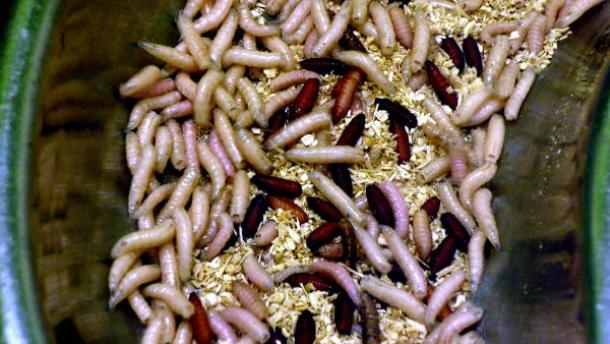
Collection of live maggots at the London Zoo. (Corey Doctorow/CC BY-SA 2.0).
Dr. Beasley began reconsidering conventional beliefs about Neanderthal eating habits after encountering a report in PaleoAnthropology by archaeologist John Speth from the University of Michigan. Speth’s research documented historical accounts from missionaries and Arctic explorers regarding a condition known as "rabbit starvation." This illness afflicted individuals who consumed excessive amounts of lean game meat, which led to a lack of sufficient fat in their diets.
Unlike carnivores such as lions, humans are not built to subsist primarily on protein. As primates, our metabolic and digestive systems evolved for a diet rich in plant-based foods. When humans ingest protein, the body breaks it down into amino acids containing nitrogen. This nitrogen is processed into ammonia, which is then excreted through urine. However, an overabundance of protein can overwhelm the liver, causing excess ammonia to accumulate in the bloodstream, which can be toxic and even lethal.
This presented a puzzle: if Neanderthals relied so heavily on meat, how did they avoid the toxic effects of excessive protein consumption, given how similar they were to Homo sapiens in their physiology and metabolism?
Speth’s study provided a possible answer. He referenced observations made by Arctic explorers, who noted that Indigenous populations sometimes consumed decayed, maggot-infested meat as a preferred food rather than a last resort.
While the idea of eating decomposed food may seem foreign and even revolting to most people, the practice is not unheard of. In her presentation Beasley illustrated this point with images of casu marzu, a Sardinian cheese that contains live cheese fly larvae.
Maggots as a Nitrogen Source
Speth theorized that rotting meat might contain elevated nitrogen levels compared to fresh meat, which could explain the high nitrogen levels found in Neanderthal remains. Rather than consuming excessive amounts of fresh meat, Neanderthals may have incorporated aged or scavenged meat into their diets, thus increasing their nitrogen intake substantially.
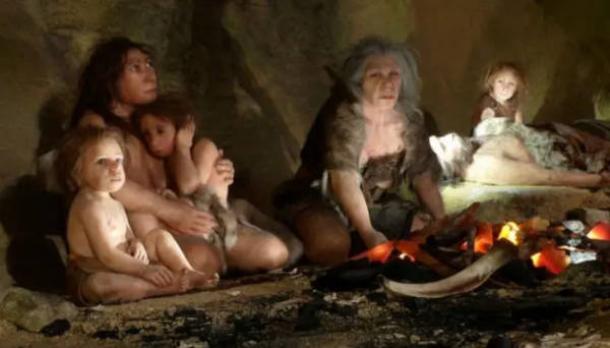
Neanderthal women and children gathered around a cave fire cooking a meal. (Free Malaysia Today/CC BY-SA 4.0).
Beasley, who was a postdoctoral researcher at the University of Tennessee, Knoxville’s Forensic Anthropology Center at the time, recognized that no one had tested whether fly larvae contained similarly high nitrogen levels. To explore this, she conducted an experiment at the university’s Body Farm, a facility dedicated to studying human decomposition. She examined nitrogen levels in decomposing tissue from 34 human cadavers left outdoors and analyzed the maggots that fed on the decaying flesh.
- Did 420,000-Year-Old Humans Plan Their Diets and Store Food?
- New Evidence Ends the Neanderthal Burial Debate
Her findings, published in Forensic Anthropology last fall, showed that as muscle tissue decayed, its nitrogen 15 content increased. In a more recent study, she expanded her research to analyze 389 fly larvae from three species—blow flies, cheese flies, and black soldier flies. Her results demonstrated that the longer the larvae consumed decomposing tissue, the more nitrogen they absorbed. Notably, black soldier fly larvae exhibited nitrogen levels eight times higher than those found in decaying tissue itself, far exceeding the nitrogen levels present in traditionally hunted animals and fish.
One Person’s Garbage is Another’s Gourmet Meal
But did Neanderthals really eat maggots? Beasley is convinced they did, given the fact that this idea explains the isotope ratio in their bones much better than any alternative.
When processing meat outdoors, maggots are virtually impossible to avoid, she notes. Additionally, they can be easily collected from the ground beneath a carcass. According to biological anthropologist Julie Lesnik of Wayne State University, who co-authored the Forensic Anthropology study, maggots are not only rich in fat and protein but also have a salty taste and are still consumed by some modern foraging communities.
“I think we should consider maggots as a regular food source for Neanderthals,” Beasley asserts.
Rather than being repulsed, Beasley’s audience found her argument compelling. Paleoanthropologist Jennifer Leichliter from the Max Planck Institute for Chemistry remarked that from a nitrogen isotope perspective, maggot consumption would provide a clear explanation for the unusually high nitrogen levels in Neanderthal remains.
The growing body of evidence suggests that Neanderthals had a more diverse diet than previously assumed. Alongside consuming putrid meat, they gathered shellfish, ate plants, and even cooked barley. This broader dietary range challenges long-standing assumptions about Neanderthal subsistence strategies, which were apparently both eclectic and highly opportunistic.
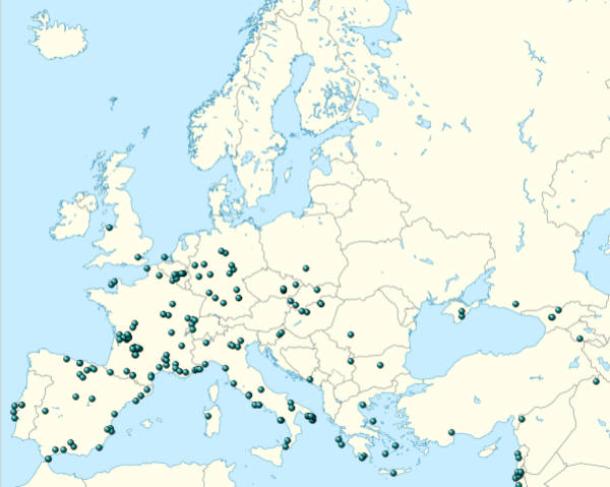
Locations of Neanderthal archaeological sites in Europe and the Levant. (Wikipedia/CC BY-SA 4.0).
Beasley’s research also has implications for understanding gender roles within Neanderthal communities. Traditionally, the emphasis in human evolutionary studies has been on hunting, often portraying men as the primary food providers. However, biological anthropologist Sang-Hee Lee from the University of California, Riverside, suggests that Beasley’s findings disrupt this perspective.
“One of the fundamental tenets of human evolution research [has been] the primacy of hunting, with men, not women, as hunters,” Lee explained to Science. “Melanie throws a wrench into this: Eating maggots can result in high nitrogen levels, too.”
Since maggot collection required no specialized hunting skills, both men and women could have contributed to this aspect of Neanderthal food gathering.
Beasley’s work offers a fresh look at Neanderthal dietary habits, reinforcing the idea that their survival depended on resourcefulness and adaptability rather than on hunting alone. It is one of many fascinating discoveries over the past few years that has changed our perspective on our Neanderthal cousins, who were far more complex and inventive than was once believed.
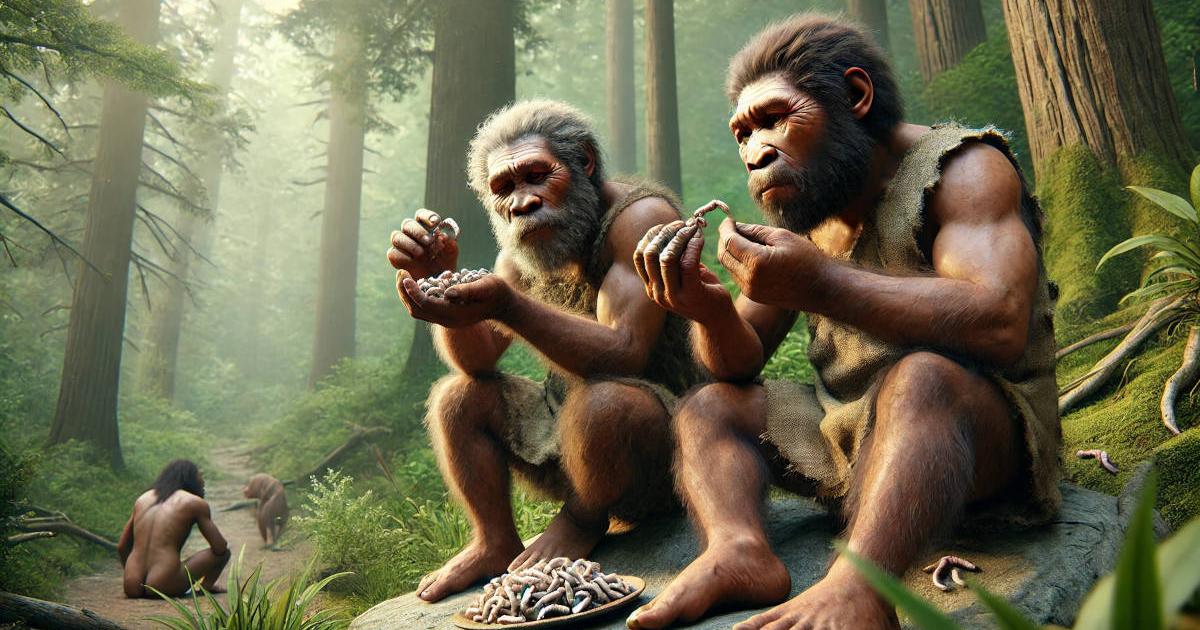
Top image: AI-generated image of two Neanderthals chowing down on delicious maggots.
Source: ChatGPT.
By Nathan Falde