
Using state-of-the-art computer modeling and climate reconstructions, a team of anthropologists has unveiled the possible migratory highways used by Neanderthals to journey thousands of kilometers from Eastern Europe to the remote reaches of Siberia - an odyssey that may have taken less than 2,000 years.
The study, published in PLoS ONE and led by Emily Coco of the University of Algarve and Radu Iovita of New York University's Center for the Study of Human Origins, proposes that Neanderthals' dispersal into Central and Eastern Eurasia was not only possible, it was almost inevitable.
"Despite natural barriers like mountains and glacial rivers, Neanderthals could have moved remarkably quickly across northern Eurasia," explains Coco. "The key was timing their journeys during periods of warmer climate, when landscapes were more passable."
- Study Shows Neanderthals Had Capacity To Produce And Understand Speech
- French Rock Shelter Changes Story of Neanderthals and Sapiens In Europe
Mapping the Invisible: How Did They Get to Siberia?
The ancient Altai Mountains in Siberia (home to the famed Denisova Cave) have long puzzled scientists. How did Neanderthals, originally from Europe, reach this distant region?
While genetic evidence and archaeological remains suggest a presence in the Altai, the sparse distribution of sites between Eastern Europe and Siberia left scholars with more questions than answers - until now.
Using terrain elevation, climate models, glacial maps, and reconstructed river systems, Coco and Iovita simulated ancient movement across the vast Pleistocene landscape. Their model identified three major migration routes that Neanderthals could have followed between two interglacial periods:
- Marine Isotope Stage 5e (MIS 5e): ~125,000 years ago
- Marine Isotope Stage 3 (MIS 3): ~60,000 years ago
Each modeled route travels northeast through the Ural Mountains and along southern Siberian river valleys, corridors which frequently intersect known archaeological sites.
"We see that Neanderthals were likely taking advantage of the same features that modern animals and even early Homo sapiens would have used," says Iovita. "River corridors were the highways of prehistory."
- Denisova Cave DNA: Neanderthals, Denisovans and Humans Lived Together!
- 11 Mysterious Human Species That Most People Don’t Know Existed

Computer simulated paths of Neanderthal dispersals demonstrate they could have reached the Altai Mountains in Siberia within 2,000 years during warm climatic conditions in one of two ancient time periods—MIS 5e (approximately 125,000 years ago) or MIS 3 (approximately 60,000 years ago)—as demonstrated by the three different possible paths shown here. These paths follow a northern route through the Ural Mountains and southern Siberia, often intersecting with known archaeological sites from the same time periods. (Emily Coco and Radu Iovita/PLoS ONE)
Into Denisovan Territory: Encounters at the Edge of the World
Perhaps most intriguingly, the simulated migration routes pass directly through regions already occupied by Denisovans - a close cousin of both Neanderthals and modern humans. This geographic overlap aligns with genetic evidence of interbreeding between the two groups, discovered in DNA extracted from Denisova Cave.
"Our work supports the idea that Neanderthals and Denisovans didn't just know of each other, they encountered each other, coexisted, and even shared genes," Coco remarks.
These findings reinforce the complex, interwoven story of human ancestry, where species that once seemed distant and isolated are now understood to have mingled, adapted, and evolved together across immense distances.
The Inevitable March of Migration
The simulations suggest that such epic migrations were not outliers, but rather natural consequences of the environment and climate conditions of the time.
"Given the landscape and the climate windows available, their movement was nearly inevitable," Iovita explains in the study. "They were simply following where the land allowed."
By applying methods typically reserved for modeling modern human or animal movement, this research opens a new chapter in understanding ancient human dispersals-especially where archaeological evidence remains elusive.
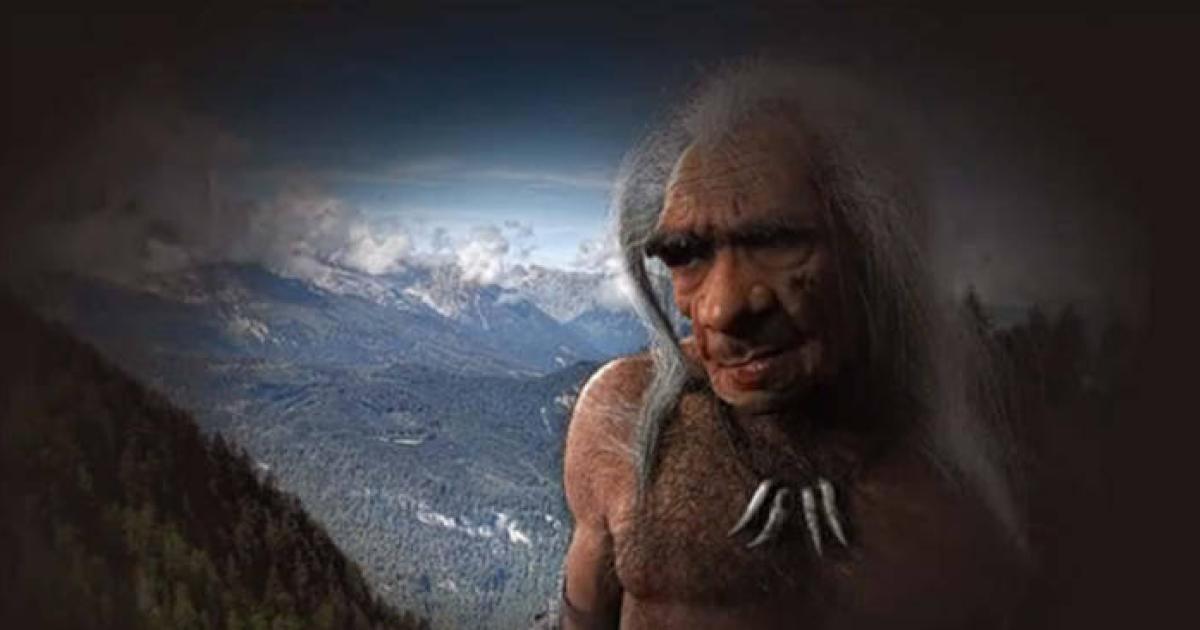
Top image: Artist’s impression of elderly Neanderthal male based on fossil found at La Chappelle-aux-Saints). Source: YouTube Screen Capture
By Gary Manners
References
Coco E, Iovita R (2025) Agent-based simulations reveal the possibility of multiple rapid northern routes for the second Neanderthal dispersal from Western to Eastern Eurasia. PLoS One 20(6): e0325693. https://doi.org/10.1371/journal.pone.0325693
Devitt, James, 2025. Anthropologists Map Neanderthals’ Long and Winding Roads Across Europe and Eurasia. New York University. Available at: https://www.nyu.edu/about/news-publications/news/2025/june/anthropologists-map-neanderthals--long-and-winding-roads-across-.html