Charred hazelnut shells discovered at an archaeological site in Cornwall have pushed back the date for the arrival of the Neolithic period in the region by at least a century. New radiocarbon dating evidence from Tregunnel Hill, near Newquay, suggests that farming and settled life began in this part of Britain nearly 6,000 years ago, significantly earlier than previously thought. The discovery, published by Cotswold Archaeology, is reshaping our understanding of a pivotal moment in British prehistory.
The excavations uncovered a rich and complex archaeological landscape with evidence of human activity spanning over 10,000 years, from the Mesolithic through to the post-medieval era. Among the most significant finds were several prehistoric pits containing deliberately placed deposits. One particularly large pit revealed a structured sequence of charcoal-rich ash, broken pottery including a Carinated Bowl, flint tools, animal bones, and beach cobbles, all sealed beneath a layer of soil.
- King Arthur's Hall Re-Dated to the Neolithic
- More than a Dozen Mysterious Prehistoric Tunnels in Cornwall Mystify Researchers
Redefining the Neolithic in Cornwall
The Neolithic period marks one of the most fundamental shifts in human history - the transition from mobile hunter-gatherer lifestyles to settled farming communities. This change brought with it the domestication of plants and animals, such as wheat, barley, pigs, and cattle, as well as new technologies like pottery. The findings at Tregunnel Hill provide crucial new insights into when and how these practices first reached Cornwall and the wider South West of Britain.
Radiocarbon dating of charred hazelnut shells from the large pit yielded dates between 3985 BC and 3793 BC. A smaller, nearby pit, which may have functioned as a fire pit, based on internal scorching, produced a similar date range of 3950 BC to 3760 BC. These dates firmly place the activity in the Early Neolithic and are among the earliest confirmed evidence for this period in Cornwall, pushing back the start of the Neolithic in the region to before 3800 BC.
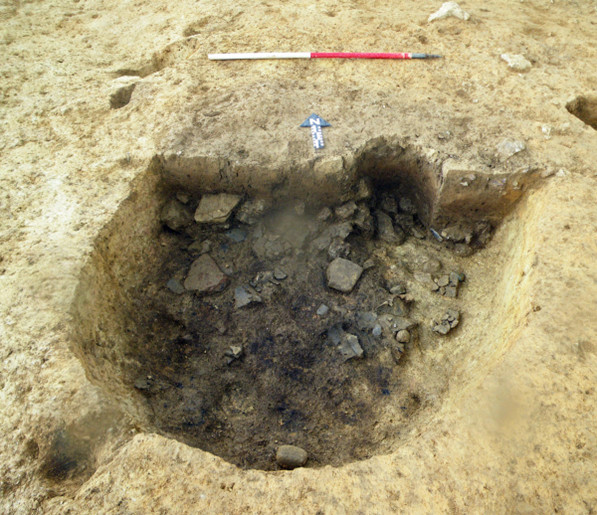
Early Neolithic pit showing broken pottery, worked flint and stone. (CC / Cotswold Archaeology)
Ritual, Domestic Life, and the Pits of Tregunnel Hill
While the excavations did not reveal structural evidence of permanent buildings (which are rare for this period and leave little archaeological trace) the carefully placed deposits in the pits offer strong evidence of ritual activity. The presence of food and cereal remains suggests that domestic waste was also deposited in the pits, pointing to a combination of ritual and everyday life. The discovery of a Carinated Bowl, a type of Neolithic pottery closely associated with early farming communities in Britain, further strengthens this interpretation.
These findings challenge the previous understanding of the timeline for the arrival of Neolithic practices in the South West. The new dates from Tregunnel Hill suggest a more rapid and earlier adoption of farming and settled life in this part of Britain than previously thought. This has significant implications for our broader understanding of how the Neolithic revolution spread across the British Isles from mainland Europe.
- The Many Legends Accounting for the Mysterious Trethevy Quoit of Cornwall
- 5000-year-old Cornish Monument to be Restored to its Former Glory
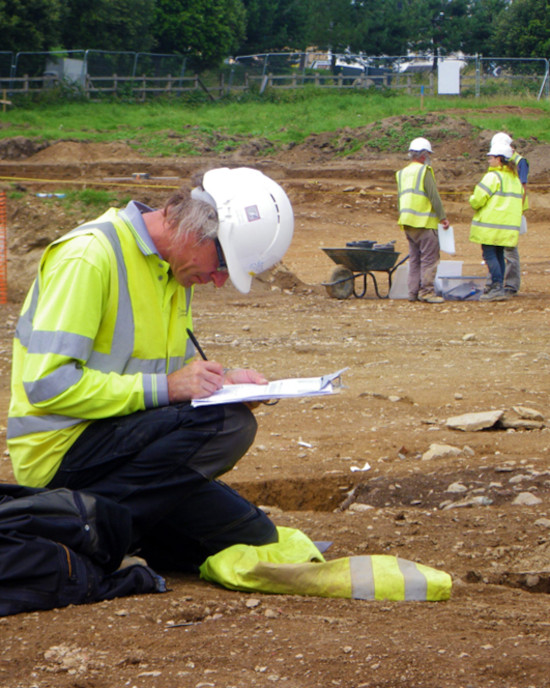
Archaeologist recording a feature at Tregunnel Hill (CC / Cotswold Archaeology)
A New Chapter for Cornwall's Deep Past
The significance of the Tregunnel Hill discovery extends beyond Cornwall. The South West of Britain has long been considered something of a peripheral region in discussions of the Neolithic transition, but these new dates suggest it was part of a broader, earlier wave of Neolithic settlement. Hazelnut shells, often overlooked as humble food debris, have here proved to be extraordinary time capsules, preserving within their charred remains the precise moment when a new way of life took hold in one of Britain's most ancient landscapes.
Top image: Archaeologists excavating at Tregunnel Hill, Newquay. Inset; Neolithic pit with pottery. Source: Cotswold Archaeology
By Gary Manners
References
Cotswold Archaeology. 2026. New radiocarbon evidence redates Cornwall's Neolithic. Available at: https://cotswoldarchaeology.co.uk/radiocarbon-cornwall-neolithic/
HeritageDaily. 2026. Hazelnut shells rewrite the prehistoric history of Cornwall. Available at: https://www.heritagedaily.com/2026/03/hazelnut-shells-rewrites-the-prehistoric-history-of-cornwall/157396

![The Great Pyramid Of Giza Top image: The Great Pyramid of Giza under a starlit sky, highlighting the North Face. Source: [Pixabay/Creative Commons] Image](https://www.ancient-origins.net/sites/default/files/styles/article_featured_big/public/field/image/Great Pyramid Of Giza_0.jpg?itok=yavsyDqT)