
For the first time, scientists may be able to predict the onset of the next ice age with remarkable accuracy. New research confirms a long-standing theory that Earth's tilt in relation to the sun has dictated the cycle of ice ages for the past 800,000 years, triggering both their onset and decline.
The groundbreaking study that verified this concept was led by Stephen Barker, a researcher from the Department of Earth and Environmental Sciences at Cardiff University in the United Kingdom, He and his colleagues identified a striking correlation between changes in Earth's axial tilt and the formation of massive ice sheets. According to their findings, the next ice age will likely have arrived in earnest in approximately 11,000 years, but with one important caveat: the potential impact of human-induced global warming, which if real, continuous and significant could disrupt this natural cycle.
“The prediction is that the next ice age will begin within the next 10,000 years,” Barker told Live Science, before adding that the accumulated effects of greenhouse gas emissions, which most climate scientists believe is rapidly warming the planet, could delay or entirely prevent the next glaciation.
- Why do Ice Ages occur? A New Paradigm Shift on a Prehistoric Problem
- The Little Ice Age and Its Giant Impact on Human History
Understanding Ice Age Cycles
Ice ages, also known as glacial periods, are long phases of extreme cold that occur approximately every 100,000 years, covering vast portions of the planet in thick ice sheets. These glacial periods are interspersed with warmer interglacial phases, during which ice sheets retreat toward the poles. Currently, Earth is in an interglacial period, with the last major glaciation peaking around 20,000 years ago.
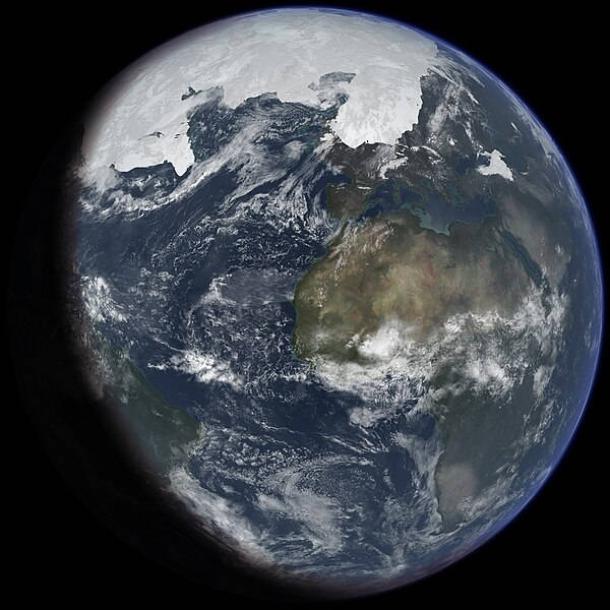
Artist’s conception of what the Earth looked like during the last ice age. (Ittiz/CC BY-SA 3.0).
For over a century, scientists have suspected that Earth's position and tilt relative to the sun influence the expansion and contraction of ice sheets. This idea was first proposed in the 1920s by Serbian scientist Milutin Milankovitch, who suggested that slight variations in Earth's axial tilt and orbital shape could trigger significant glacial events.
Researchers have spent decades testing this theory. And in fact, a 1976 study provided geological evidence linking ice sheet activity to two specific parameters: obliquity (changes in Earth's axial tilt) and precession (the wobble of Earth’s axis). However, the precise role of these factors remained unclear until now.
The Role of the Earth's Tilt and Wobble
Barker and his colleagues recently published findings in the journal Science that clarify how these parameters shape ice age cycles.
Currently, the Earth’s axis is tilted at a 23.5-degree angle, influencing the amount of solar energy reaching the poles. Over a 41,000-year cycle, this tilt naturally fluctuates. Meanwhile, Earth's axis also wobbles over a 21,000-year period, affecting how much solar radiation reaches equatorial regions during summer. This creates a complex dynamic that interacts with the complex dynamic of climate, causing shifts in climate and weather that can be dramatic and profoundly life-altering for the species that populate the planet.
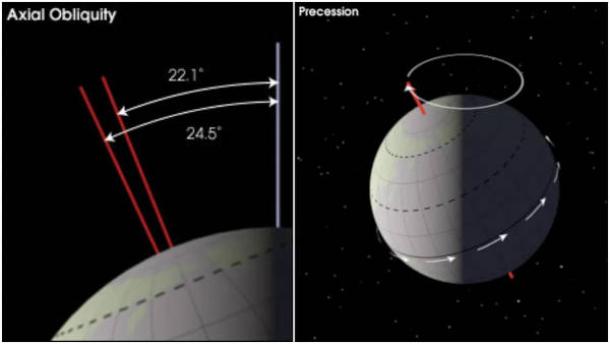
Obliquity primarily determines how much sunlight hits the poles, while precession governs the intensity of sunlight in equatorial regions. (Robert Simmon/NASA).
To better understand these effects, the research team analyzed 800,000 years of data, mapping known changes in axial tilt and precession alongside ice sheet expansion and retreat. The ice sheet data came from the chemical composition of microscopic marine fossils called forams, preserved in ocean sediment cores. The oxygen isotopes in these fossils reveal the extent of ice coverage at different times.
The results provided a breakthrough moment.
“We found this amazing correlation [...] that says there's a direct relationship between the phasing of obliquity and precession, and then the resulting duration of how long it takes the ice sheets to decay,” Barker explained.
- Should We Thank or Blame the Ancestors? Ancient Farmers Stop the Ice Age
- Rising to the Challenge: Innovative Civilizations Advanced Through Climate Change
Simply put, the growth of ice sheets from the poles toward the equator appears to be primarily influenced by obliquity, while their retreat is more closely tied to precession. Since these cycles determine how much sunlight reaches different parts of the planet, their role in ice sheet behavior is now clearer than ever.
The Next Ice Age is Coming! Maybe ...
With their newly refined model, the researchers projected when the next ice age would begin—if natural climate cycles were the only factor. According to their findings, ice sheets would start expanding again in about 10,000 to 11,000 years, reaching their peak size after another 80,000 to 90,000 years. They would then take roughly 10,000 years to retreat back toward the poles.
However, human-driven climate change could alter these natural cycles. The increase in atmospheric CO2 and other greenhouse gases are heating the planet at an unprecedented rate, Barker and his colleagues say, and as a result, global warming could indefinitely delay the next ice age.
“If CO2 stays high, you won’t get a new glaciation,” Barker stated.
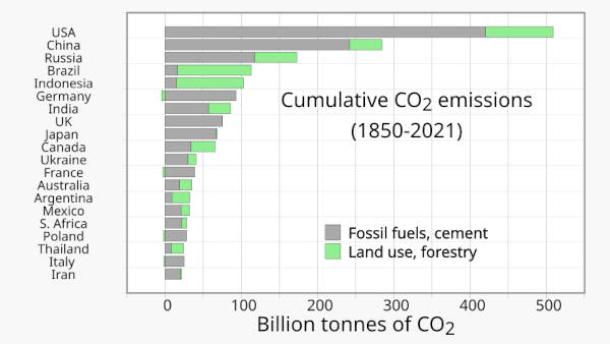
Bar chart of cumulative carbon dioxide CO₂ emissions by country (1850–2021). (RCraig09/CC BY-SA 4.0).
Despite this belief, the researchers caution that preventing an ice age is not a justification for unchecked emissions of greenhouse gases.
“What we don’t want is for people who want to emit more CO2 into the atmosphere to jump on this,” Barker warned – although if the most dire predictions about climate change are right, society could collapse completely as a result of the droughts, sea level rise and extreme weather events it causes, plunging humanity back into a prolonged post-technological Stone Age with minimal fossil fuel consumption (and no more global warming).
Likewise, if investments in new energy technology bear fruit in the coming decades, that could also lead to a rapid decline in the emission of CO2, turning concerns about climate change a thing of the past. And if climate scientists are ultimately proven wrong about the connection between climate change and CO2 emissions, with the current rise in global temperatures proving to have been caused by other factors, human-induced global warming may not have any impact on ice age cycles whatsoever. And even if its real, the impact of human-induced global warming may be overwhelmed by the forces that trigger the onset of ice ages, which could be far too powerful to be slowed or halted.
Whether the next ice age arrives as predicted or is indefinitely postponed remains an open question, and one that could hinge on the choices humanity makes in the coming decades. But then again, thinking that anything we do or don’t do will have an effect on ice age cycles could prove to be the height of folly.
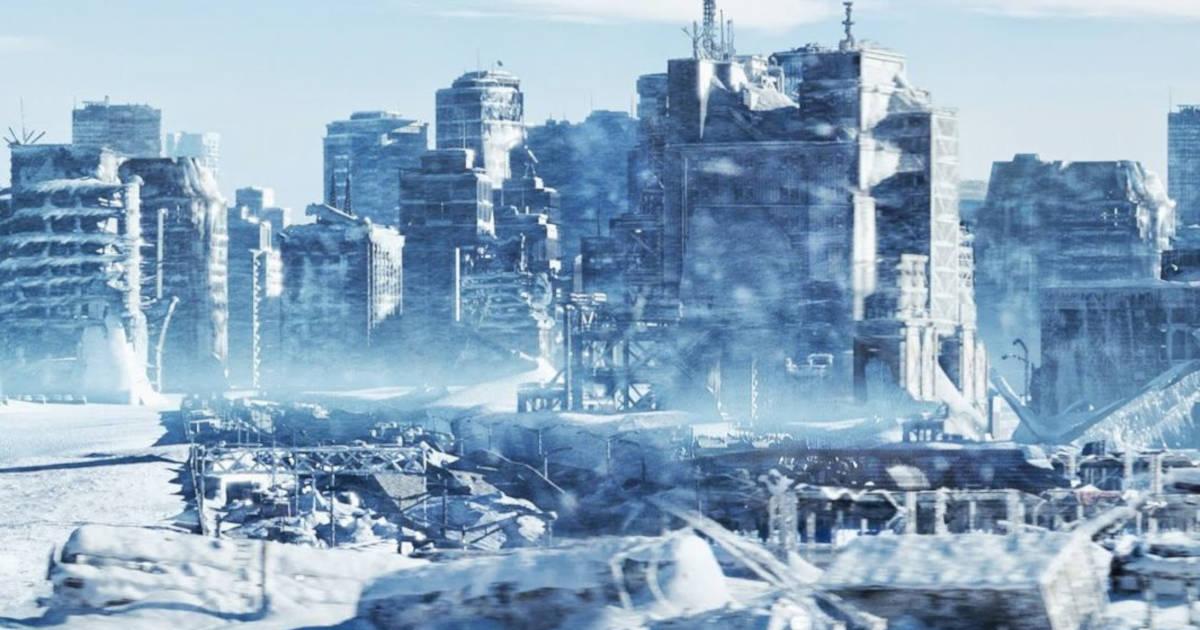
Top image: Image of a city of the future covered by a layer of ice during the next ice age.
Source: NeoPress.
By Nathan Falde