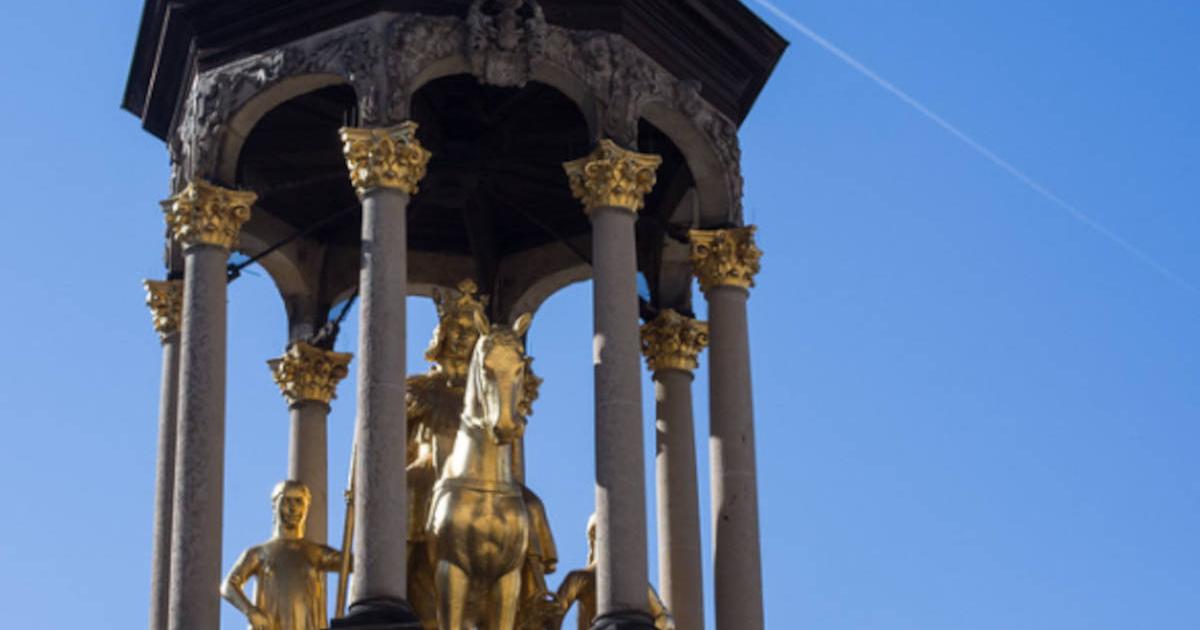

The throne of the Holy Roman Emperor was a very attractive position in the Early Middle Ages. It signified power, control, and immeasurable wealth. And, naturally, many of Europe’s Kings and nobles sought to reach this lofty position.
But, of course, it was no easy task. The throne was reserved only for the most powerful, tenacious, and influential leaders. One such leader was Otto the Great, a Frankish German King and the son of the famed Henry the Fowler. Otto was emperor for 11 years, and during this time he achieved many notable things. For these, he earned the moniker “the Great”, which reflected his power and solidified his authority. This is his story ...
- The Ottoman Empire: 600 Years of Domination
- Huge 1,000-Year-Old Church Built by Otto the Great Found In Germany
Otto the Great and the Ascent of the Ottonians
Born on November 23rd, 912 AD, Otto was the son of powerful Henry the Fowler, Duke of Saxony, and Matilda of Ringelheim, daughter to a great lord. Seven years later, his father, Henry, became the King of East Francia, the first non-Frankish king to sit the throne. This was the start of the so-called “Ottonian dynasty”. As such, Henry the Fowler is credited as the first founder of the Medieval German state, until then known as East Francia. Henry, however, died in 936, and was succeeded by his able and powerful son, Otto. He inherited from his father a “patchwork” of fragmented duchies and continued to work on unifying all of the German tribes into a single, unified state. Soon, it would become obvious that he was a master ruler, able to consolidate the realm and shape the trajectory of the whole of Western Europe.
- The Annals of Quedlinburg: Rare Example of Female Scholarship in Medieval Europe
- Otto the Great’s Tribute to His Late English Queen Finally Makes Sense
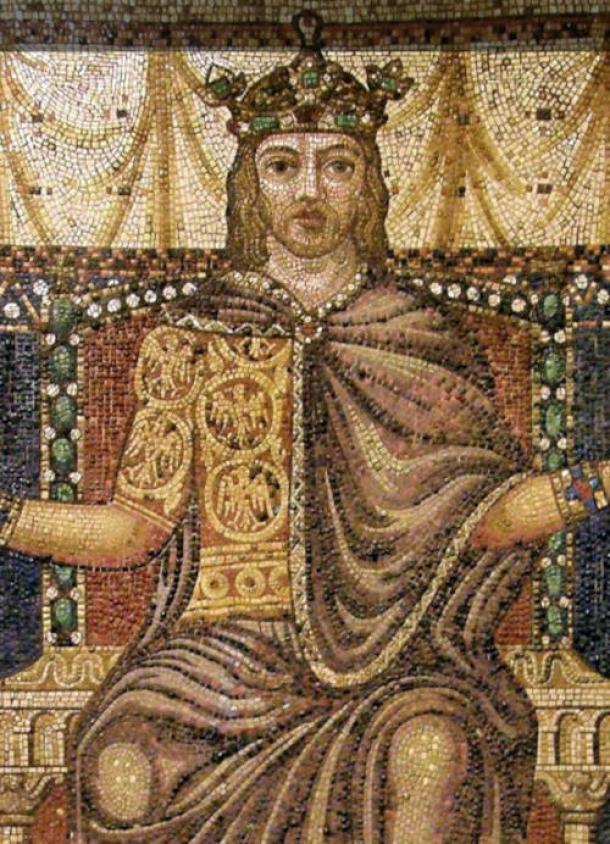
Otto I, Holy Roman Emperor. (Public Domain)
However, there was a lot of work ahead of him. His father’s legacy was vast, but his work was not yet finished. Otto was soon in the thick of the political complexities of the German duchies and post-Carolingian Europe. And even though his father laid the foundations for the swift rise of the Saxon dynasty, Otto had to ensure that this foundation would not crumble but was instead built upon. When his father died, Otto ascended to the throne of Germany in a lavish ceremony in Aachen. He was seated on the famed throne of Charlemagne in the Aachen Cathedral, and the entire coronation process evoked memories of Charlemagne. Many took this as a sign that Otto was to restore Charlemagne’s fractured realm to its former glory.
But as soon as the ceremonies were over, Otto had to get to work. The powerful dukes of Germany ruled semi-autonomously, even though Henry the Fowler united them into a single realm. The duchies of Franconia, Swabia, Bavaria, and Lorraine were often in conflict with one another, and vied for regional dominance, all the while resisting royal authority. And soon, Otto showed his qualities as a promising leader. He employed a combination of strategic marriages (which acted as alliances at the time), military force, and political alliances that helped him assert his supremacy as King. He himself married out of interest, creating a key alliance when he took the hand of Edith of England, the daughter of King Edward the Elder, son of Alfred the Great. This strengthened Otto’s ties with the Anglo-Saxon kingdom’s, elevated his prestige, and only increased his power and authority.
Power, Consolidated
As was often the case, the first thing Otto experienced was open rebellion. The proud lords were hard to accept suzerainty and fought hard to maintain their semi-independence. The revolt arose in 938 AD, led by Eberhard of Franconia and Thankmar, his half-brother. Otto was decisive in his response. Moving swiftly to besiege the rebellious nobles, he took the advantage and defeated them quickly and mercilessly. In this way, he was quick to reassert royal control and to solidify his position as the new king. Adding to this, he continued his policy of appointing loyal relatives and ecclesiastical figures to key positions. In this way, he further centralized his authority.
As all new rulers, Otto was likewise challenged in his early reign. A significant early threat came from his own younger brother, Henry, who wanted to claim a part of the kingdom for himself. After a long struggle, Otto managed to defeat his brother and forgive him, integrating him into his administration and inner circle. It was an act of clemency which served as a proof of Otto’s strategic acumen - he turned former rivals into staunch allies. And it was this ability to manage internal dissent that set the stage for other major challenges that he was to face later in his reign.
However, the threats he was to face were not always internal. After several years of his kingship, Otto had to face external threats as well, and for the first time at that. During the early parts of his reign, the Magyars made repeated incursions into Central Europe. They were a nomadic people arriving from the east and looking for a place to settle permanently. And for long they plagued the German duchies, exploiting their lack of apparent unity to pillage and plunder without mercy. And now, it was up to Otto the Great to deal with them - once and for all.
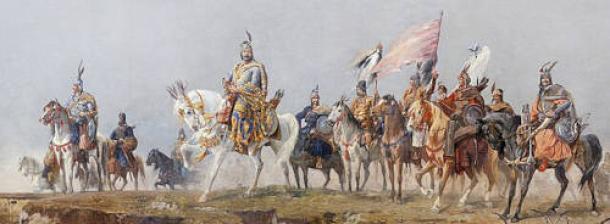
The Hungarians, also known as Magyars. (Public Domain)
One Threat After Another
The defining moment in Otto's military career came in 955 AD at the Battle of Lechfeld. The Magyar forces, emboldened by previous successes, launched a major raid into Bavaria. Otto would have none of it. He assembled a coalition army that included troops from Swabia, Bavaria, and Bohemia. His leadership on the battlefield was exemplary; employing innovative tactics, Otto decisively defeated the Magyars, ending their threat to the region. This victory not only secured his kingdom but also earned Otto widespread acclaim, cementing his reputation as a defender of Christendom. The Magyar army was decisively defeated, and their further excursions into Central Europe were stopped for good.
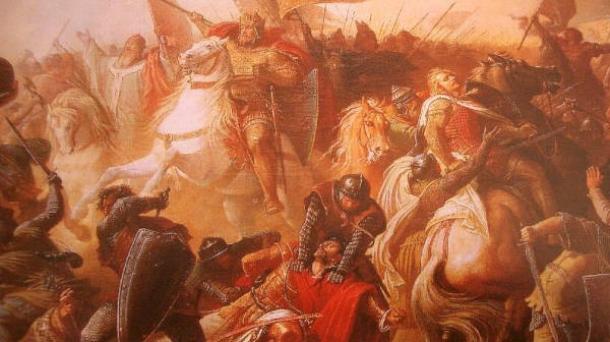
The Hungarian Battle of Lechfeld 955, an 1860 painting by Michael Echter. (Public Domain)
By this time, Otto was cemented as a powerful and capable ruler, the leader of all Germany. He further solidified his reign by cementing his relationship with the church. Recognizing the stabilizing influence of the Church, Otto sought to strengthen its ties with the monarchy. To that end, he granted extensive lands and privileges to ecclesiastical leaders, ensuring their loyalty. And in return, the bishops and abbots assumed a critical role in administering the realm, acting as royal representatives in regions where secular nobles could not be trusted. It was a major leap forward towards a centralized government, and only made Otto the Great greater.
By the late 940s AD, Otto rearranged his interior policies by utilizing the offices of the Catholic Church as tools of royal administration. In this way he set the course for the “Ottonian imperial church system”. This was the idea that clerics, who were celibate and without heirs, could be more loyal stewards of royal power than hereditary nobles. Otto’s appointment of bishops and abbots allowed him to bypass the secular aristocracy, consolidating his control. This symbiotic relationship between the crown and the Church became a defining feature of his reign and laid the groundwork for the later Holy Roman Empire.
Furthermore, his religious policies stretched beyond mere administration. Otto became a patron of major monastic reform. He supported movements such as the Cluniac reform, which sought to change monastic life and enforce stricter adherence to spiritual discipline. Otto’s efforts to combine religion with governance of the realm were crucial to establishing a unified Christian identity across his realm.
The Holy Roman Emperor
Otto the Great is best remembered for the revival of the imperial title and the establishment of the Holy Roman Empire. After Charlemagne, Otto was essentially the first emperor of the Holy Roman Empire, as compared to just the Roman Empire of Charlemagne. By the 10th century AD, Italy was embroiled in chaos. A series of weak kings and rival factions vied for power, succumbing to all-out war. The prominent nobles of Italy turned to Otto, who was at the time one of the most powerful European nobles. They sought his intervention, and with that, offered him a chance to expand his influence southwards - as well as his territories.
In 951 AD, Otto invaded Italy and married Adelaide, the widowed queen of Italy, consolidating his claim to the Italian crown. However, his ambition extended beyond merely ruling Italy. Otto sought to restore the imperial dignity that had lapsed since the death of Charlemagne's last legitimate successor. As a result, in 962 AD, Pope John XII crowned Otto as Emperor in Rome, thus marking the formal establishment of the Holy Roman Empire. Through this act, the fusion of the Roman Imperial tradition and German kingship was finally combined, and Otto’s role as the foremost protector of Christendom was firmly solidified. Of course, it goes without saying that the alliance with the papacy was mutually beneficial, as the pope gained Otto’s military support while Otto secured the Church’s blessing for his rule.
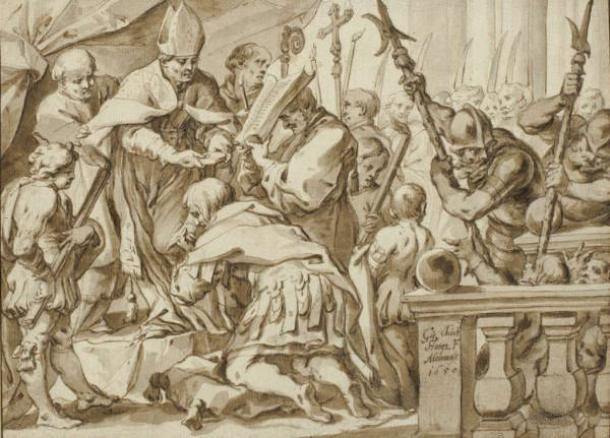
Coronation of Otto the Great in the Church of St. Ambrogio, Milan. (Public Domain)
Nevertheless, no matter how successful Otto was as a ruler, he was repeatedly challenged. The relationship between the emperor and the papacy, though initially cooperative, became strained with time. Pope John XII, dissatisfied with Otto’s growing influence, conspired against him. In response, Otto deposed the pope and installed Leo VIII, asserting his authority over the papacy. At this point, Otto the Great was the most powerful man in Europe, without a doubt. And what is more, his intervention with the church set a precedent for imperial involvement in papal affairs. This new relationship between the church and the empire shaped medieval politics for centuries.
The Father of the German State
Otto’s reign marked a cultural renaissance, often referred to as the Ottonian Renaissance. As much as he was a warrior, he was also a patron of the arts and of learning. Throughout his reign, he fostered an intellectual revival, which was focused on monastic schools and courtly, noble culture. The creation of manuscripts, religious architecture, and liturgical practices all flourished during his rule.
In his later years, facing repeated challenges to his rule and numerous revolts, Otto the Great focused on preparing his son, Otto II (later known as Otto the Red) for the throne.
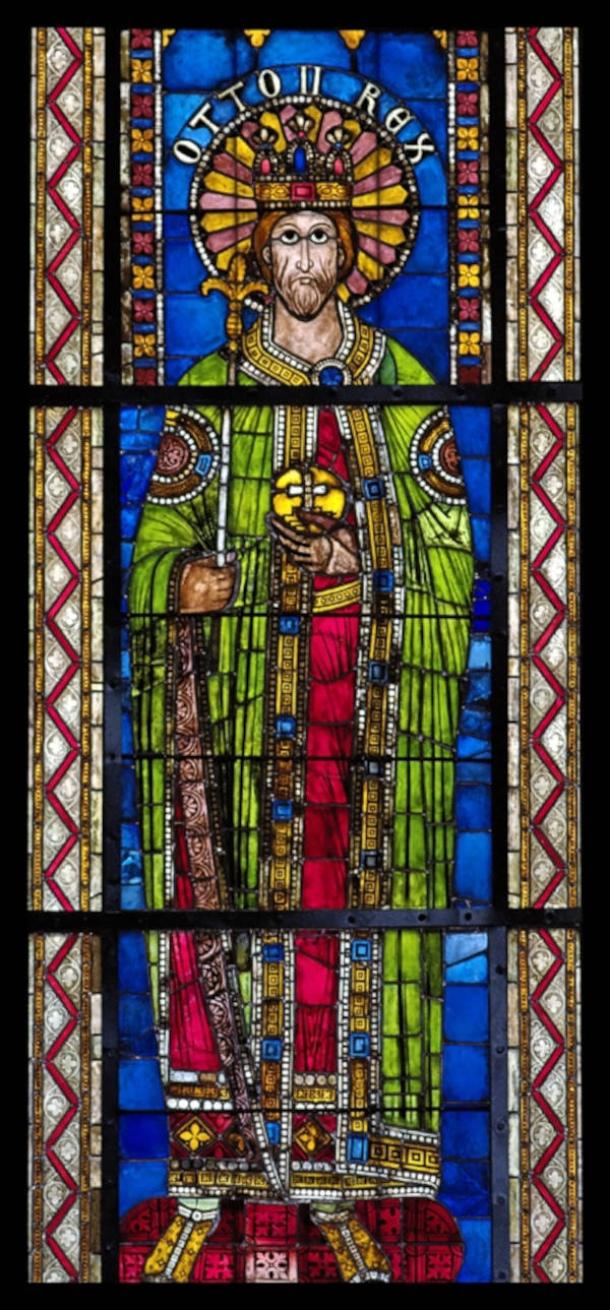
Romanesque stained glass depiction of Otto II also known as Otto the Red; Cathedral of Our Lady of Strasbourg, France (Public Domain)
In the winter of 967 AD, Otto II was crowned as co-emperor alongside his father, which ensured a smooth transition of power later on. In 973 AD, upon returning from Rome, Otto the Great found himself in his residence in Memleben, where his father, Henry the Fowler died 37 years before. As if it was fated, Otto fell ill with a fever, and subsequently died there, aged 60. The date was May 7th, 973 AD. At the time of his death, Otto was the most powerful man in the whole of Europe.
Top image: Statue of Otto I, Holy Roman Emperor. Source: Public Domain
References
Criswell, D. 2005. The Rise and Fall of the Holy Roman Empire: From Charlemagne to Napoleon. PublishAmerica.
Lasko, P. 1995. Ars Sacra: 800 - 1200. Yale University Press.
Stollberg-Rilinger, B. 2021. The Holy Roman Empire: A Short History. Princeton University Press.