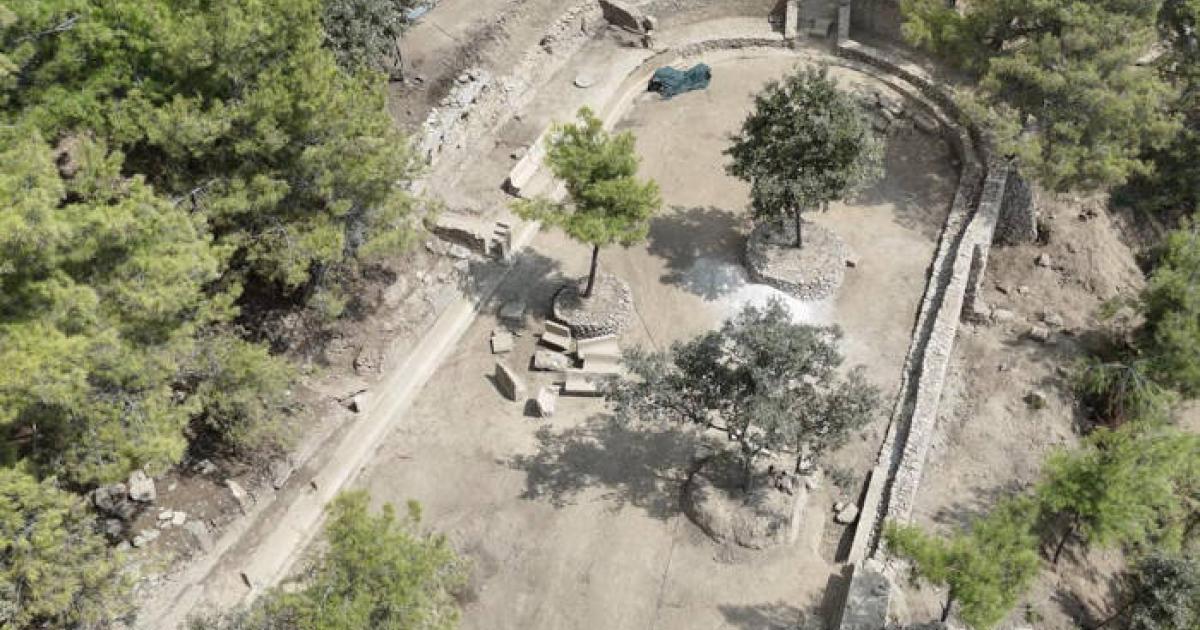

Archaeologists excavating the ancient city of Syedra in Turkey's Mediterranean region have uncovered a spectacular 1,800-year-old Roman stadium, revealing new insights into the sporting and cultural life of this once-thriving port city. The impressive discovery, measuring approximately 200 meters in length and 16 meters in width, was carved directly into the bedrock at an altitude of 340 meters above sea level. This remarkable find adds another layer to Syedra's rich archaeological heritage, which spans three millennia from the Hellenistic through Byzantine periods.
Ancient Athletic Arena Emerges from Turkish Hillside
The stadium discovery represents a significant breakthrough for the excavation team led by Associate Professor Ertug Ergurer from Alanya Alaaddin Keykubat University. Built directly into the city's natural bedrock, the structure had remained partially hidden for centuries, with only sections of the seating rows visible before the current excavation campaign. The findings suggest the stadium could accommodate between 2,000 and 3,000 spectators, making it a substantial venue for its time period.
- Turkey's Third-Largest Roman Odeon Emerges from Sagalassos
- Breakthrough Discovery Unveils Private Homes at Kultepe, Turkey
Located in the Alanya district of Antalya province, Syedra has been continuously inhabited since the ninth century BC, serving as an important port city that witnessed the rise and fall of multiple civilizations. The site preserves architectural and cultural elements from Hellenistic, Roman, Byzantine, and Anatolian Seljuk periods, making it a treasure trove for understanding Mediterranean history.
The northern section of the stadium remains remarkably well-preserved, showcasing the exceptional craftsmanship of Roman builders. Ergurer noted that while only the stone seating rows survive today, evidence from other buildings in the city suggests that higher tiers were constructed from wood. The southern portion suffered damage from later fortification walls, but enough remains to understand the stadium's original impressive scope.
- Astonished Archaeologists Find Roman Colosseum Replica in Turkey
- Massive Mosaic Depicting the 12 Labors of Heracles Found in Turkey
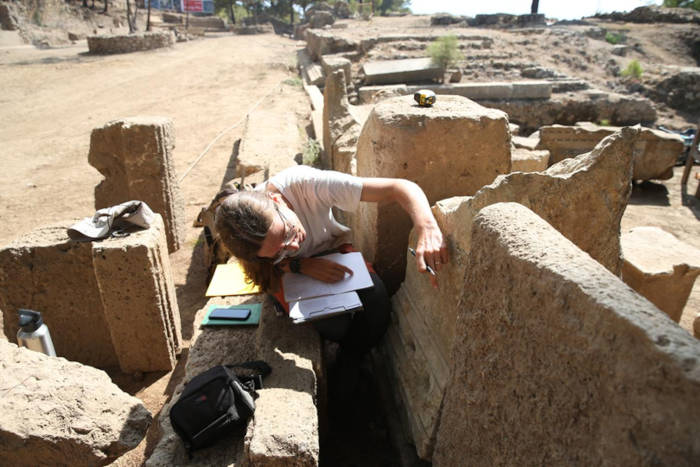
Archaeological team examining preserved stone blocks from the ancient stadium structure. (AA Photo via Türkiye Today)
Athletic Inscriptions Reveal Sports Heritage
Nearly 40 inscriptions discovered throughout Syedra provide compelling evidence of the city's athletic traditions, with particular emphasis on wrestling and boxing competitions. These ancient texts suggest that the newly discovered stadium hosted not only athletic competitions but also religious festivals and imperial celebrations during the height of Roman rule.
The presence of such an elaborate sporting facility indicates that Syedra enjoyed considerable prosperity and status during the Roman period, comparable to neighboring cities along the Mediterranean coast. The stadium's construction required significant resources and engineering expertise, suggesting the city's importance as a regional center for trade, culture, and entertainment.
The discovery aligns with broader archaeological evidence showing that Roman athletic culture spread throughout the empire, with local communities adopting and adapting Greek sporting traditions. Wrestling and boxing, mentioned prominently in Syedra's inscriptions, were central to Roman athletic competitions and often held religious significance.
Architectural Marvel Reveals Roman Engineering
The stadium's construction demonstrates remarkable Roman engineering skills, with builders taking advantage of the natural hillside topography to create an amphitheater-like setting. Carved directly into bedrock, the structure required minimal foundation work while providing excellent sight lines and acoustics for spectators. This approach was common in Roman stadium construction, where engineers skillfully incorporated natural landscapes into their architectural designs.
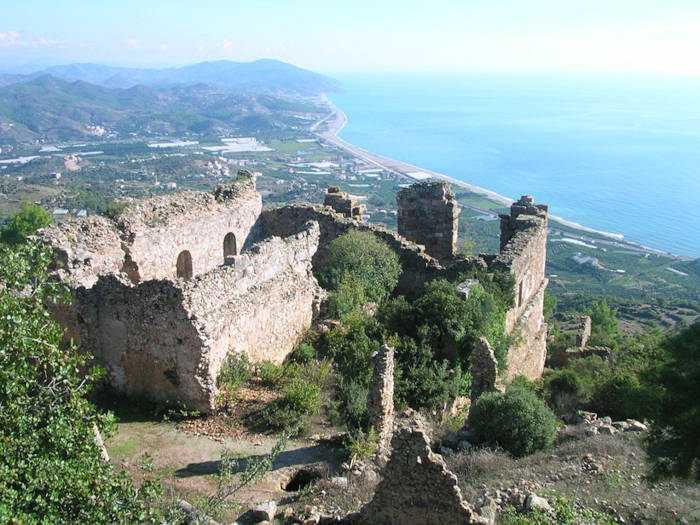
Overview of Syedra's extensive Roman ruins showcasing the site's architectural complexity. (matzi01/CC BY-SA 3.0)
Ergurer emphasized that the craftsmanship of the stone blocks ranks among the finest found anywhere in the ancient city. The precision of the stonework reflects the high standards of Roman construction techniques, designed to withstand centuries of use and natural weathering. The stadium joins an impressive array of monuments at Syedra, including a colonnaded street, large bathhouse, council building, and the famous mosaic floor depicting the twelve labors of Heracles.
The site's extensive water supply system, complete with cisterns and channels, likely served the stadium during major events, ensuring adequate water for both spectators and participants. This infrastructure demonstrates the comprehensive planning that went into creating a major entertainment venue in the ancient world.

Roman Emperors Running the Family Business Interview from the AO Store.
Preserving Three Millennia of History
Syedra's archaeological significance extends far beyond the recent stadium discovery, encompassing a continuous record of human occupation spanning nearly 3,000 years. The Ministry of Culture and Tourism's "Heritage for the Future" project continues to preserve and study the site's remarkable architectural and cultural remains. Recent discoveries have included hidden Roman-era cisterns and mosaics, adding to the growing understanding of this ancient port city's importance.
The stadium discovery represents just the latest chapter in Syedra's ongoing archaeological story, with excavations regularly uncovering new insights into Mediterranean civilizations. Statues of the goddess Nike, elaborate staircases connecting different city levels, and sophisticated hydraulic systems all testify to the city's former grandeur and cultural sophistication.
Future excavation plans include further exploration of the stadium's surrounding areas and continued investigation of the city's residential quarters. The research team hopes to uncover additional evidence of daily life in ancient Syedra, potentially including training facilities, changing rooms, or related structures that supported the stadium's athletic programs.
Top image: Aerial view of the 1,800-year-old Roman stadium carved into bedrock at the ancient city of Syedra in Alanya, Turkey. Source: AA/Türkiye Today
By Gary Manners
References
Ergurer, E. (2025). 1,800-year-old stadium excavation at Syedra Ancient City. Alanya Alaaddin Keykubat University Archaeological Project.
Hispanatolia. (2025). Archaeologists uncover ancient Roman stadium in Antalya, Turkey. Available at: https://hispanatolia.com/en/archaeologists-uncover-ancient-roman-stadium-in-antalya-turkey/
Hürriyet Daily News. (2025). 1,800-year-old stadium unearthed in Antalya's Syedra Ancient City. Available at: https://www.hurriyetdailynews.com/1-800-year-old-stadium-unearthed-in-antalyas-syedra-ancient-city-213809
Jerusalem Post. (2025). 1800-year-old Roman stadium found in Syedra, Turkey. Available at: https://www.jpost.com/archaeology/article-868215
Türkiye Today. (2025). 1800-year-old stadium unearthed in Türkiye's ancient city of Syedra. Available at: https://www.turkiyetoday.com/culture/1800-year-old-stadium-unearthed-in-turkiyes-ancient-city-of-syedra-3207132