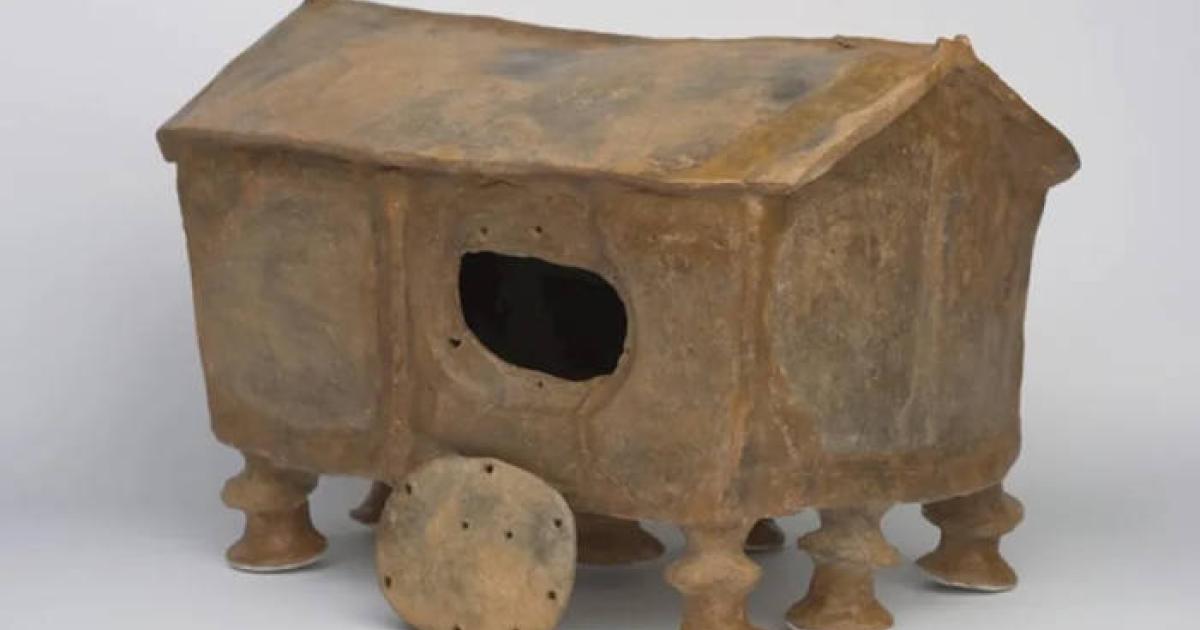

The Archaeological Museum in Gdansk has publicly presented an extraordinary 2,600-year-old house urn for the first time, marking a significant milestone in Polish archaeology. This remarkable Early Iron Age artifact, discovered in 2023 during rescue excavations in Bożepole Wielkie, represents only the fourth house urn found in Poland since World War II, making it an exceptionally rare and valuable archaeological treasure, reports PAP.
The unique rectangular clay vessel, designed to mimic a house complete with nine legs and a round door, provides fascinating insights into cremation practices of the Pomeranian culture that flourished between the 7th and 3rd centuries BC. Unlike typical burial urns, this house-shaped container held the cremated remains of multiple individuals, offering unprecedented evidence of Early Iron Age funeral traditions in Eastern Pomerania.
- Unique and Decorative Burial Urns with Faces in the Pomeranian Culture
- Rich Ancient Burial Ground Reaps Rare Artifacts Near Krakow

The house urn in situ at Bożepole Wielkie, Poland. (Archaeological Museum in Gdańsk)
Multiple Burial Discovery Reveals Family Connections
Dr. Piotr Fudziński, head of the Early Iron Age Department at the Archaeological Museum in Gdansk, explained the significance of this extraordinary find.
"This artifact is exceptional not only because it's just the fourth such house-shaped cremation urn discovered post-World War II, but also due to its remarkable state of preservation," he told Science in Poland.
The urn contained a multiple burial featuring the cremated remains of at least four individuals. Anthropological analysis confirmed the presence of a child over ten years old, an adult male, and likely two additional people, including a probable female. This discovery challenges previous understanding of Early Iron Age burial practices, suggesting complex family or community connections in cremation ceremonies.
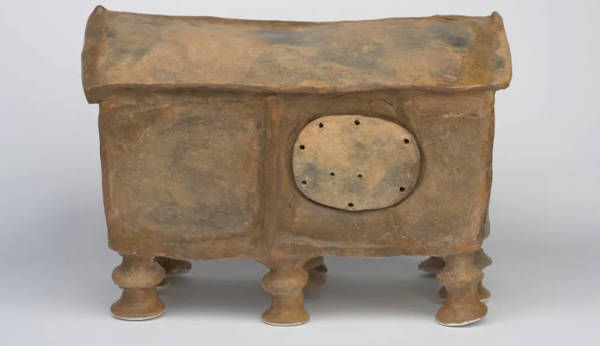
The house urn from Bożepole Wielkie after conservation at the Archaeological Museum in Gdańsk (photo by Zofia Grunt/PAP)
In the 7th century BC, Eastern Pomeranian communities practiced cremation burial rituals where deceased individuals were carefully burned on pyres. "The process involved meticulous collection of bone fragments after cremation, which were then placed in urns alongside small bronze or metallic objects that belonged to the deceased," Fudziński detailed. Nearly seven pounds of cremated bones were excavated from this single house urn, indicating the careful preservation of multiple individuals' remains.
Sophisticated Conservation Reveals Hidden Details
The house urn underwent extensive conservation and research following its discovery during commercial development excavations funded by Lidl company. The History Blog reported that CT scans revealed internal cracks and fissures that were held together only by soil deposits, requiring painstaking reconstruction work.
Archaeologists from the Foundation of Archaeological Heritage conducted the initial rescue excavation, discovering the urn within a carefully constructed cist grave made of multi-colored stone slabs. The Provincial Conservator of Monuments for Pomeranian Voivodeship subsequently transferred the artifact to the Archaeological Museum in Gdansk for specialized treatment.
Conservation specialists created custom molded replicas to replace missing legs and used precise plaster and adhesive techniques to reassemble every fragment. This meticulous process enabled the urn to be displayed publicly for the first time in September 2024 at the Błękitny Baranek Granary, a branch of the Archaeological Museum.
- 2000-Year-Old Germanic Warrior Burials Unearthed In Poland
- Artifacts of War: Ancient Polish Weapons Found in Iron Age Graves
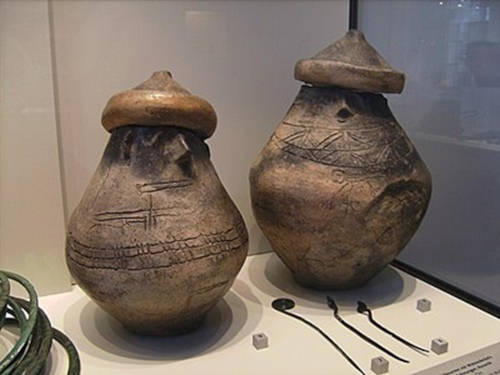
Early Iron Age cremation urns from Vor Museum archaeological collection. (Lillyundfreya/CC BY-SA 3.0)
Pomeranian Culture's Unique Burial Traditions
The Pomeranian culture evolved from the Lusatian culture around 650 BC, developing distinctive burial practices that included both house urns and face urns. These cultures flourished in areas between the Oder and Vistula Rivers, representing sophisticated Iron Age communities that maintained extensive trade networks and complex social structures.
House urns like the Bożepole Wielkie specimen typically stood on multiple legs and featured architectural details mimicking contemporary dwellings. This symbolic connection between homes for the living and final resting places suggests deep spiritual beliefs about death and afterlife transition within Pomeranian society.
Archaeological evidence indicates these communities practiced systematic agriculture, including early cultivation of rye, while maintaining fewer hillforts than neighboring Lusatian populations. Southern trade connections remained limited, suggesting relatively isolated but self-sufficient cultural development throughout the Early Iron Age period.
Future Exhibition Plans and Research Potential
The Archaeological Museum plans to incorporate this exceptional house urn into a new archaeological exhibition at the renovated Natural History House on Mariacka Street in Gdansk. This permanent display will contextualize the artifact within broader Early Iron Age developments across northern Poland and the Baltic region.
Ongoing research continues examining the cremated remains and associated grave goods recovered from the urn. Advanced analytical techniques may reveal dietary information, health conditions, and genetic relationships among the buried individuals, potentially illuminating family structures and social organization within Pomeranian communities.
The discovery emphasizes the importance of rescue archaeology during modern construction projects. Without the systematic excavations required before commercial development, this irreplaceable window into Early Iron Age life would have been permanently lost, highlighting ongoing challenges in preserving Poland's rich archaeological heritage for future generations.
Top image: The house urn from Bożepole Wielkie after conservation at the Archaeological Museum in Gdańsk. Source: Zofia Grunt/PAP
By Gary Manners
References
Archaeological Museum in Gdańsk, 2025. Prezentacja urny domkowej z Bożepola Wielkiego. Available at: https://archeologia.pl/en/aktualnosci/blekitny-baranek-aktualnosci/urna-domkowa-bozepole-wielkie/
Fudziński, P. 2024. Archaeological Museum Presentation. Available at: https://naukawpolsce.pl/aktualnosci/news%2C109213%2Cgdansk-w-muzeum-archeologicznym-zaprezentowano-urne-domkowa-sprzed-2600-lat
History Blog, The. 2024. Rare 2600-year-old house urn found in Poland. Available at: https://www.thehistoryblog.com/archives/74077