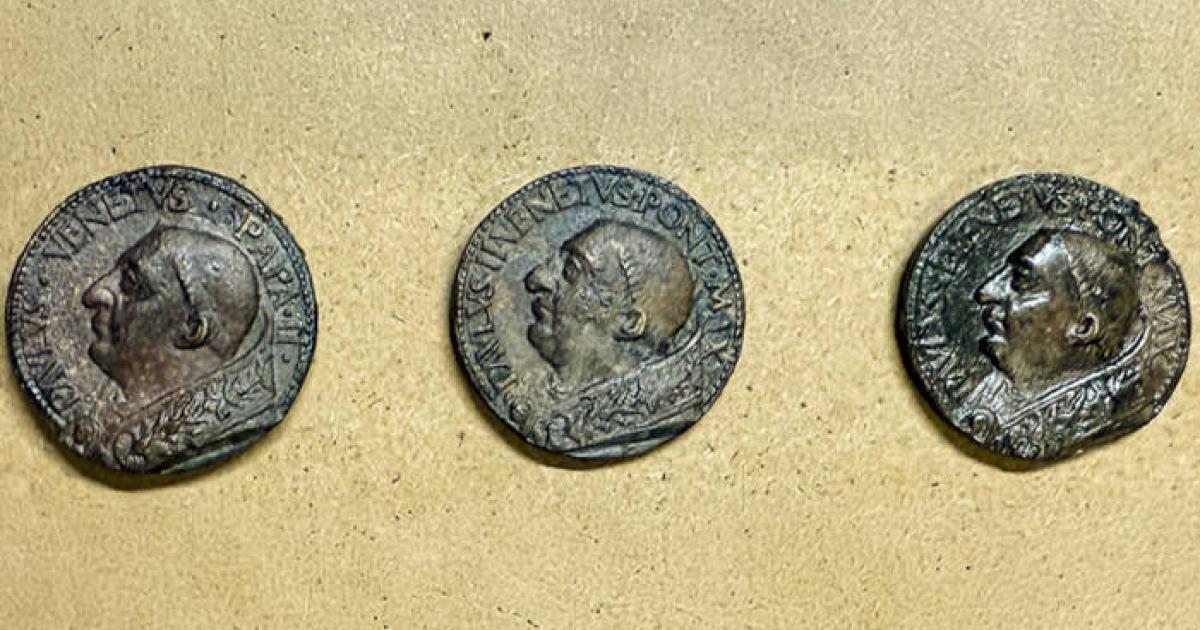

Archaeologists working on Rome's Metro Line C have uncovered three remarkable 15th-century bronze medals bearing the image of Pope Paul II, providing unprecedented insight into Renaissance-era foundation rituals. The medals, dating to 1465, were discovered carefully buried in a terracotta vessel beneath the foundations of Palazzetto Venezia in central Rome's Piazza Venezia.
Construction Reveals Sacred Foundation Ritual
The discovery represents more than mere archaeological treasure. These medals were deliberately placed during the building's construction as part of an ancient auspicious tradition meant to bring fortune to significant structures. The timing of their burial corresponds precisely with Pope Paul II's commission of the Palazzetto as an extension to his grand Palazzo Venezia residence.
- The Renaissance: The 'Rebirth' That Changed the World
- Saint Peter's Basilica: A Magnificent Renaissance Icon

The coins in situ in a vessel beneath Palazzetto Venezia, Rome. (Italian Ministry of Culture)
The Venetian Pope's Roman Legacy
Pope Paul II, born Pietro Barbo in Venice in 1417, was a Renaissance pontiff known for his extravagant lifestyle and artistic patronage. After becoming pope in 1464, he commissioned the Palazzetto Venezia just two years later as his preferred residence, moving away from the traditional Vatican quarters, explains Archaeology.org.
The medals themselves bear Paul II's distinctive likeness, marking them as official papal commemoratives from his brief but culturally significant reign (1464-1471). Each bronze piece reflects the Renaissance tradition of creating medals to commemorate important papal projects and building campaigns. The pope's nephew, Marco Barbo, completed the Palazzetto project after Paul II's sudden death in 1471, ensuring his uncle's architectural vision came to fruition.
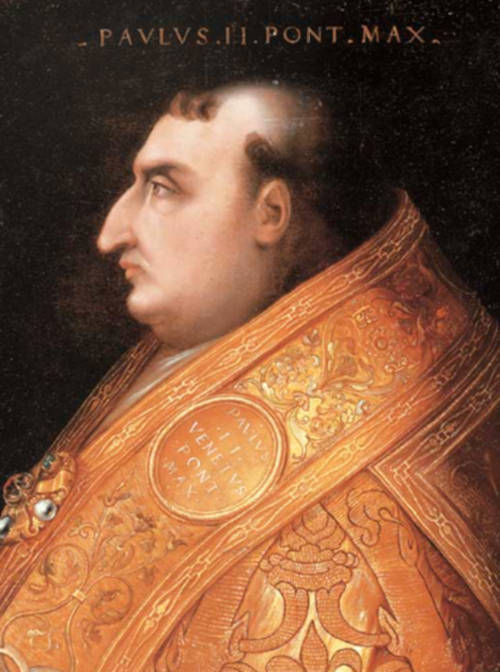
Portrait of Pope Paul II (1417-1471) (Public Domain)
This Venetian-born pope was particularly fond of luxury and ceremony, famously commissioning a papal tiara studded with diamonds, sapphires, emeralds, and large pearls. His collection of art and antiquities was legendary, and he accumulated over 800 precious gemstones during his papacy.
- Imported Timber is the Newly Discovered Secret to Building Rome
- Enormous 2300-year-old Roman water basin unearthed in heart of Rome
Archaeological Significance in Modern Rome
The medals' discovery during Metro Line C construction exemplifies how modern infrastructure projects continue to reveal Rome's layered history. Daniela Porro, Rome's Special Superintendent, noted the find's cultural significance, especially during the current Jubilee year, highlighting how commemorative and possibly superstitious practices intertwined with papal Rome.
Lead archaeologist Marta Baumgartner explained that hiding objects in building foundations represents a long-standing custom seen not only in grand structures like palaces and churches but also in ordinary buildings. This practice continues even today, demonstrating the enduring human desire to consecrate significant constructions with protective or fortunate objects, records the Greek Reporter.

Mad, Bad, and Deadly: Power in the Hands of Infamous Roman Emperors from the AO Store.
Renaissance Building Traditions Revealed
The careful placement of these medals within the Palazzetto's foundations reveals sophisticated Renaissance building rituals that blended Christian symbolism with ancient superstitions. The practice of burying commemorative objects during construction was widespread throughout 15th-century Italy, particularly for papal and ecclesiastical buildings.
After the complex was completed, it served as Venice's first permanent embassy in Rome when Pope Paul II's successors gifted it to the Republic of Venice in the 16th century. This diplomatic function underscored the building's continued importance in Italian Renaissance politics and international relations.
The discovered medals will undergo conservation treatment before being displayed in the new Piazza Venezia subway station, allowing modern Romans and visitors to witness this tangible connection to Renaissance papal culture. Luigi La Rocca, director at Italy's Ministry of Culture, emphasized how this project demonstrates the successful coexistence of modern development and heritage preservation.
Top image: The medals of Pope Paul II discovered at Palazzetto Venezia, Rome. Source: Italian Ministry of Culture
By Gary Manners
References
Archaeology.org. 2025. Objects Linked to Renaissance Pope Unearthed During Subway Construction. Available at: https://archaeology.org/news/2025/09/16/objects-linked-to-renaissance-pope-unearthed-during-subway-construction/
Greek Reporter. 2025. 15th Century Medals Belonging to Pope Paul II Discovered in Rome. Available at: https://greekreporter.com/2025/09/12/fifteenth-century-medals-pope-paul-rome/