
Archaeological analysis of textiles from the Judean Desert has revealed a widespread imitation industry in the Roman Empire, where supposedly prestigious purple garments were often dyed with inexpensive plant materials rather than costly murex snails. The discovery exposes a 2,000-year-old fashion fraud that allowed ordinary citizens to display status symbols once reserved exclusively for the elite, according to research led by the Israel Antiquities Authority.
The findings challenge long-held assumptions about ancient textile production and reveal that Roman fashion was far more democratic (and deceptive) than previously believed reports Arkeonews. Rather than genuine Tyrian purple extracted from Mediterranean sea snails, most "purple" garments were cleverly dyed using a double-dyeing process with madder and woad plants, creating convincing imitations at a fraction of the cost.
- Roman Citizens Could Be Punished with Exile for Wearing Purple
- Tunisian Man Rediscovers Secret of Priceless Ancient Purple Dye
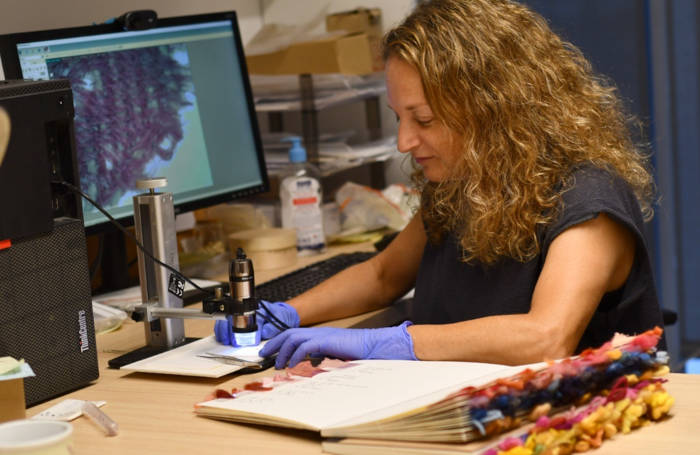
Expert Dr. Naama Sukenik examines a fragment of purple textile. (Israel Antiquities Authority)
The Social Currency of Color in Ancient Rome
In the classical world, clothing served as far more than protection from the elements. Fabric quality, decorative patterns, and especially color functioned as visible markers of wealth, power, and social position. Among all hues, purple reigned supreme as the ultimate status symbol. Extracted through a laborious multi-day process from murex trunculus and related marine snails found in the Mediterranean, genuine purple dye commanded astronomical prices and was associated with emperors, senators, and religious authorities.
Dr. Naama Sukenik, curator of organic materials at the Israel Antiquities Authority and leading expert on ancient dyes, explains that "dyeing with murex was an arduous process that took several days and required large quantities of snails." Modern scientific techniques can now identify the unique molecular signature of murex dye, allowing researchers to determine with high confidence whether textiles were authentically dyed with this prestigious substance or created using substitutes.
The expectation among archaeologists was that purple-toned textiles recovered from caves in the Judean Desert, preserved by the region's arid climate, would contain traces of genuine murex dye. The reality proved dramatically different.
- Archaeologists Strike 3000-Year-Old "Royal Purple" in Ancient Israel
- Ancient textile may contain Biblical blue dye lost for 1300 years
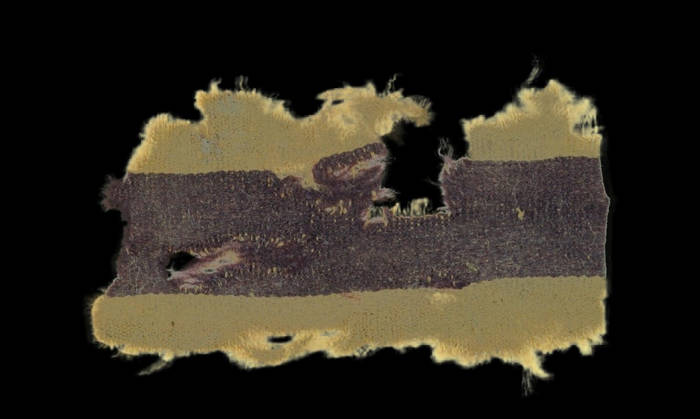
Fragment showing central band dyed purple-like shade using plant materials. (Israel Antiquities Authority)
The Clever Chemistry of Counterfeit Purple
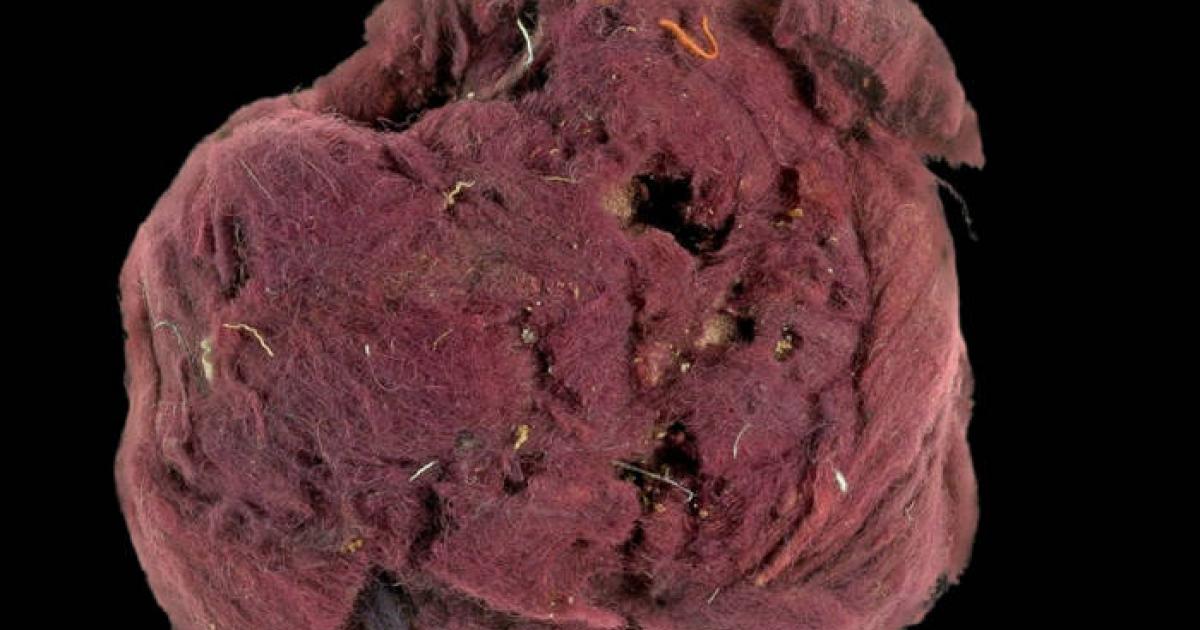
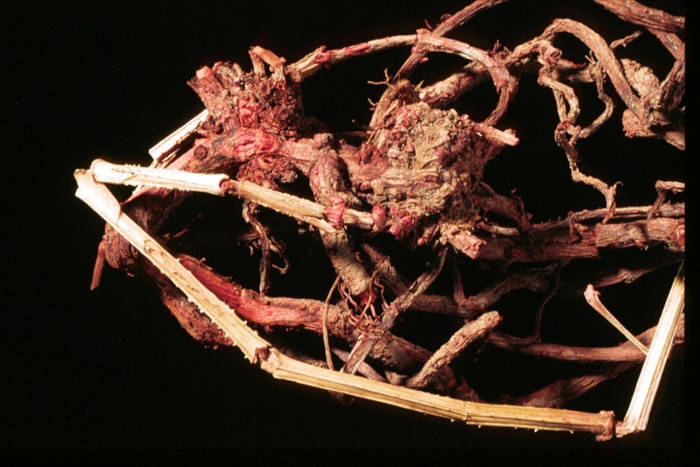
Laboratory analysis revealed that the overwhelming majority of purple-hued textiles examined contained no murex dye whatsoever. Instead, ancient dyers had employed a sophisticated double-dyeing technique using two readily available plants: madder (Rubia), which produces red dye from its roots, and woad (Isatis tinctoria), which yields blue pigment often described as the "Near Eastern indigo."
By carefully immersing cloth first in a madder dye bath and then in woad - or potentially reversing the order - skilled craftsmen created rich purple-like hues that could easily pass for authentic royal purple to the untrained eye. The process required considerable technical expertise but eliminated the need for expensive sea snails, complex chemical extractions, and days of preparation time.
"Double dyeing achieved a sophisticated imitation that could easily pass for authentic royal purple," Dr. Sukenik explains. "Madder and woad were widely available, far cheaper, and far easier to work with than murex snails. Their use points to a deliberate strategy—creating prestige at a fraction of the cost."
The discovery demonstrates that ancient dyers possessed remarkable chemical knowledge and technical skill. They understood how different dye baths interacted with textile fibers and could manipulate color outcomes to achieve specific visual effects. This level of sophistication suggests that imitation purple production was not a marginal cottage industry but rather an established trade with standardized methods passed down through generations of craftspeople.
Microscopic view showing plant-based dye residues in fiber structure. (Israel Antiquities Authority)
An Ancient Marketplace Built on Imitation
The widespread use of imitation purple dyes reveals a phenomenon that resonates strongly with modern consumer culture: the democratization of luxury through convincing replicas. These plant-dyed textiles demonstrate that counterfeiting was neither marginal nor stigmatized in the ancient world. Instead, it appears to have been normalized, widely accepted, and possibly even expected as part of the textile trade.
The practice was not even a Roman innovation. A Babylonian cuneiform tablet from the 7th century BCE already describes a dyeing "recipe" specifically designed to mimic expensive purple dye. This suggests that imitation luxury goods have been part of human commerce for at least 2,700 years, crossing multiple civilizations and geographical boundaries.
"Human nature has not changed," observes Dr. Sukenik. "Even in antiquity, people wanted to appear as though they belonged to a higher social class. The use of imitation dyes made that possible." The textiles represent what researchers have dubbed "Prada for the masses"—affordable versions of elite goods that allowed people of modest means to participate in visual displays of status and refinement.
The economic implications were significant. By creating a market for imitation purple textiles, dyers could serve customers across a broader socioeconomic spectrum while genuine murex purple remained the exclusive province of the truly wealthy and powerful. This two-tiered system likely benefited both producers, who expanded their customer base, and consumers, who gained access to previously unattainable status symbols.
Preserving the Past in Desert Caves
The textiles analyzed in this study came from caves in the Judean Desert, where extraordinarily dry conditions create a natural preservation environment for organic materials that would normally decompose. Each fragment helps reconstruct the complex social ecosystem of the Roman period, where appearance, aspiration, and technological innovation intersected in unexpected ways.
The findings also illuminate the ancient dyeing industry in the Land of Israel. Both madder and woad were cultivated regionally and frequently mentioned in Jewish sources, reflecting not only economic pragmatism but also the technical proficiency of local dyers. These craftspeople had mastered sophisticated color manipulation techniques long before the development of synthetic dyes in the 19th century.
The research forms part of a broader investigation into textile heritage in the region, exploring everything from tekhelet (biblical blue) to scarlet and genuine murex purple. The Israel Antiquities Authority has published these findings alongside the launch of a new book, Thread and Color in the Textiles of the Land of Israel, which examines the region's rich tradition of textile production and dye technology.
The discovery challenges archaeologists to reconsider assumptions about other aspects of ancient material culture. If something as prestigious as purple dye could be successfully imitated on a large scale, what other supposedly luxury goods might have had widely available substitutes? The findings open new avenues for investigating ancient economics, social mobility, and the relationship between authentic prestige items and their imitators.
Top image: 2,000-year-old textile fibers showing red-blue plant-based dye residues used to imitate expensive murex purple in the Roman period. Source: Israel Antiquities Authority
By Gary Manners
References
Israel Antiquities Authority. 2025. A 2,000-Year-Old Fashion Fraud: Roman Textiles Imitated Royal Murex Purple. Available at: https://arkeonews.net/a-2000-year-old-fashion-fraud-roman-textiles-imitated-royal-murex-purple/
Sukenik, N. 2025. Textile Research Findings. Israel Antiquities Authority. Available at: https://www.facebook.com/AntiquitiesEN/

![The Great Pyramid Of Giza Top image: The Great Pyramid of Giza under a starlit sky, highlighting the North Face. Source: [Pixabay/Creative Commons] Image](https://www.ancient-origins.net/sites/default/files/styles/article_featured_big/public/field/image/Great Pyramid Of Giza_0.jpg?itok=yavsyDqT)