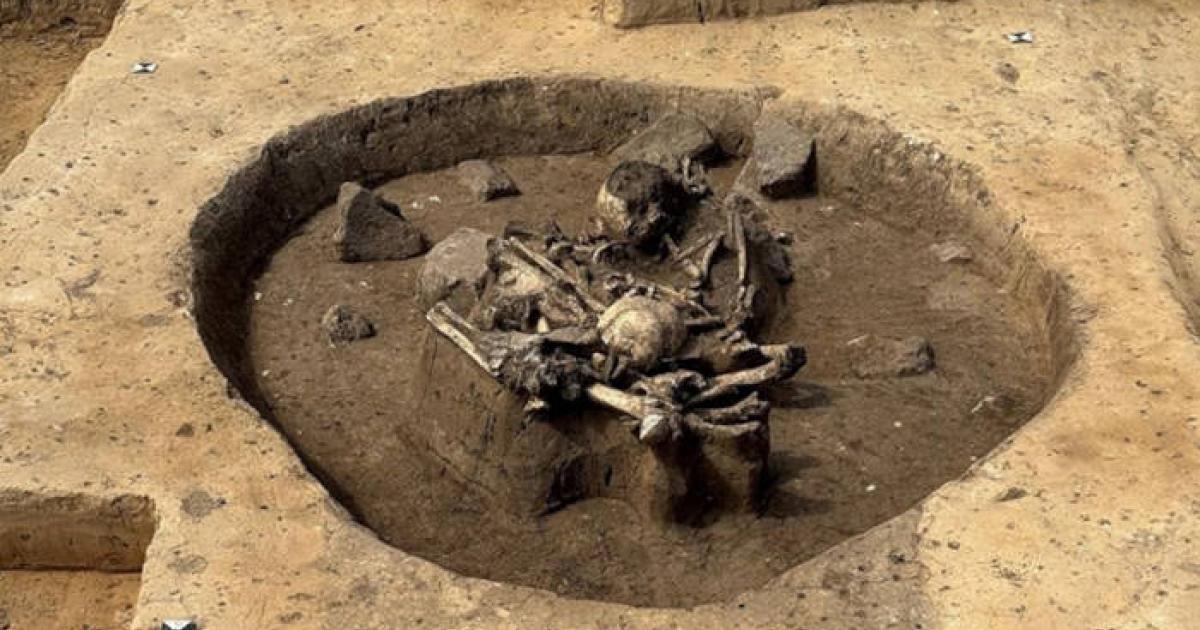

Archaeologists have uncovered twelve extraordinary ritual pits from the enigmatic Salzmünde culture near Gerstewitz, Germany, revealing haunting evidence of complex Neolithic funeral ceremonies involving human skulls, dog sacrifice, and the ritual burning of structures. Dating to approximately 3000 BC, these circular pits provide unprecedented insights into the mysterious spiritual practices of prehistoric communities grappling with climate change and cultural upheaval during one of Europe's most turbulent prehistoric periods.
Spectacular Discovery Along Power Transmission Route
The remarkable discovery emerged during excavations conducted by the State Office for Heritage Management and Archaeology Saxony-Anhalt along the route of Germany's SuedOstLink high-voltage power transmission project. Working in collaboration with transmission operator 50Hertz, archaeologists systematically investigated areas scheduled for construction, leading to the identification of what may be one of Germany's most significant Neolithic ceremonial complexes.
The twelve circular pits, each measuring 2 to 3 meters in diameter and reaching depths of up to 2.5 meters, were originally enclosed by protective ditches that have long since been filled by centuries of sediment accumulation. The Salzmünde culture, a regional offshoot of the broader Funnel Beaker tradition, flourished between approximately 3400 and 3050 BC across the middle and lower Saale River valley region.
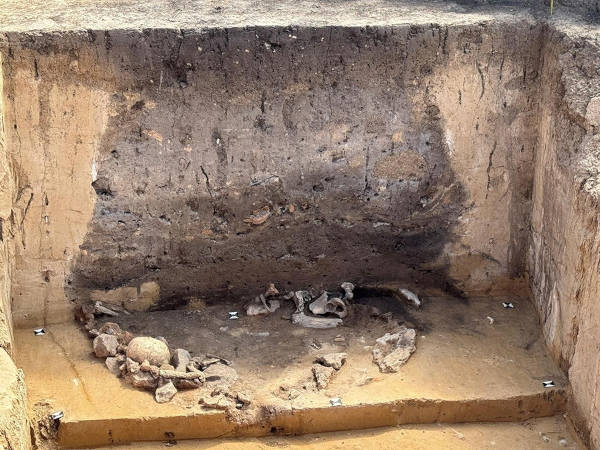
Archaeological excavation revealing the complex layered deposits within a Salzmünde ritual pit. (State Office for Heritage Management and Archaeology Saxony-Anhalt)
What initially appeared to archaeologists as simple storage or waste pits quickly revealed themselves to be something far more sinister and sophisticated. The careful arrangement of contents and the deliberate nature of deposits indicated these structures served crucial roles in elaborate multi-phase funeral ceremonies that likely extended over considerable periods.
- Evidence of Human Sacrifice and Death Rituals Found at German Woodhenge
- 7000-Year-Old Ritual Site Unearthed in Poland
Evidence of Ritual Dog Sacrifice and Skull Manipulation
The contents of the Gerstewitz pits paint a vivid and disturbing picture of ancient death rituals that incorporated both human and animal elements. Each pit contained carefully arranged deposits including human skulls showing evidence of deliberate cleaning and preparation, complete dog skeletons in anatomical connection, fragments of burned wooden structures, and distinctive pottery vessels characteristic of Salzmünde craftsmanship.
Perhaps most intriguingly, one pit contained two intact pottery vessels that would have been utilized during the ceremonies, alongside the charred remains of a dog still positioned as if in life, but showing clear evidence of exposure to intense fire. Next to these canine remains, archaeologists discovered a remarkably fresh human skull that showed no signs of weathering, suggesting a complex temporal sequence where animal bones may have been preserved or stored for extended periods before final deposition.
The evidence suggests that dogs held special spiritual significance within Salzmünde funeral practices, possibly serving as psychopomps or spiritual guides to facilitate the deceased's journey to the afterlife. This interpretation gains support from the careful, almost reverential treatment of the canine remains and their prominent positioning within the ceremonial deposits.
Another particularly fascinating discovery involved a converted oven pit containing the remains of two individuals who appeared to have decomposed elsewhere before burial. This evidence points to elaborate staging processes where bodies may have been exposed or stored in separate locations before final ceremonial interment. The researchers noted in their preliminary report that "this suggests that the pits remained open during extended ritual ceremonies, or that the dog bones were kept in another place for a prolonged period of time" writes La Brújula Verde.
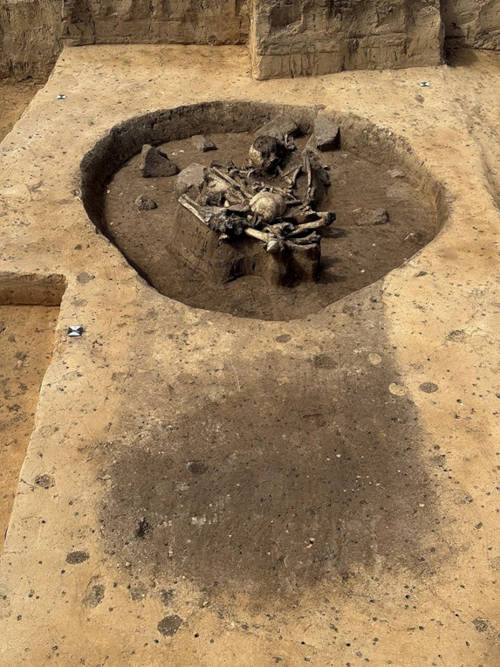
Gerstewitz double burial discovered in a converted oven pit, showing evidence of complex multi-phase funeral rites. ( State Office for Heritage Management and Archaeology Saxony-Anhalt)
Climate Crisis and Cultural Transformation
The timing of the Gerstewitz ceremonies, around 3000 BC, coincides with a period of significant environmental and cultural upheaval across northern Europe. Paleoclimatic evidence indicates that Central Europe experienced a dramatic cooling event during this period, with increasingly unpredictable weather patterns that would have placed enormous stress on agricultural communities dependent on predictable seasonal cycles.
Simultaneously, the expanding Bernburg culture was applying pressure from the north, gradually encroaching on traditional Salzmünde territories and disrupting established cultural practices. Researchers suggest that the increasingly elaborate ritual ceremonies evidenced at Gerstewitz may represent desperate attempts by Salzmünde communities to maintain their cultural identity and seek supernatural protection against mounting external pressures.
The practice of deliberately destroying and burning domestic structures as part of funeral rites may have held particular symbolic significance during this period of uncertainty. By ritually destroying the material foundations of daily life, communities may have been symbolically preparing for transformation or seeking to accompany the dead with the very essence of their earthly existence.

History Themed Clothing Designs from Ancient Origins Store
Advanced Archaeological Techniques Reveal Ceremonial Complexity
The excavation of the Gerstewitz site employed cutting-edge archaeological methodologies that enabled researchers to reconstruct the precise sequence of ritual activities within each pit. Advanced micro-stratigraphic analysis and comprehensive 3D documentation revealed that many structures were used repeatedly over extended periods, with evidence of multiple phases of deposition and ceremonial modification.
The systematic nature of the deposits, combined with apparent standardization of pit construction techniques, implies highly organized religious practices overseen by specialist practitioners. This level of ceremonial sophistication suggests that Neolithic communities possessed far more elaborate belief systems and ritual knowledge than previously recognized by archaeological scholarship.
The discovery follows earlier finds along the same infrastructure project, including graves attributed to the later Corded Ware Culture near Krauschwitz. However, the Salzmünde pits are nearly 500 years older and reflect significantly more sophisticated ceremonial activity, likely representing an intensification of ritual practices during periods of acute social stress.
Top image: Sacrificial pit of the Salzmünde Culture at Gerstewitz, containing dog bones, a human skull, charred house wall remains, and a horn core, revealing the complex ritual practices of 5,000-year-old Neolithic communities. Source: Oliver Dietrich, State Office for Heritage Management and Archaeology Saxony-Anhalt
By Gary Manners