
Archaeologists have uncovered an unprecedented family statue from ancient Egypt that challenges conventional artistic traditions of the Old Kingdom period. The limestone sculpture, discovered at Gisr el-Mudir in Saqqara, represents the first known example of a family statue combining traditional three-dimensional carving with innovative bas-relief techniques.
Published in The Journal of Egyptian Archaeology, the discovery by Dr. Zahi Hawass and Dr. Sarah Abdoh reveals a nobleman's family portrait unlike any previously found from this era, reports Phys.org. The statue's unique artistic approach provides new insights into the creative flexibility of ancient Egyptian sculptors during the Fifth Dynasty.
- Archaeologists Unearth 4500-Year-Old Tomb of Fifth Dynasty Egyptian Prince
- Tombs, Treasures, and Animal Mummies Unearthed in Saqqara
Conventional Forms Meet Innovative Techniques
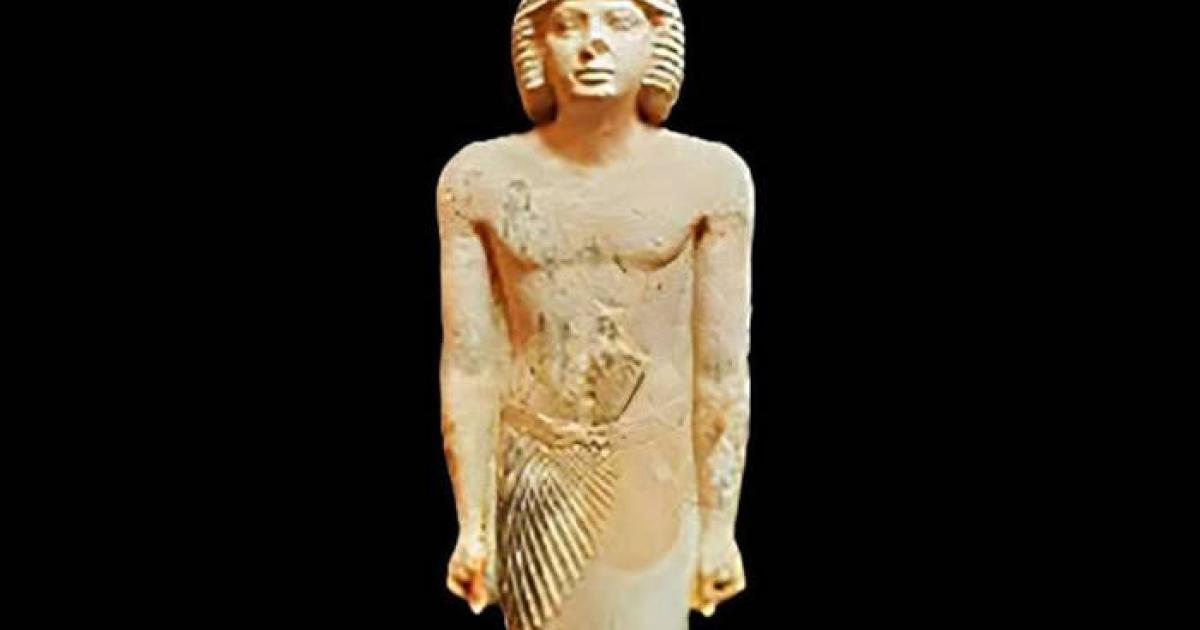
The statue depicts a standing nobleman in traditional Old Kingdom style, with his left foot forward representing youth and vitality. He wears a short wig and half-goffered kilt, with careful attention paid to anatomical details including his shoulders, pectoral muscles, and arms. Beside him, his wife appears in conventional form, kneeling and embracing his right leg while wearing a shoulder-length wig and simple sheath dress.
However, the daughter's representation breaks entirely from established conventions. Rather than being carved fully three-dimensional like her parents, she appears in bas-relief behind her father's left leg, holding a goose in one hand while grasping his leg with the other. This unique artistic choice has no parallel in known Old Kingdom family sculptures, making this discovery extraordinary for Egyptological studies.
The goose held by the daughter likely represents provisions for the afterlife, serving the same function as wall paintings that would typically appear in tomb chambers. Dr. Hawass explains that "since there are no wall scenes preserved in this tomb that we could see, the statue of the daughter holding a goose may have served the same function, representing provisions for the afterlife."
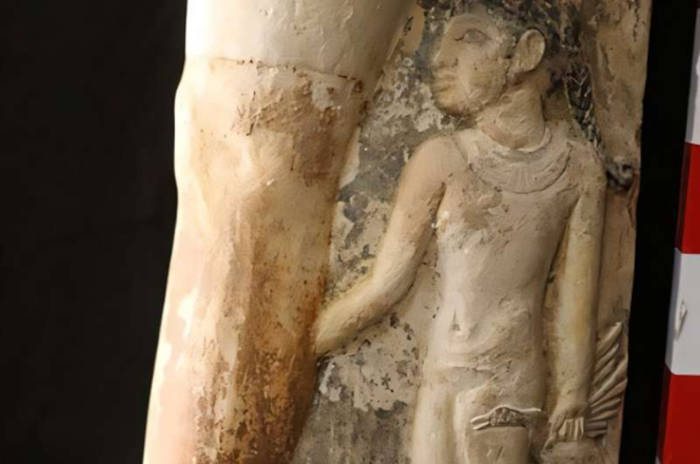
Bas-relief carving of the daughter holding a goose, representing afterlife provisions. (Zahi Hawass Library via Phys.org)
Artistic Dating Through Comparative Analysis
The statue was found without archaeological context in the sands of Gisr el-Mudir, likely abandoned by ancient tomb robbers. To determine its date, researchers compared its artistic style with similar known pieces, particularly focusing on anatomical proportions, facial details, and clothing styles characteristic of specific dynastic periods.
The analysis revealed striking similarities to the statue of Irukaptah housed in the Brooklyn Museum, which dates definitively to the Fifth Dynasty. Both sculptures share nearly identical heights, anatomical proportions, and artistic details including the nobleman's stance, clothing, and the wife's positioning. The primary differences lie in the reversed positions of the wives and the unique bas-relief treatment of the Gisr el-Mudir daughter.
These stylistic parallels suggest both statues originated from the same artistic "school" and time period, likely created by sculptors working within the same traditional framework while allowing for individual creative expression. The similarity in technique and execution indicates a shared cultural and artistic context during the Fifth Dynasty period.
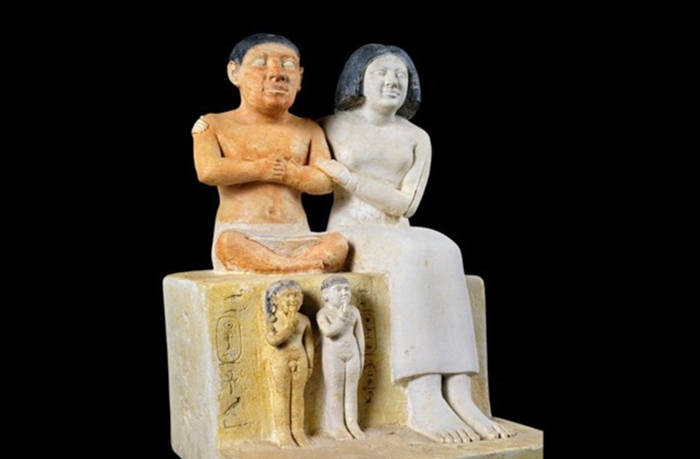
Traditional Old Kingdom family statue showing conventional three-dimensional carving techniques (Egypt Museum/Ministry of Tourism & Antiquities)
Significance for Understanding Ancient Egyptian Art
This discovery challenges previous assumptions about the rigid adherence to artistic conventions in Old Kingdom sculpture. The innovative treatment of the daughter figure suggests that ancient Egyptian artists possessed greater creative flexibility than previously recognized, particularly in family portrait sculptures where personal expression could coexist with traditional forms.
The statue's discovery at Saqqara adds to the site's importance as a center of artistic innovation and religious practice during the Old Kingdom. The combination of traditional and experimental techniques reflects the sophisticated artistic culture that flourished in this ancient necropolis.
The unique artistic approach raises questions about why this particular sculpture employed bas-relief for the daughter while maintaining three-dimensional carving for the parents. Whether this choice reflected practical considerations, artistic preference, or symbolic meaning remains an intriguing mystery for future research.
Top image: Unique limestone family statue from Gisr el-Mudir, Saqqara, showing nobleman with wife and daughter in mixed artistic styles from the Fifth Dynasty period. Source: Zahi Hawass Library via Phys.org
By Gary Manners
References
Hawass, Z., Abdoh, S. A. 2025. Family Statue from Gisr el-Mudir (Saqqara). The Journal of Egyptian Archaeology. Available at: https://journals.sagepub.com/doi/10.1177/03075133251329948
Oster, S. 2025. First family statue of its kind discovered in ancient Egypt. Available at: https://phys.org/news/2025-09-family-statue-kind-ancient-egypt.html