
Just 20 centimeters beneath the windswept soil of Senja, a remote island in Northern Norway, archaeologists have uncovered a stunning remnant of the Viking Age: a woman of status laid to rest in a boat, accompanied by her beloved dog and a wealth of symbolic artifacts.
First discovered in 2022 thanks to a lucky signal from a metal detector, the grave was alarmingly close to being destroyed by routine ploughing, reports Science in Norway. But what lay beneath the surface turned out to be among the most evocative Viking burials ever found in the region.
- Beyond Violence: Examining UK Viking Families and their Artifacts
- What Really Happened at Viking Funerals? It’s Not What You Think!
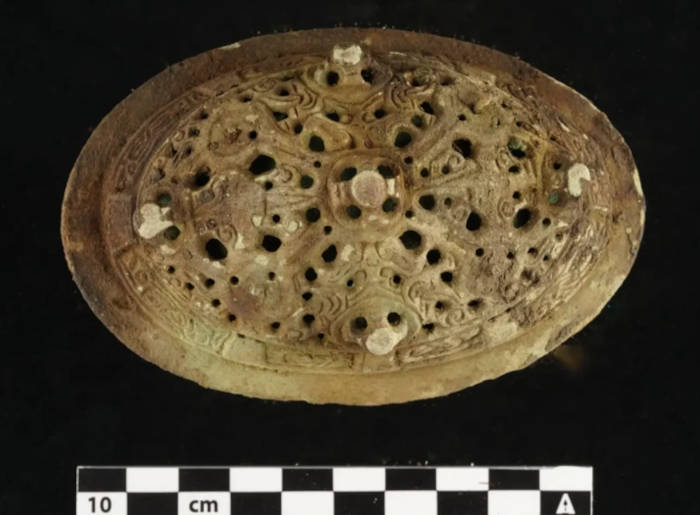
One of the two oval brooches, still undergoing conservation. (Ida Fløystad Brevig, The Arctic University Museum of Norway)
A Woman of Distinction
The discovery began with the unearthing of two finely wrought oval brooches, glittering with silver thread - jewelry unmistakably associated with Viking women of high status, from around 900–950 AD. As the excavation unfolded, archaeologists from the Arctic University Museum of Norway revealed a 5.4-meter-long (18 feet) sewn-plank boat, buried with a woman whose life and death reflect local power and prestige.
Science in Norway records lead archaeologist, Anja Roth Niemi as explaining:
"Only the elite would receive a burial like this… Perhaps only one or two individuals per generation were honored this way."
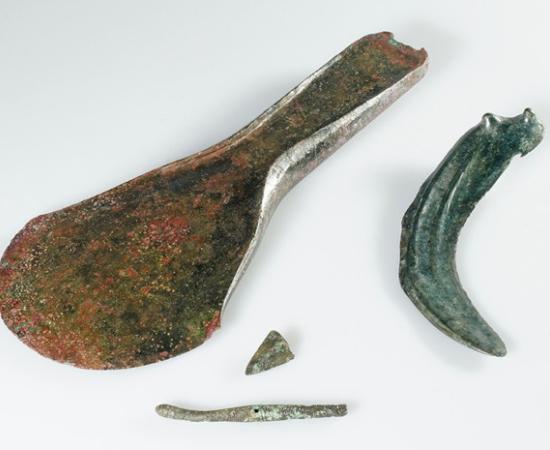
The woman’s grave included personal objects suggesting authority over domestic life and textile production: a ring-shaped pendant, a suspected weaving sword carved from whale bone, beads made of bone or amber, a spindle whorl, a whetstone, and even an iron sickle.
- What’s a Viking Sword? What’s not? The Distinctions of Norse Weaponry
- Discovering the Drengr Code: The Truth About Viking Ethics
A Loyal Companion in Death
Perhaps most touching of all was the small dog buried tenderly at the woman’s feet.
"It appears to have been placed with real care," Niemi noted. "We know from saga literature that Vikings valued their dogs deeply. This suggests a personal bond that transcended death."

The small dog was placed at the feet of the deceased. (The Arctic University Museum of Norway, UiT)
Dogs are occasionally found in Viking graves, though rarely in such well-preserved contexts. This find echoes Iron Age burial traditions in Northern Norway, where animals were sometimes interred alongside humans as companions into the afterlife.
Preserved by Time and Soil
While the boat’s wooden planks had long since decomposed, they left their ghostly outlines, dark stains in the shell-rich soil. Parts of the skeleton, particularly those in contact with the bronze brooches, were impressively preserved. Northern Norway’s lime-rich sand and cool climate have helped save such fragile remains, even after over 1,000 years underground.

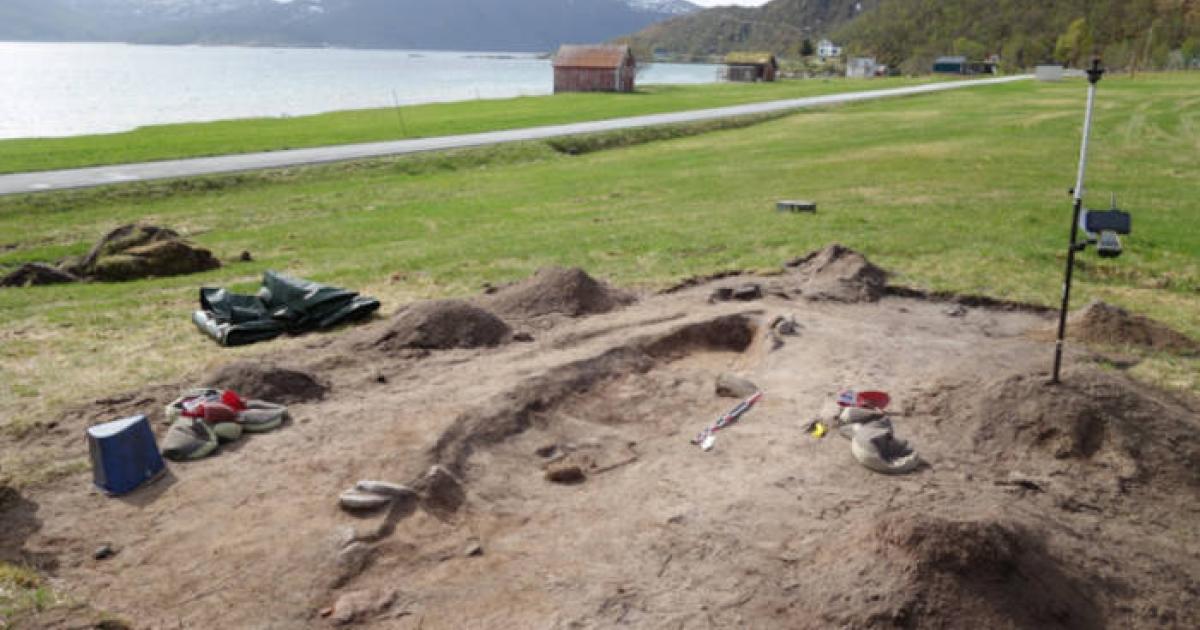
The full boat grave recently excavated on Senja Island, Norway. (The Arctic University Museum of Norway, UiT)
Traces of textiles were also recovered - thanks to the care taken by the original metal detectorists, who left the artifacts with the surrounding soil intact. These could offer rare insights into Viking funeral dress and textile production, particularly the role of women in Norse society.
Clues to Her Life Still Emerging
Ongoing analysis will determine the woman's age, diet, stature, possible illnesses, and whether she moved during her life-information preserved in the very chemistry of her bones. DNA testing might one day reveal her hair and eye color, although that is beyond the scope of the current project.
"It's a humbling experience," Niemi reflected. "We get very close to those who lived long ago. This woman walked the Earth over a thousand years ago - and yet here she is, telling us her story."

Archaeologist Janne Oppvang carefully cleans the skeleton. (Arctic University Museum of Norway, UiT)
More Graves Await?
The discovery has prompted interest in the surrounding area. Just meters from the burial site, another oval brooch was discovered-suggesting a second, still-untouched grave. Archaeologists hope to survey the area with ground-penetrating radar, to reveal what other secrets lie hidden beneath the thin northern soil.
A Glimpse into a Viking World
This remarkable boat grave is more than a burial - it's a window into the social fabric, beliefs, and emotional bonds of the Viking world. In life, the woman commanded respect. In death, she was sent into the afterlife with dignity, tools of her station, and the faithful companion who likely shared her hearth and home.
Top image: Archaeologist Janne Oppvang carefully cleaning the skeleton. Source: The Arctic University Museum of Norway, UiT
By Gary Manners
References
Gjellesvik, Alette Bjordal (Translator), June 2025. A Viking woman was buried here with her dog. Science in Norway. Available at: https://www.sciencenorway.no/viking-age-archaeology-culture/a-viking-woman-was-buried-here-with-her-dog/2515330
Radley, Dario, June 2025. Viking-era boat burial unearthed in Norway reveals 1,100-year-old remains of woman and her dog. Archaeology Magazine. Available at: https://archaeologymag.com/2025/06/viking-boat-burial-remains-of-woman-and-her-dog/